Railpen: good partners add skills

Earlier this year, RPMI Railpen, investment manager for the £28 billion ($37 billion) pension fund serving the UK’s railway workers, embarked on a joint venture with the $66 billion Alaska Permanent Fund and Kuwait’s Public Institution for Social Security (PIFSS) to better access private markets.

Like many other asset owners, the trio have found competition and elevated prices has made accessing private markets difficult. The hope is that combining firepower and expertise in a joint venture will open up more opportunities. The joint venture, Capital Constellation, will invest in private equity and alternatives managers, and plans to deploy more than $1.5 billion in the next five years. The three funds manage about $200 billion in assets between them.

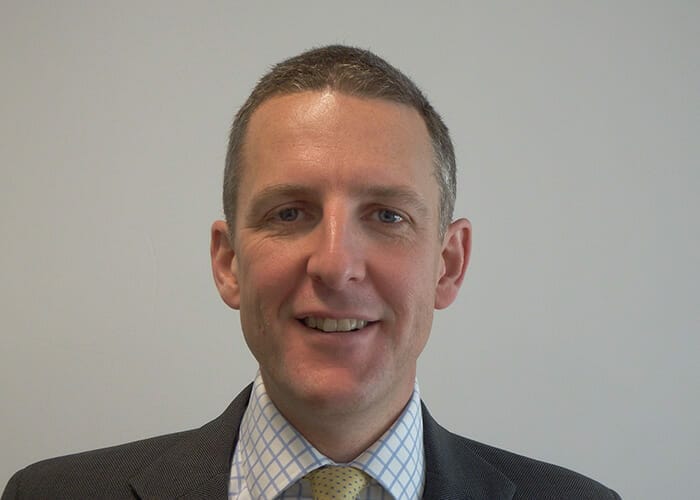
The project has revealed important lessons, Railpen chief investment officer Richard Williams says. First, asset owners should partner with investors that bring different elements to the party. In Railpen’s case, this means finding partners that can complement its ESG experience and UK presence, he says.

“It is also about finding heterogeneous skill sets that blend together,” Williams says. “There are lots of hurdles to jump through and we would like to do more initiatives like Capital Constellation, but only time will tell if we do. It won’t be for lack of intention.”

Preparing the ground at the beginning of a collaboration in case things grow tricky and parameters shift in the future is important as well, he says.

“It is a little bit like a prenup [prenuptial agreement],” Williams says. “If it doesn’t work out, all parties need to know how they can separate without it getting too acrimonious. I’m not suggesting the best marriages have to have a prenup, but sometimes love isn’t enough.”

Sponsored Content

For more on Railpen’s strategy see our profile Railpen reaps benefits of in-house team.

Leave a Comment

How CPP is evolving risk management for a faster, more interconnected world

How CPP is evolving risk management for a faster, more interconnected world

In an environment where multiple risks are emerging and their effects are compounding on the portfolio, CPP Investments' chief risk officer Priti Singh says the $572 billion fund is rethinking risk management from the ground up, shifting from reaction to preparation and embedding risk thinking earlier in investment decisions. She speaks to Amanda White about the fund's risk approach.

Sort content by

NOW: Pensions crosses borders

In the city of Hillerød outside Copenhagen in Denmark, a small group of Danes want to teach the United Kingdom’s pensions industry a thing or two. Where UK trustees tend to see fund choice as a blessing, Denmark’s DKK579-billion ($101.6-billion) public pension plan ATP has always viewed picking and choosing between different managers as more

Autumnal Danish fund shows spring growth

Innovation is associated more with bold new businesses than gently declining ones, but Denmark’s Lønmodtagernes Dyrtidsfond (LD) is embracing change as it enters its final years. The pension fund’s inevitable disappearance has nothing to do with any lack of competitiveness or poor investment returns – the 9.9-per-cent net return it generated in 2012 is testament

KLM funds ride out de-risking turbulence

Pension funds can face a lot of turbulence in the course of their investing journey and many funds thrown into shortfalls have found the need to de-risk their portfolios. There might be a few investment officers at those funds casting an enviable eye upwards to the pension fund of Dutch flag-carrying airline KLM. Toine van

Mid-life crisis at West Midlands Pension Fund

The area surrounding the British city of Wolverhampton, near Birmingham, is still called the Black Country although the polluting coal mines and steel mills that sprung up during England’s nineteenth-century explosion of wealth have long gone. Today there is little evidence that Wolverhampton was the cradle of an industrial revolution and the 300-odd public sector

Inhouse target: zero to
$40 billion in 4 years

If everything continues on schedule, the $60-billion AustralianSuper will begin testing its new internal investment-management systems this month, with a view to managing its first money in house in the third quarter of 2013. Within four years the fund expects to manage as much as $40 billion in house, funded primarily from cash flow, and

Belgium’s KBC fund
thrives on LDI

Edwin Meysmans, chief executive of the KBC Pension Fund, sounds extremely relaxed for a man who rises early to avoid Brussels’ clogged roads on the way to the office. Then again, that Meysmans shies away from the madness of commuting crowds should perhaps be no real surprise given that his fund focuses on avoiding being

Previous




