
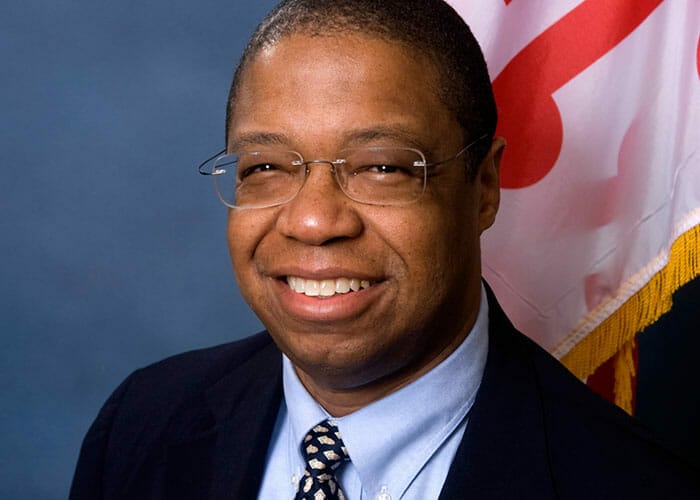

The Minnesota State Board of Investment, the state agency responsible for managing Minnesota’s $82.3 billion retirement assets, plans to increase both its allocation to public equity and passive management within the equity portfolio.
Public equity exposure will increase from 60 per cent of assets under management to almost 65 per cent, explains Mansco Perry III, executive director and chief investment officer at the SBI. Around 30 per cent of the current equity allocation is passively managed; going forward, this will increase to around 65 per cent, he explains.
“We’ve been prettily heavily weighted to active management in public equities. We are going through a process to significantly increase our passive exposure. Active management has not met our expectations. It is very resource-, time- and energy-intensive; it’s expensive, and we haven’t been rewarded for it. In fact it’s not just us, others are going in the same direction too.”
Current asset allocation at the fund is divided between domestic equity (45 per cent) international equity (15 per cent) bonds (18 per cent) and alternatives (20 per cent) with 2 per cent of the fund in cash.
“We are strategic investors so we follow our asset allocation pretty religiously, always rebalancing back to it,” says Perry in an interview from the fund’s St Paul’s headquarters.
The US passive allocation will track the Russell 3000 index and the international allocation will track the MSCI ACWI ex US. The passive allocation will increase in domestic US first, followed by international. He still believes active management pays in small cap US and emerging markets.
“We haven’t given up on active management in every area, but over time we will have significantly less active exposure to US large cap.”
It will mean a smaller roster of public equity managers in the next couple of years at the fund that outsources all asset management.
“We are also going to review managers relative to our expectations, not just their expectations of value-add relative to the benchmark. Managers say they can add between 200-300 basis points gross over the market cycle. We haven’t experienced that very much. If I can get between 50-75 net, why would I spend so much time and effort on active management?”
The increased equity focus will also be characterised by greater diversification outside US stocks. Public equity currently has a 75/25 bias in favour of the US, explains Perry. Now that will change to favour the US two-thirds to one third international.
“We will still have a large home country bias but less so than historically.”
He is also planning more geographical diversity in the alternative allocation.
“We are increasing our European exposure and building a toehold in Asia. Our liabilities are in dollars but we are trying to be more globally diversified.”
Minnesota’s State Retirement System comprises numerous pension funds, trust funds and cash accounts commingled in pooled investments.
The lion’s share of the portfolio lies in the so-called combined funds, representing the assets of both active and retired public employees who participate in the defined benefit plans of 10 state-wide retirement systems. The combined funds, which have a market value of $60.1 billion, returned 4.4 per cent last year.
The fund is 85.7 per cent funded, putting it in the top quartile compared to other US public pension plans.
“We’ve been pretty fortunate. We were able to benefit from the tail winds of the 1980s as interest rates declined and equity markets had a strong, sustainable bull market. Going forward we face low returns and low interest rates. The tailwind has turned into a headwind,” says Perry, who has spent much of his professional life at the fund.
Aside from a five-year stint running the investment portfolio of Maryland State Retirement Agency and St Paul’s Macalester College, he has been at the SBI in various senior roles since 1990.
Balanced alongside plans to increase the allocation to public equity, the fund is equally committed to being a “long-term private market investor”.
Up to 20 per cent of the value of the combined fund is targeted to alternatives, although the allocation is underweight with only 13 per cent currently invested.
“Over the last five years we have received back more money from managers than what we’ve invested,” says Perry. “It’s a good thing; we’ve got our money back. But we could invest more.”
Statutory rules guide Minnesota’s investments in alternatives: each investment must involve at least four other investors and participation in an investment may not exceed 20 per cent of the total investment. The allocation is divided between real estate, yield-orientated strategies and private equity, and provided a 7.6 per cent return last year versus a 13.6 per cent return annualized over the past 10 years. Minnesota has no allocation to hedge funds.
“We’ve stayed away from hedge funds; it’s not an area we’re really excited about.”
Going forward, Perry aims to increase the allocation to real estate, which was reduced four years ago. “We are looking at adding a bit more back here. There is fierce competition in private markets. Certain groups of managers see our size as a plus but we can’t access small managers so easily”.
The main components of the real estate portfolio consist of investments in closed end, commingled funds.
Private equity disappointed last year, primarily because of the allocation’s exposure to oil and gas markets. “We have a large amount of private equity in resource investments,” says Perry.
Last year’s poor performance came despite it being one of Minnesota’s strongest performers in a portfolio that aims to bring an inflation hedge and diversification. Going forward he is also determined to build up the fund’s ESG investment.
“We are in the process of determining how ESG factors should be viewed. We have begun the process. It includes education and looking at what other funds are doing.”








Leave a Comment
You must be logged in to post a comment.
Login