
Looking for the exit: Oregon battles overweight allocations to illiquids

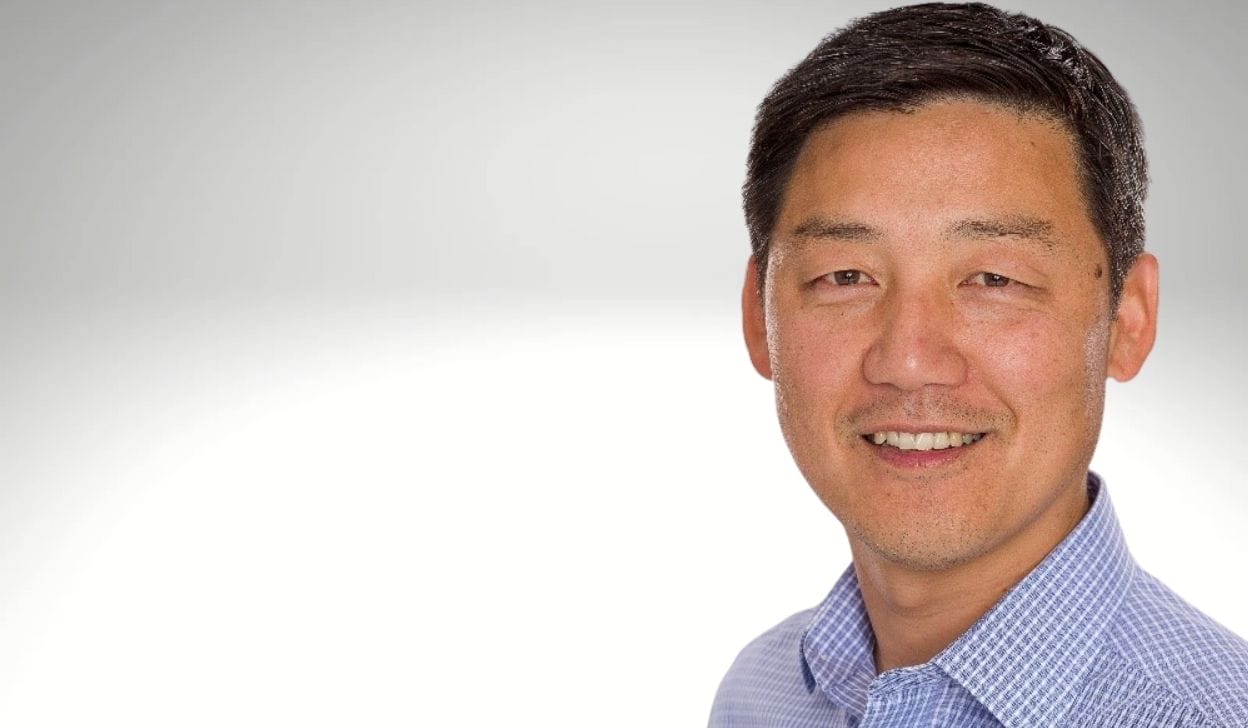
Oregon Investment Council, which oversees $140 billion of investments including the $97 billion Oregon Public Employees Retirement Fund, OPERF, currently has 55 per cent of its assets in private markets, well above its target allocation of 40 per cent. The overweight to illiquid investments that can take years to sell is a growing source of consternation for chief investment officer, Rex Kim.

“We have much less liquidity in our portfolio now,” says Kim in an interview from the fund’s Tigard investment headquarters.

Oregon is not alone. According to analysis from CEM Benchmarking, average LP allocations across private equity, infrastructure, and real estate were at or above target allocations as of the beginning of the year. Meanwhile a lack of exits and rebounding valuations have driven net asset values (NAVs) higher. Analysis from McKinsey and global private markets firm StepStone Group suggests that an overallocation of just one percentage point can reduce planned commitments by as much as 10 to 12 percent per year for five years or more.

One way the Oregon team are approaching the problem is by reducing risk in the liquid portfolio. Comprising fixed income, public equity, and hedge funds, it is supposed to be split 55:45 between stocks and bonds respectively. Today it is tilted 40:60 in favour of bonds.

“We have decided that the mix of this piece of the portfolio needs to be less risky. We look at the risk level of the liquid portion of the portfolio relative to how much weight to illiquids we have, and we want this part of the portfolio to be less risky so it has lower drawdown potential and enables us to pull funding from it overtime.”

To illustrate the problem Kim turns to the real estate portfolio where Oregon has a 12.5 per cent strategic allocation which is currently overweight at 14 per cent. He says the market is struggling to find the right pricing thanks to a vicious circle of lacklustre transactions and little price discovery that means Oregon is struggling to value the assets it is sitting on.

Sponsored Content

Oregon accesses real estate via separate accounts so has a direct look into the assets. As well as meeting external managers more frequently, portfolio managers now visit the assets to try and get a sense of where the market is.

“We’d like to bring the allocation to real estate down and we will reduce it once there is more price discovery. My hunch is there is more downward pressure on prices to come,” Kim says.

“Many of our peers are facing an overweight in private markets,” he continues. “Our investment managers are aware of the problem, and everyone in the ecosystem is trying to appropriately manage it. From our perspective, it will take numerous years to reset, and that’s ok.”

Still, the large allocation to private markets is knocking on to other corners of the portfolio too. For example, the team, consultants, and board are keen to build out private credit but Kim is minded to wait, describing increasing the allocation to private credit when the fund is already pretty illiquid as a “balancing act.”

For now, the allocation to private credit sits in Oregon’s 0-5 per cent (currently 2.5 per cent) allocation to opportunities, that also serves as a store of dry powder. If the team find an investment that doesn’t fit into the strategic asset allocation, they can invest via the opportunity fund which is also used to incubate ideas – the  allocation to hedge funds, infrastructure, natural resources and bank loans all began life in the opportunities portfolio.

“Long term it’s likely we’ll have a strategic allocation to private credit, but I’d like to see how it behaves in a fuller market cycle and softer market environment. I’d like to see more stress, and see how managers handle that stress,” he says.

The over allocation to illiquids is also hindering his ability to explore new manager relationships. Over the years, Oregon has pared down its number of manager relationships in private equity to a roster of around 35 of the highest conviction names. Now Kim would like to expand the number of relationships. “We do generally think that our manager line up is on the smaller side,” he says. “We want to be somewhere in the 40s.”

In a recent Annual Review of private equity, the private markets team told the investment council that OPERF’s large program is skewed to allocating to larger funds – yet smaller private equity funds have significantly outperformed.

New manager relationships would reflect the evolution of private equity, he continues. The portfolio has steadily evolved since Oregon’s first foray into the asset class, a direct investment in a chain of local grocery stores.

“We still see these types of transactions, but they are not for us. We don’t do direct investments anymore and our portfolio is very tech and consumer heavy,” he says.

Kim says offloading private equity in the secondaries market is difficult. Oregon does transact private equity in the secondaries market, but the volume of transactions the investor requires can only really happen through exits. And he acknowledges this will take a long time.

“It all goes back to price discovery,” he concludes. “With higher interest rates, buyers are wondering at what level to buy assets. It does feel like the bid ask spread is wider than normal.”

Leave a Comment

How CPP is evolving risk management for a faster, more interconnected world

How CPP is evolving risk management for a faster, more interconnected world

In an environment where multiple risks are emerging and their effects are compounding on the portfolio, CPP Investments' chief risk officer Priti Singh says the $572 billion fund is rethinking risk management from the ground up, shifting from reaction to preparation and embedding risk thinking earlier in investment decisions. She speaks to Amanda White about the fund's risk approach.

Sort content by

Why West Virginia’s CIO is worried about its China divestment directive

The $28 billion West Virginia Investment Management Board will divest from Chinese state-owned companies and CIO Craig Slaughter has reservations about the decision. He outlines in an interview with Top1000funds.com about why the directive is an extension of a big threat facing investors: a decline in liberal democracy. 

TRS strikes gold: Tiny allocation crushes its benchmark

This year, TRS doubled its tiny allocation to gold via a special fund that buys gold ETFs and mining companies. The strategy returned nearly 60 per cent, thanks to market conditions including inflation, geopolitics, government debt levels and de-dollarisation pushing gold higher.

LGPS Central doubles in size; looks to add more alternatives

In a rare interview, Jayne Atkinson, chief investment officer of the £100 billion ($132 billion) UK pool LGPS Central, reveals the plan to scale up its offering after almost doubling its assets under management, including expanding alternatives to new allocations in hedge funds, diversified growth funds and insurance-linked securities.

CalPERS bets on outperformance from growing climate allocation

CalPERS' Peter Cashion tells Top1000funds.com how the pension fund's strategy to allocate to climate mitigation, transition and adaptation strategies is allowing it to access an untapped corner of the US market where many investors have retreated because of the policy environment.

Alaska’s APFC mulls the positives of growing its small crypto exposure

The $84 billion Alaska Permanent Fund Corporation is weighing the benefits and risks of increasing its less than 1 per cent allocation to cryptocurrency following positive returns for the sovereign wealth fund. Despite the current policy tailwinds, the investor is wary about the asset class's liquidity and value drivers. 

TPA just a new acronym for ‘common sense’: Pennsylvania PSERS CIO

As CalPERS becomes the first US pension fund to adopt a total portfolio approach, Ben Cotton, CIO of $80 billion Pennsylvania PSERS suggests TPA is just another acronym for something investors should already be doing: making decisions for what is best for the whole portfolio.

Previous



