
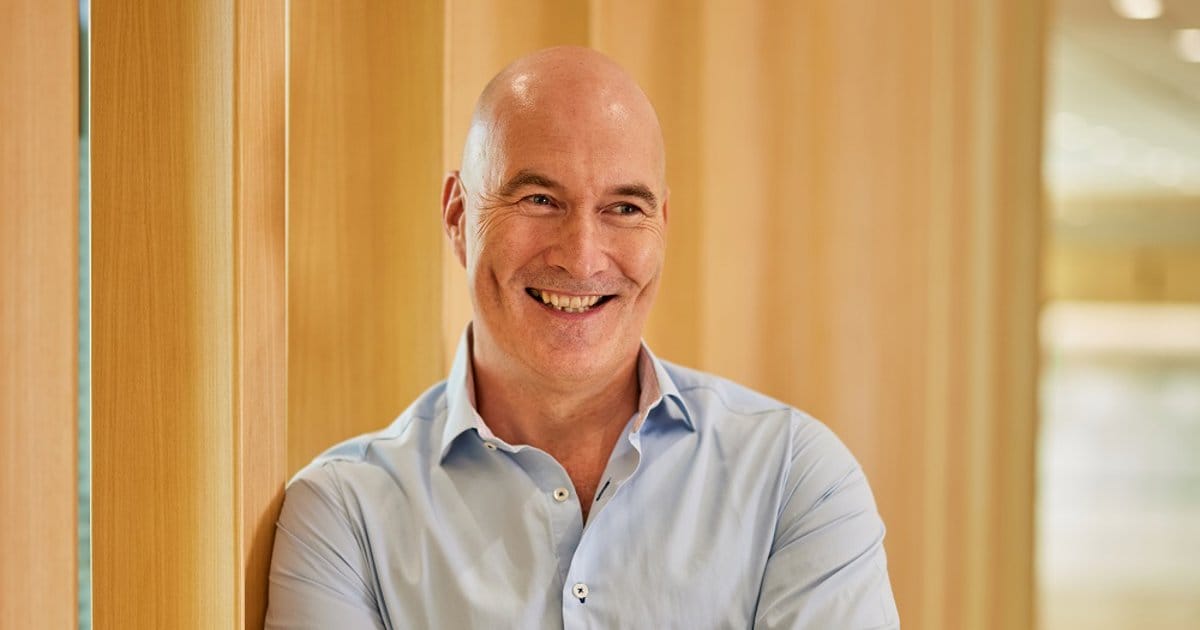

Two of the biggest pension funds in the world, the Netherlands’ €532 billion ($565 billion) APG and Japan’s ¥227 trillion ($1.5 trillion) GPIF, have joined forces to invest in large scale infrastructure deals, with APG taking the lead. The move comes as APG Asia head Thijs Aaten tells Top1000funds.com he envisages more than half of the fund’s real assets will be invested in Asia to reflect global growth and opportunities.
An infrastructure co-investment deal with Japan’s ¥227 trillion ($1.5 trillion) GPIF is the latest in a throng of relationships that Dutch pension fund APG has entered with other funds to invest in large scale infrastructure and real estate, including Korea’s largest pension fund NPS, and New Zealand Super Fund.
The €532 billion ($565 billion) APG has extensive experience investing in infrastructure and will act as lead investor in the latest collaboration, selecting projects which GPIF, relatively new to investing in infrastructure by comparison, will be invited to join.
At the end of December 2023 GPIF’s portfolio was split roughly equally between equities and fixed income, although it does have an unlisted assets cap of 5 per cent including infrastructure (which is less than 1 per cent), noting that 5 per cent of GPIF is $75 billion.
APG sees many benefits to the collaborative model with other pension funds and is open to further expanding the number of “preferred partnerships” it has with other pension funds that have a similar investment philosophy and share the same views on sustainability.
Collaborative deals with like-minded partners to date include student housing in Australia and toll roads in Portugal.
APG’s Asia chief executive, Thijs Aaten, told Top1000funds.com in an interview that in addition to increased capital to invest, investing with other pension funds has implications for the investment structures and purpose of the investments because of an alignment of interest.
“We have quite a bit of experience in private investments and even though we are a decent size we occasionally run into a situation that some of the deals are too big even for us. Deals of €1 to €2 billion is sizable for us,” Aaten said.
“The idea is we want to team up with asset owner partners who have similar investment horizons, and don’t necessarily look for an exit. We might be enthusiastic to hold on to the asset, and often GPs want to exit, but for us it could become more of a core asset with a good income or an inflation hedge. With private equity partners there is not always an alignment of interest, so we expect to see that more with asset owner partners.”
Part of what makes APG an attractive partner is its large internal teams, with nearly 100 people on the ground in Asia an example of the depth of its operations. Some funds, such as GPIF, don’t have those large internal capabilities in private assets, making APG a natural and complimentary partner.
“What we do see is that there are more like-minded partners looking for this capability in Asia,” Aaten said.
APG has about 30 per cent of its portfolio in real assets, and Aaten believes over time up to half of that will be invested in opportunities in Asia.
“That’s where I feel that if you only have 10 per cent allocated in Asia that is not in line with fundamental economic activity,” he said. “The central gravity of the world economy is shifting to Asia. I don’t think everyone sees that or is willing to acknowledge it.
“I think it is obvious, and the statistics support it – like half of global GDP is from Asia, and it is a much larger amount of global growth. The US has a stronger capital market and is still growing, but Europe is not growing much.”
APG has offices in both Hong Kong and Singapore, and the team has doubled in size in the six years Aaten, who is headquartered in Hong Kong, has been running the region. Included in the 100 people employed across the region are 20 different nationalities, which Aaten said has been key to navigating the multitude of cultural nuances in Asia and has been critical to landing deals.
He points to a real estate deal in Hong Kong where the entire negotiations were conducted in Cantonese as an example of a deal that would not have been possible from the fund’s Netherlands HQ.
“There is a long way in the run up to these deals and certain ways of doing business in Asia, so you have to talk to companies, build networks, find trustworthy partners and establish that trust with your partners and you need an understanding of the culture. That is so important,” he said.
“It’s not just about numbers but lots of other things. Some cultures appreciate the Dutch bluntness, and some don’t. It doesn’t always make sense to send me in.”
Investments in Asia make up about 10 to 15 per cent of the entire APG portfolio with the team in Hong Kong managing infrastructure, including solar farms and toll roads; natural resources, such as a Tasmanian forest; real estate, which is the biggest allocation and includes both listed and unlisted assets across the region; a small private equity allocation, although the bulk of private equity is managed from New York; and a capital markets team that covers emerging market debt, including some Chinese fixed income, developed market equities in Japan and Australia, and global emerging market equities.
The investment team at APG is run as a global team and the investors based in Asia are integrated with teams in other locations, including Europe.
APG’s pension fund clients, including the giant ABP, work to a three-year strategic asset liability modelling framework and there is no specific target to increase the allocations to Asia. Still Aaten is very bullish on Asia, a view that sometimes differs from his colleagues in Europe.
“There is no specific goal to increase a regional allocation,” he said.
“The pension funds work with a three-year strategic ALM and is still set up very traditionally with asset categories. All of these models are based on inputs and return expectations, and that’s where sometimes we might disagree on assumptions that are being used that require a deeper discussion.”
Aaten points to the large Dutch firm ASML as an example of tapping into the Asian growth story. The firm generates more than 80 per cent of revenue from Asia.
“I feel that it is easier to make money in economies that are growing,” he says. “The argument that I get often is that investments in the US and Europe would have done better than emerging markets, so why be so positive on Asia?
“There are not a lot of IPOs in Hong Kong at the moment, and there are a lot more in the US. So you might argue the US is the place to be. But when are you IPOing? When you think you’ll get a decent price, and you sell because you think you’ll get more than what it’s worth. You are not IPOing if you are not getting value. So it’s it the other way around, as investors we should buy where there are no IPOs because there is a bargain.”








Leave a Comment
You must be logged in to post a comment.
Login