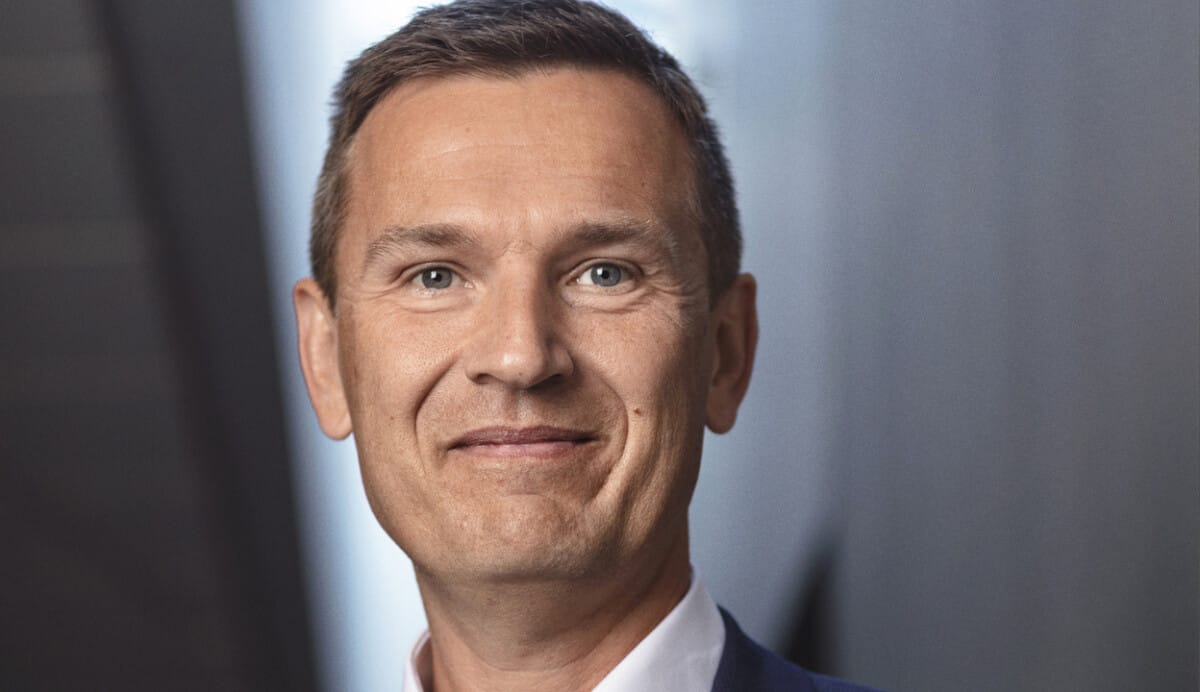

Denmark’s AkademikerPension takes on the banks financing fossil fuels

Denmark’s AkademikerPension, the member-owned pension fund for 150,000 academics, has just notched up another important milestone in its ambitious sustainability strategy. Pressure from the fund’s CIO and chief financial officer Anders Schelde on Denmark’s Danske Bank contributed to the lender announcing plans to end new financing to oil and gas E&P companies that don’t have a credible transition plan in line with the Paris Agreement.

Last year, Schelde stood up and challenged Danske executives at the bank’s AGM, the only institutional investor to ask the bank climate questions. Schelde, who describes his approach as “polite, constructive criticism, focused on the bank’s lending policy,” contributed to Danske drawing up a more comprehensive climate strategy that included axing large parts of its fossil fuel financing programme.

Acting on behalf of AkademikerPension and client fund LD Pensions, he says a close relationships with the Danish companies that make up a large chunk of AkademikerPension’s internally managed equity portfolio is a central seam to strategy.

“Danske Bank is now demonstrating leading practice in some areas with its updated policy. They have committed to stop asset or project finance and corporate finance of new upstream oil and gas exploration and production,” adds Kelly Shields, campaign and project manager at London-based pressure group ShareAction.

Danske Bank’s commitment is important because it restricts corporate finance which accounts for the vast majority of bank lending, and much more than project finance. “The frontier is shifting in the level of ambition of investors and their asks of banks. We are seeing a growing interest from investors to tackle the financing of oil and gas expansion.”

Now she says Danske Bank should go further still by also restricting finance to infrastructure related to new oil and gas like pipelines.

Sponsored Content

New frontier

Like Shields, Schelde is also convinced more banks will stop financing fossil fuels and believes investor pressure on bank lending to the industry is the “next frontier” in engagement and divestment. The reason, he explains, is because despite selling all its upstream, fossil fuel-related investments in oil majors bar an allocation to Italian oil group ENI, the pension fund remained exposed indirectly to the industry via investments in banks’ lending to oil groups.

“Recent shareholder proposals at HSBC and Barclays show we are influential, and that investor pressure is speeding up the process,” he says.

Last year, HSBC announced plans to cut direct financing and advisory ties to new oil and gas fields and metallurgical coal projects after coming under fierce criticism over its climate change policies from shareholders and environmental activists.

And Schelde is convinced investors will successfully influence banks’ lending policies because they are targeting bank behaviour, rather than their core business.

“It’s very difficult to persuade, say, Shell to stop taking oil out of the ground. But it’s easier to get HSBC to stop lending to Shell.”

It’s why Schelde has no plans to divest AkademikerPension’s holdings of banks with oil and gas lending programmes. “If we stay invested we can try and change their behaviour. However, one factor that might make us divest from a bank is if we got no response from the board.”

Divestment at AkademikerPension is based on two key criteria – it must have a positive, or at least neutral, impact on the portfolio’s long term returns and be “the responsible thing” to do.

Schelde says the pension fund would consider investing in oil groups again if they aligned their business with the goals of the Paris Agreement. “They can continue to produce oil and gas,” he explains, continuing. “It’s pretty clear what oil majors need to do. They need to stop exploring for new reserves; pay out that capex spending to investors or invest in renewable energy.”

Yet despite record profits, oil majors don’t seem to be changing strategy. “Some money is going back to investors and they are investing more in renewables, but it’s only a fraction compared to their fossil fuel business where we are seeing money going into exploring and building out reserves.”

ARTICLE 9

Alongside successful engagement, AkademikerPension’s sustainability strategy encompasses a new allocation aligned to Sustainable Finance Disclosure Regulation (SFDR) Article 9 whereby 100 per cent of the assets in the fund must be sustainable. The strategy uses a quant process to select equites, after which the allocation is actively managed.

“We use quantitative methods to narrow down the universe,” says Schelde.

The new allocation builds on a similar portfolio in place for the last three years. However, this allocation was unlikely to hit strict Article 9 criteria because it also had “some tech stocks” in the portfolio.

Leave a Comment

PGGM: Impact begins at home

PGGM: Impact begins at home

PGGM is preparing to build out the third element to its impact strategy targeting biodiversity. By focusing on food and the circular economy, PGGM aims to create most impact at home. Top1000funds.com looks at the fund's impact journey.

Sort content by

Investors urge SEC to mandate climate reporting

Global investors have overwhelmingly urged the SEC to provide corporate disclosure rules on climate. In submissions to the SEC many investors including CalPERS and CalSTRS said the rules should be mandatory.

Net zero commitments make greenwashing more prolific

The proliferation of grand gestures of sustainability, such as net zero commitments, means manager due diligence is even more important and more intensive, according to global head of research at Willis Towers Watson, Luba Nikulina.

DEI and ESG in manager ratings: Clarke’s legacy

Mercer will incorporate DEI considerations into its manager research the same way it pioneered the incorporation of ESG factors in its manager ratings process back in 2012. The integration of DEI is a parting gift from long-term global head of investment research, Deb Clarke, who retired yesterday. Amanda White spoke to her about her legacy and the investment industry’s unfinished business.

Promoting diversity won’t cut it, results will: Brown Duckett

CEOs are accustomed to stretch targets and reward outcomes, not efforts says TIAA’s Thasunda Brown Duckett, the same principals should be applied in the DEI space. She was speaking alongside CIOs from CalPERS and CalSTRS at a diversity forum co-hosted by the funds.

Asset owners’ increasingly global diversity lens

More investors around the world are looking at how to invest with a diversity lens. Amanda White examines how investors in Japan, Sweden, the US and Canada are addressing the diversity question as part of their internal organisation and in their investments and the managers they work with.

Aware Super positions for growth

Aware Super, one of Australia's largest superannuation funds, engaged McKinsey as part of the development of its next five-year strategy which the fund presented to the board in March. As it develops its next five-year plan a key initiative is how to deal with growth as it plans for an organisation that could double in size.

Previous



