
CPPIB considers impact of size

The C$328 billion ($258 billion) Canada Pension Plan Investment Board is looking at how it can maintain a 42 per cent allocation to private markets. At some point it might be possible to augment private market holdings with public-market proxies.

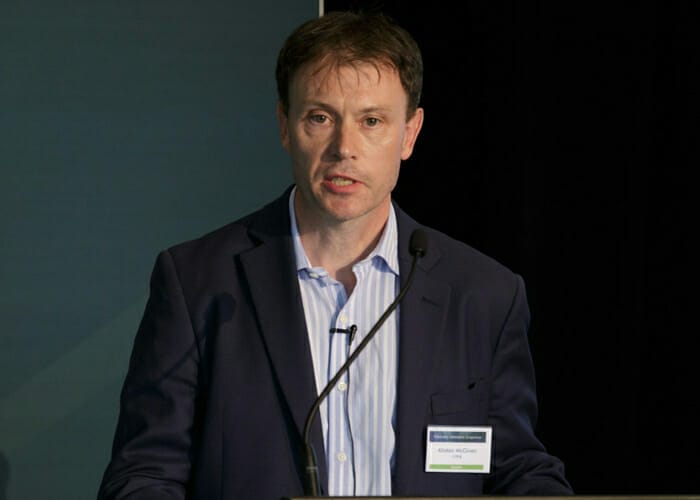
Alistair McGiven, CPPIB managing director and head of strategic tilting, says the fund was considering how the fund might retain its private markets, given its projected growth.

“One issue we are looking at is how we can retain the level of exposure we want on the private side,” McGiven says. “As we’ve grown, we’ve done a pretty good job increasing the amount in private asset classes but we are starting think about how we could retain a high share of private market assets as we continue to grow. The kind of debate we are having is whether we can augment some of what we are holding in private markets with public proxies. We don’t have an answer to that yet but it’s just one of the questions we are asking ourselves.”

CPPIB invests in private markets directly and through funds, and was relatively early into the space, influenced by former chief executive Mark Wiseman, who had a private-equity background.

In 2003, the fund had 3 per cent of its assets in private markets and has increased that exposure over time to the 42 per cent it has now.

The Canadian Government recently announced it was expanding the Canada Pension Plan and is increasing contribution rates from 9.9 per cent to 11.9 per cent McGiven says the fund is examining what sort of investments it will hold when it has assets of $1 trillion and beyond.

Sponsored Content

“There’s a capacity issue. We are looking at all asset classes to see if it makes sense to be in them or not. When you’re $1 trillion, there are some assets that can’t help you anymore so we might need to review their role in the fund,” he explains.

McGiven points out that private investments are expensive, and if the same proportion of those assets is maintained as the fund grows, there isn’t the benefit from the economies of scale like in public markets.

CPPIB has a 6.7 per cent 10-year annualised return.

“We have had very good returns, and there has been a negative bond/equity correlation, so the Sharpe ratio has been very good. Will this be sustained? Dangerous for us to assume that negative correlation will remain. We need to be at least testing whether we are robust,” he says.

McGiven says CPPIB believes there are three main sources of investment returns: security selection, diversification and strategic tilting. The strategic tilting, for which he is responsible, is tactical asset allocation done at the total-fund level, similar to what New Zealand Super does.

“It’s a global macro, tactical asset allocation overlay…It’s very high scale,” he says. “We try to figure out the intrinsic value of the asset classes and when they are cheap we’ll go long and when they are expensive we’ll go short. But value can be one of those things you have to be patient [with and let] play out. Because we have a long-term horizon, we have an edge and can be more patient, maybe, than the average investor – and can be rewarded for our patience.”

Leave a Comment

Nest favours institutional-first managers as retail exodus pressures private credit

Nest favours institutional-first managers as retail exodus pressures private credit

Nest, the largest workplace pension in the UK, says that private credit managers who prioritise institutional clients will be more favourably viewed. The £61 billion ($82 billion) fund has awarded a £450 million ($605 million) US direct lending mandate to Crescent Capital this month, citing the manager's institutional-client-first approach as a key attraction.

Sort content by

Frampton shows the way as APFC turns to China, private equity

Opportunity in China, risk aversion in fixed income as spreads remain tight, and turning up the volume in private equity: Alaska Permanent Fund Corporation's Marcus Frampton talks latest strategy at the $82 billion fund.

Looking past the hype to the real benefits (and risks) of AI

AI is on every investor’s lips as a technology that will revolutionise businesses and industries. The Fiduciary Investors Symposium heard that looking past the hype to the tangible, on-the-ground benefits presents some genuine challenges for asset owners and the managers they often employ to do it for them.

‘Golden age of private credit’ comes with idiosyncratic risks: Pictet

Pictet private debt head Andreas Klein says “mainstream” private credit investments have run their course as buyout activity decreases and global regulators up their oversight. Instead, investors should consider “micro-niches”, but he warns these emerging corners of the market come with hidden and unique risks.

Stock-bond correlation ‘shock’ prompts portfolio rethink

For the past two years the correlation between bonds and equities has been positive, counter to the long-term assumed relationship between the asset classes. The challenges for asset owners include determining whether the change is transient or long-term, and what it means for portfolio construction either way.

Investors must (creatively) make room for sustainable assets in portfolios

The investment path to net zero may not always be clear. With no dedicated asset class and shifting risk profiles for energy transition-critical assets, the Fiduciary Investors Symposium heard that asset owners need to be flexible and ready to creatively make room in their portfolios when the right opportunities arise.

New Jersey opens up to Next Gen managers

New Jersey already invests 18 per cent of its $11 billion private equity programme with emerging managers. Now it's rolling out its platform to Next Generation real estate and private credit managers too

Previous



