
CalSTRS’ sustainability strategy: Net zero and investing in opportunities

CalSTRS has been integrating climate change into its portfolio for decades, but the strategy took a leap forward in 2021 when the pension fund adopted a 2050 net zero commitment that included an interim goal to reduce emissions from the portfolio by 50 per cent by 2030.

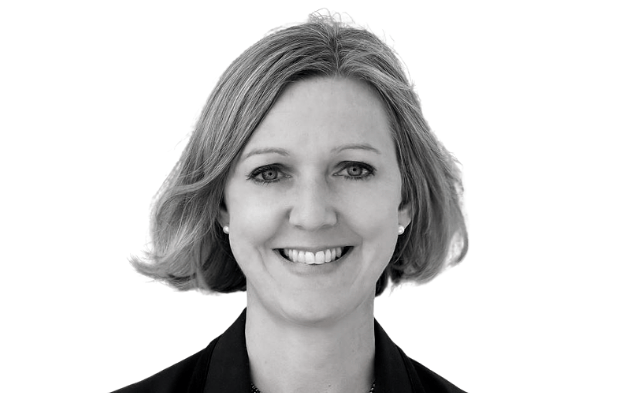
Kirsty Jenkinson, investment director for the sustainable investment and stewardship strategies at the pension fund, was initially sceptical of whether a net zero target would be the right approach. Two years in, she is convinced it has provided a new level of focus and anchor to climate investment at the $325.9 billion pension fund for California’s teachers.

Net zero is now one of the pension fund’s core strategic priorities, sitting alongside its 7 per cent return hurdle, benchmark investment and commitment to DEI. It has allowed the 220-person investment branch overseeing a complex, multi-asset class portfolio to align under one goal.

“Having a common shared goal, even though it is many years out, can’t be underestimated when you are a large allocator with multiple different strategies,” she says.

Measuring and reducing emissions

One of the three tenets in CalSTRS’ net zero pledge is to measure and reduce emissions. CalSTRS is in the process of allocating 20 per cent of its listed equity allocation to a low carbon index that could reduce portfolio emissions by 14 per cent. The strategy is being implemented over the cycle and allows the passive investor to reduce emissions in a way that also meets its risk parameters by limiting the level of active risk.

Following board approval in May 2023, the team extended emissions reduction to fixed income, targeting a 12 per cent reduction in emissions in corporate credit also via a bespoke index.

Sponsored Content

“Corporate credit accounts for a significant amount of our fixed income so we are focusing on the priority allocation,” says Jenkinson.

Both CalSTRS public equity and corporate credit portfolios are around 50 per cent aligned with a 2-degrees scenario, and about 20 per cent aligned with a 1.5-degrees scenario.

One of the biggest challenges is accessing emissions data and tracking emissions reduction at a company level to a total portfolio level.

“The data we get on emissions doesn’t pipe into the financial tools we use to govern the whole portfolio,” says Jenkinson. CalSTRS is working with MSCI to try and bridge the gap and measure and manage net zero public market emissions exposure and reduction efforts.

Elsewhere Jenkinson is using CalSTRS influence with external managers to try and improve emissions data and analysis coming into the fund, particularly the hedge funds in the risk mitigation portfolio.

“We have interesting partners that are helping educate us,” she says. “We can use our influence as a client to see how we can progress.”

Emissions reduction in private markets is more challenging. CalSTRS uses the GRESBY framework to track emissions in its direct and externally managed real estate allocations. In private equity and infrastructure, the team is developing an internal classification to determine the trajectory or pathway of an asset from grey to olive and green.

SISS solutions

The challenges of reducing emissions in private market is one of the reasons the pension fund is using private markets to home in on opportunities.

“It’s worked well for us to have a focus on emission reductions and climate solutions,” she says.

Investing in opportunities got a boost in 2021 when CalSTRS launched a new sustainable investment and stewardship strategies private portfolio (SISS) targeting climate investment opportunities across private equity, real estate, and inflation sensitive assets particularly.

The portfolio which has already hit $2 billion (although it’s not all fully invested) benefits from steadfast commitment from the leadership and board, despite heightened liquidity concerns at a total fund level because of the macro environment.

“The portfolio is directionally supported by our leadership and board,” she says.

Of the portfolio’s two sleeves, one involves scaling investments with existing external managers. The other allows staff to develop new investment partnerships that allows capital to flow across assets and the risk spectrum, from infrastructure to venture and into structures that sit between the risk return hurdles of the asset classes, typically a difficult fit because of underlying benchmark or other considerations.

The platform also allows investments in spun-out, first-time funds, with new players and different structures in a specific departure from CalSTRS typical investment with established partners. It is allowing the pension fund to tap into evolving, fast-moving investments and expand its expertise in the intersection between risk-adjusted returns and climate change drivers.

“We felt we needed to be open to building new structures with new players who understand the policy, technology and physics of the transition.”

Asset allocation modelling

In another development, CalSTRS is integrating climate scenarios into its asset liability modelling study, which guides asset allocation and is updated every four years. Since there is no fit-for-purpose way to pipe climate risk into the asset allocation, the process involves estimation and trial and error, she says.

“The architecture is still being built.”

Furthermore, as the team tries to understand the interplay between risk, return and emissions, they hope to build a better understanding of where the market is moving regarding emissions, physical and transition risk. From this they will be able to calibrate what risk CalSTRS is prepared to take versus the market.

“It’s a new concept, and we don’t have perfect answers.”

CalSTRS is not happy taking significant active risk, yet the team doesn’t’ know how much active risk they are taking by putting in place net zero strategies to reduce emissions and investing in climate solutions, she continues.

“I do worry about this, and because there is no visibility on how the market is pricing risk, we have to assume it may respond at the last moment, when the crisis happens.”

“We are very used to understanding where, say, inflation is going, but the market has no way to calibrate emissions. We don’t have a clear way of saying emissions are doing this and physical risk is doing this and therefore we need to be aware of this,” she says.

Jenkinson concludes that climate investment also brings considerable change management. It requires building different and enhanced skills, yet the topics are diverse and rapidly changing.

“Not everyone follows climate policy, and nor should they have to. Physics, science, and policy expertise doesn’t exist in every team. We are spending lots of time on how to work smarter – how to skill-up is really important.”

Leave a Comment

How CPP is evolving risk management for a faster, more interconnected world

How CPP is evolving risk management for a faster, more interconnected world

In an environment where multiple risks are emerging and their effects are compounding on the portfolio, CPP Investments' chief risk officer Priti Singh says the $572 billion fund is rethinking risk management from the ground up, shifting from reaction to preparation and embedding risk thinking earlier in investment decisions. She speaks to Amanda White about the fund's risk approach.

Sort content by

Much to learn from New Mexico ERB’s alternative investments play

The New Mexico Educational Retirement Board’s aggressive move into alternatives has not been without hurdles. Chief investment officer, Bob Jacksha, spoke to Amanda White about the plan’s alternatives strategy, the bumps along the road and his expectations of the sector. Two years ago the $6.6 billion New Mexico Educational Retirement Board started looking for a

Inflation hedge drives ATP’s investment implementation

Denmark’s largest pension fund and the 29th largest in the world, ATP, is not leaving anything to luck when it comes to providing a guaranteed return for its members. Kristen Paech talks to chief investment officer, Bjarne Graven Larsen, about the various risk management methods the fund has implemented across its portfolio. The DKK400 billion

PGGM finds alpha via internal management of illiquids

PGGM Investments, the 17th largest institutional investor in the world, as ranked by the Watson Wyatt top 300, has introduced a number of new investment strategies and has plans to significantly increase its in-house investment management this year. mrec4inarticleinline Sponsored Content scnative1 scnative2 scnative3

Hedging pays off for Industriens Pension

Industriens Pension is one of very few pension funds globally to achieve a positive return in 2008. Kristen Paech talks to chief investment officer, Jan Ostergaard, about what drove the positive return, and the fund’s upcoming merger with two small Danish funds. mrec4inarticleinline Sponsored Content scnative1 scnative2 scnative3

Stopping traffic: Bankpension’s solvency strategy

As markets turn south, remaining solvent is the biggest challenge facing Bankpension, Denmark’s 1.6 billion (US$2.1 billion) pension fund. Chief investment officer Leif Hasager talks to Kristen Paech about the measures the fund has introduced to protect against downside risk. mrec4inarticleinline Sponsored Content scnative1 scnative2 scnative3

Canada’s PSPP shifts focus to funding

One of Canada’s largest public pension plans has diverted its  immediate attention away from investments, and in particular new risk management tools, to solve its funding deficit issues. Amanda White spoke to PSPP’s plan board manager about their concerns. mrec4inarticleinline Sponsored Content scnative1 scnative2 scnative3



