
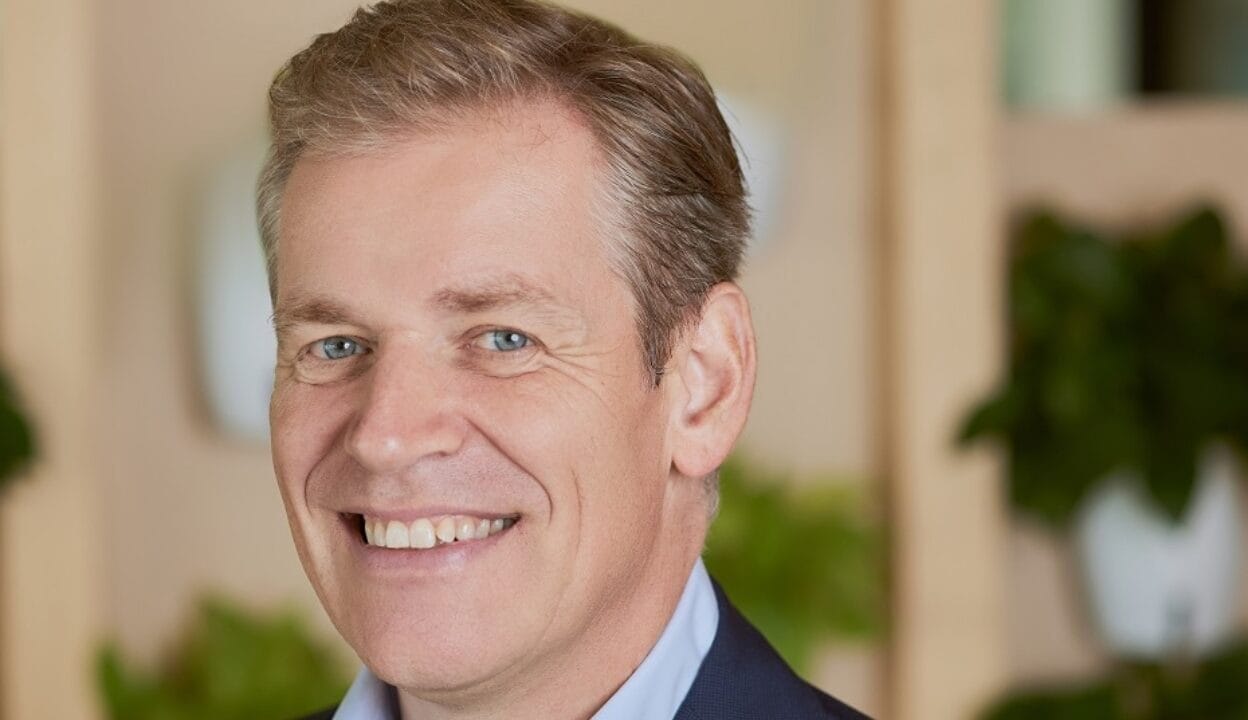

APG Asset Management, the largest pension fund manager in Europe, is so convinced by the advantage its regional office network brings in sourcing and running private assets, that Patrick Kanters, member of the APG Asset Management board and chief investment officer of private investments since 2023 is based out of Hong Kong.
Kanters – who stepped into the position when APG split the single CIO role into two distinct positions in capital markets and private investments – oversees some $180 billion in global real estate, infrastructure, private equity and natural capital out of APG’s Wan Chai office, home to a 95-person team around two-thirds of whom work in private markets, alongside teams in Singapore, New York and Europe.
He tells Top1000funds.com that Hong Kong is a prime location from which to proactively source opportunities for APG’s sole client ABP, as the €552 billion civil service pension fund seeks to not only increase its allocation to infrastructure (from 6.5 per cent to 10 per cent) and private equity (from 6 per cent to 8 per cent) from opportunities fanned by mega trends like the energy transition and digitisation, but also meet ambitious impact investment targets primarily sourced from private assets.
In early 2025, ABP requested APG cease asset management services for all other pension fund clients and manage money exclusively for ABP come 2030.
“It’s difficult structuring illiquid strategies at source when you fly in and fly out,” says Kanters, who joined APG as co-head of real estate back in 2005. “We serve on the boards of companies and funds we have co-created and that requires being in that time zone so you can attend board meetings – the strategic controls of these companies and funds need to be in the region.”
Moreover, Kanters believes the different worldview that comes from being based in Asia offers another valuable investment edge.
“The Hong Kong and Singapore teams have a different view of the world. All our local teams help ensure we have a more balanced perspective on the world, and they support our ability to come to less biased decisions which leads to a better performance.”
Still, for all its proximity to Asia’s largest market, APG’s biggest exposure in China sits in real estate concentrated in large investments in logistics and data centres in Hong Kong and mainland China. Outside this, Kanters says APG owns few private assets in China – private equity is limited and APG doesn’t own any Chinese infrastructure.
“China never really needed money for infrastructure because they fund it themselves,” he reflects.
Moreover, he says the Chinese real estate market is particularly tough because of thin trading, exacerbated by many US and Canadian investors backing out and liquidity drying up.
Allocating more to global private equity and infrastructure
APG began investing in global infrastructure in 2004 and the current allocation is around 6.5 per cent. To reach ABP’s new target of 10 per cent by 2030 (in line with real estate), Kanters says the team aims to allocate $3 billion a year focusing on mega themes.
Building out the private equity allocation to ABP’s 8 per cent target is easier, primarily because the fund is overweight in the asset class from the denominator effect of stellar returns from previous years.
APG will continue to venture into the secondaries market to sell private equity holdings. However, the team has pared back secondary sales compared to a more proactive strategy two years ago. Now sales are mostly confined to older vintages that won’t provide co-investment opportunities. He says APG rarely buys in the secondaries market because older fund opportunities don’t comply with the investor’s high responsible investment standards.
Unlike in capital markets, where APG has run different strategies for its different clients, the investor runs one strategy per asset class in private markets, so its multiple client base is aligned. As APG’s clients drop away (like construction industry pension fund bpfBOUW and PWRI, which has transitioned to the new pension system), APG’s private markets team is adjusting and adapting the risk-return of the portfolio to wholly meet ABP’s requirements, particularly around impact.
ABP wants to invest €30 billion in impact by 2030, primarily focused on private markets. Around €10 billion will be ploughed into the Netherlands, where the investor will focus on assets like affordable housing and investments supporting the energy transition.
Impact in private equity
Kanters observes that the biggest challenge inherent in impact investment is the absence of a single standard of what accounts for impact. It means investors must “come up with their own definition” that brings implementation challenges because GPs also have different definitions. APG has been able to build out its own impact standards off its success in responsible investment and by comparing notes with other responsible investors also investing for impact. “Standards will ultimately become more aligned,” he says.
Next, sourcing and committing to private equity funds focused on impact is complicated because although there are more, newer funds, they lack long track records. Moreover, investing in a fund means APG has less control over impact because the fund manager has discretion to put the money to work.
The clock is also ticking. Unlike real estate and infrastructure, where investments are typically 10-15 years, the private equity team is under pressure to invest money as assets materialise because they are held for a much shorter time. “We need to keep re-investing at a much higher pace in private equity,” he says.
Fortunately, it is easier to integrate impact in co-investment where the private equity team targets 40 per cent of the portfolio split across all regions, of which the US is the largest, followed by Europe and APAC. “Private equity co-investment and impact investing is a strong focus. We can select the investments that fit best, comply with our responsible investment requirements and lower costs.”
Impact in infrastructure
When it comes to achieving impact in infrastructure, success depends on APG’s ability to build new assets like renewable energy and transmission infrastructure.
“It’s not about buying existing assets, but about developing and adding new assets that support the energy transition,” he says.
Success requires capping development risk and negotiating fixed price development agreements and long-term power price agreements to ensure stable and predictable returns.
The team learnt valuable lessons during the pandemic when development risk in new real estate assets, including the spike in commodity prices and inflation, delayed construction. “In some ways, it was a perfect storm. We learnt a lot, particularly around mitigating development risk and sharing it with the partners involved,” he says.
He also espouses the importance of ensuring the ability to sell an asset when investing alongside others in consortia. In big ticket infrastructure, APG aims for a large minority position and therefore often invests alongside other asset owners like Omers Infrastructure, New Zealand Super and Japan’s Government Pension Investment Fund, amongst others.
An exit strategy must always be in the small print even when partnering with long-term, like-minded investors and with no initial intention to sell.
“Allocations might need to be increased or decreased, and also our long-term partners’ strategies can change,” he concludes.








Leave a Comment
You must be logged in to post a comment.
Login