
A rock and a hard place: GEPF on the challenges of transitioning coal

Reducing exposure to the risk of falling profits in coal is particularly challenging for South Africa’s 2.38 trillion rand ($122 billion) Government Employees Pension Fund (GEPF).

While other investors like the $82 billion United Nations’ UNJSPF, Norway’s $1.9 trillion sovereign wealth fund and the Netherlands’ $608 billion APG have cut or set key thresholds on their exposure to coal, GEPF’s direct exposure to the fossil fuel accounts for around 6.5 per cent of the portfolio.

Around half of that comes via GEPF’s 50 per cent, predominantly passive, allocation to listed shares on the Johannesburg Stock Exchange (JSE) in a country where the mining industry and the development of the public equity markets have grown hand-in-hand. On top of that, GEPF also has an 84 billion rand ($4 billion) stake in coal-reliant Eskom, the South African power utility, primarily in listed bonds.

But the indirect exposure is even more. Coal and the fortunes of the South African economy – where GEPF invests 85 per cent of its assets and is the equivalent of owning around a third of the economy – are also deeply intertwined.

Coal feeds roughly 85 per cent of South Africa’s electricity capacity, yet that crumbling generation is stymying the wider economy. Rolling blackouts were estimated to cost South Africa 2.9 trillion rand in 2023 and GDP growth of 0.7 per cent that same year, according to World Bank Group data.

In another highly complex characteristic of GEPF’s link with coal, any divestment must navigate the impact on vulnerable coal communities. South Africa’s multi-dimensional poverty, low economic growth and high unemployment, including youth unemployment, making the curb of investment in the industry challenging.

Sponsored Content

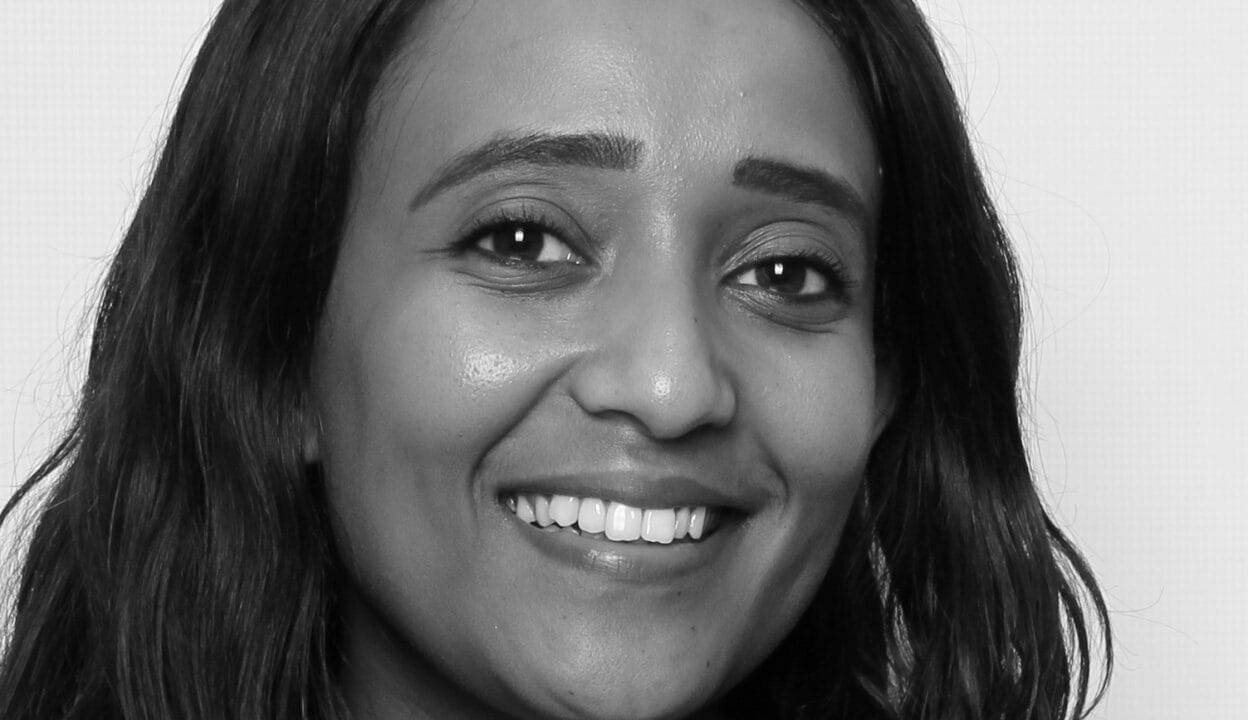
“It’s a transition conversation”, Belaina Negash, ESG manager at the pension fund where she has worked in the responsible investment team for the last 13 years, tells Top1000funds.com.

“When we engage with a company in the extractive sector, we have to have a balanced conversation that takes into account the thousands of people employed in the sector. Of course, we engage on their climate change policy but change impacts profits and therefore we must be able to balance the imperative of environmental sustainability with the need to address socio-economic disparities and once you start impacting profits, it’s going to impact people in a very real way.”

Engaging for a Long-term Transition

GEPF’s ESG strategy is shaped by a systems approach that views every ESG issue from carbon emissions to addressing historical inequalities as interconnected and interdependent. ESG is viewed across all asset classes and strategy includes active ownership and specific allocation decisions. Elsewhere, the team reports portfolio emissions across all high-emitting sectors to the investment committee in an analysis that looks at the per rand invested and carbon intensity.

“We have really tried to strengthen analysis on climate change,” Negash says.

The systems approach means divestment is a last resort. Although the pension fund has divested from companies that don’t align with best practice or meet investment return requirements, it believes staying invested is a better way to effect long term change. Moreover, issues that are externalised in one portion of the portfolio are likely to reappear in another.

“We are in a position to effect change over the long term. If we divest because of climate or other ESG issues, someone else will buy that company stock and systemically, nothing will change. It might reduce the emissions in our portfolio, but you are left with an investable universe that has got more issues than when we were invested in that company. It’s better to have conversations to effect change, and over the long-term to try and create a better system underscored by sustainable financial flows.”

In reality, divestment is also hard. GEPF is by far the largest investor in South Africa and cannot diversify away systemic risk. The pension fund has exposure to every economic sector and every type of risk

“Our investable universe is small,” she says.

GEPF uses its large shareholding to engage on carbon and science-based budgets, and the extent to which a company is investing in renewables. Negash believes it does ultimately move the needle – but points to most progress in areas other than climate.

“A decade ago, we would have conversations with investee board members about ESG metrics in their remuneration policy which was unheard of. Now we see companies being open to these conversations.”

Between 2023/2024, the Public Investment Corporation, GEPF’s government-owned asset manager that invests over 80 per cent of the portfolio, voted on 2,990 resolutions at public companies at 174 meetings and engaged 104 times on 253 ESG topics, mostly related to governance (66.8 per cent), transformation (18.2 per cent), environment (10.7 per cent) and social (4.3 per cent).

The GEPF also invests directly in sustainability via its Isibaya fund. Investments promote socio-economic transformation objectives, renewable energy, healthcare, education, and infrastructure and measurable social impact includes boosting youth employment, adding electricity to the grid and student accommodation.

Asset allocation with a home bias

GEPF currently invests less than 10 per cent overseas and has the headroom to diversify more outside South Africa. But because the pension fund’s liabilities are at home, this is unlikely to change. The portfolio is split between equities, fixed income, real estate and the Isibaya Fund.

Assets under management have grown from 127 billion rand at its formation in 1996 and, according to its latest annual report, it recorded a growth of 2.6 per cent and an annual return on investment of 4.9 per cent. The GEPF’s 10-year annualised return was 7.2 per cent for the period 2015-2024 and its funding level is 110.1 per cent.

“Mitigating climate change and promoting human rights is at the heart of what we do,” she concludes. “We believe we have the capacity to make a difference and have a fiduciary duty to consider how we invest.”

Leave a Comment

How CPP is evolving risk management for a faster, more interconnected world

How CPP is evolving risk management for a faster, more interconnected world

In an environment where multiple risks are emerging and their effects are compounding on the portfolio, CPP Investments' chief risk officer Priti Singh says the $572 billion fund is rethinking risk management from the ground up, shifting from reaction to preparation and embedding risk thinking earlier in investment decisions. She speaks to Amanda White about the fund's risk approach.

Sort content by

Postcard from Japan

For many years Japan has been an insurance-market behemoth and Japan Post Insurance Company is one of the giants with $1.13 trillion. But the industry has not been immune to change. Between 1997 and 2001 seven life insurance companies became insolvent, and there is a question mark over whether it was a low interest-rate environment

Feathering the NEST

In the United Kingdom there are around 1.5 million employers, and it is estimated more than half of them do not offer a pension to their employees. The pension system in the UK is fragmented. There are more than 10,000 mostly defined-benefit plans and, unless you are a government employee or in the high-income bracket,

Norway’s GPFG enters the property game

Last May, when Norway’s Government Pension Fund Global bought 4 per cent of the Formula One motor racing group from private-equity firm CVC Capital Partners, its goal was clear. The sovereign wealth fund, which invests Norway’s oil revenues, wanted the inside track on Formula One’s IPO in Singapore, scheduled for June. Instead, the GPFG’s foray

Irish fund “turned on its head”

Institutional investors across the planet are squaring up to changed realities in the wake of the financial crisis. It is difficult though to think of any that has found its operating environment transformed as fundamentally as Ireland’s National Pensions Reserve Fund (NPRF). “Being turned on its head is a fairly accurate way to describe the

Taking RI from in-house to front of mind

The industry needs to be better at thinking how responsible investing can be accessed by smaller funds or those lacking sufficient internal resources, David Russell, co-head of responsible investment at the UK’s Universities Superannuation Scheme, says. Russell, who will join a panel at the Fiduciary Investors Symposium in Santa Monica produced by Conexus Financial, publisher

Overseeing complexity with Rotman-ICPM

A week-long Board Effectiveness Program with peers from around the globe, including those from Canada’s HOOPP and Denmark’s ATP, has given AIMCo board member, Andrea Rosen, a new perspective on best practice. In a business environment where most people are working harder, multi-skilling, facing lower-than-necessary resourcing, staffing and margins, a week-long course could be viewed

Previous



