
Under-priced climate risk plagues pension portfolios

Climate risk remains systematically under-priced, the world isn’t on course to meet net zero and investors must prepare for the risks of climate and environmental change.

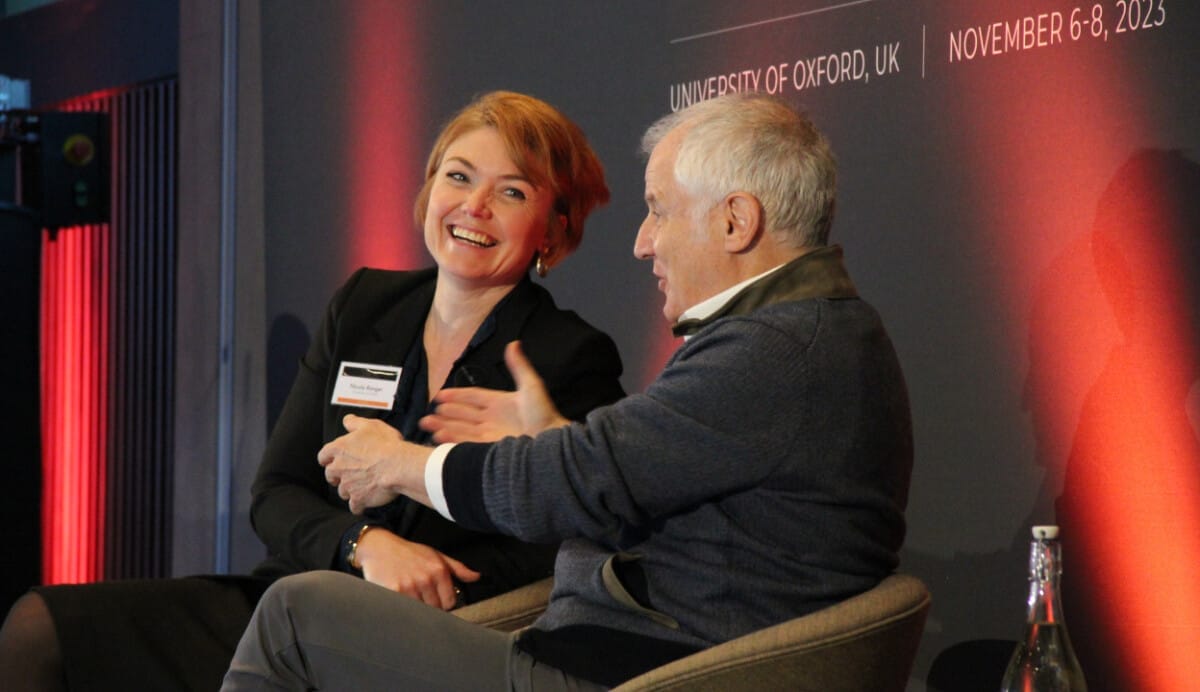
So warned Nicola Ranger, executive director of the Oxford Martin Programme on Systemic Resilience and a senior research fellow at the Institute for New Economic Thinking at Oxford Martin School, opening the second day of Sustainability in Practice at the University of Oxford. She said that climate risks are coming thick and fast, with a direct impact on assets, labour productivity, patterns in demand, supply chains and markets.

Ranger urged asset owners to re-evaluate climate risk and bring this analysis into their decision-making. For example, few asset owners report on the physical risk of climate change in their portfolio.

“Not managing this risk means the wider economy is not getting the economic signals it needs to create changes. Financial institutions need to price risk properly, and signal to the wider economy that it needs to adapt.”

If governments and countries meet all their pledges, she predicted global warming could be capped at 1.8 degrees, below the threshold for catastrophic tipping points. But she also described a much more pessimistic view based on progress to date and the fact global emissions keep climbing and still haven’t peaked. “We are not on course.”

The risks of climate change are already visible. For example, high temperatures is causing deaths, disrupting transport networks and leading to floods and drought as rainfall patterns change, impacting agricultural systems. She flagged implications for water-dependent industries and big increases in volatility of commodity prices. “Sixty percent of our food comes from five countries,” she said, predicting shocks to supply chains and impact on sovereign credit ratings.

Sponsored Content

Investors have a role to mobilize finance across geographies, countries, sectors, infrastructure and agriculture. But she warned that many investment decisions are not building resilience. For example, new infrastructure investment doesn’t always consider climate-related risk. “We are still building physical infrastructure that economies depend on, but we are not doing it in a way that is considering climate risk, risking both investors and society,” she said. Similarly, she flagged the much of the estimated annual $6 trillion invested in agriculture doesn’t consider future climate risks.

Ranger urged asset owners to take a holistic approach to managing risk and align their portfolios with resilience. They should ensure they “do no harm” and manage risk in their own portfolio to ensure it doesn’t create risks for society. For example, she said water companies have a significant impact on water scarcity.  Elsewhere she noted that data centres are exposed to climate risk like heat, and they are also water dependent. Adaption can bring returns from investing in new technology, but adaptation also incurs long term costs. For example, retrofitting buildings requires upfront investment.

“We, as a society, are mismanaging climate risk. We are putting insufficient emphasis on our safety and not properly valuing the impact of climate change or logging or exploitation of the soil. Many things doing that are impacting environment that are impacting on us.”

Leave a Comment

Macquarie: Deglobalisation the next inflection point in real assets

Macquarie: Deglobalisation the next inflection point in real assets

Global governments are partnering with private investors to boost their domestic infrastructure and become more self-sufficient in a geopolitically fragmented world, according to Ben Way, global head of Macquarie Asset Management, who said that constrained public balance sheets are increasingly reliant on private capital to meet their infrastructure needs.

Sort content by

Innovation pays off at Iowa PERS with an alpha-producing TAA

An internally developed tactical asset allocation at IPERS has produced more alpha than any other active management allocation in the second half of 2025. It's the first time the investment team have gone live with an internal idea that has made money in its early months.

Learning to see with a risk 2.0 lens

What happens if we examine past financial crises through a risk framework that acknowledges the adaptive, interconnected nature of real markets? Researcher at Thinking Ahead Institute Andrea Caloisi explores the application of a 'risk 2.0' framework to historical events. 

Best of 2025

From the DeepSeek-driven reassessment of the US’ AI leadership to the Liberation Day tariffs which plunged global trades into uncertainties, 2025 has tested asset owners’ theses around geopolitical stability, the dominance of the tech sector, and geographical diversification. Here are the top read stories of this year.

Europe rearms, defence returns surge, asset owners rethink exposure

Years of hard-line exclusions of the defence industry kept many asset owners out of one of the strongest-performing sectors. Now, as Europe rearms, investors are reworking defence policies – cautiously and under intense scrutiny.

Alaska’s APFC: Why any nudge lower in private equity will be slow progress

As Alaska's APFC mulls trimming its 18 per cent private equity allocation, the reality of getting legacy managers off the books is proving more challenging, according to deputy CIO, private markets Allen Waldrop. In an interview with Top1000funds.com, he also shares his view on secondaries and manager selection. 

CalPERS’ Stephen Gilmore on the total portfolio approach

Listen to the detailed interview between Top1000funds.com editor Amanda White and CalPERS' CIO Stephen Gilmore to gain insights into how a TPA mindset has the potential, through a shared focus on the total portfolio, to add value, simplify accountability and open new opportunities for investments.

Previous



