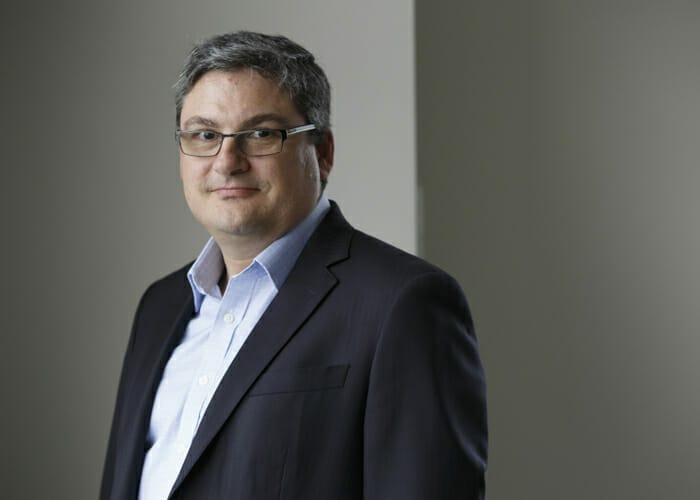

Investment industry needs to rethink strategy: Future Fund CEO

Persistently challenging market conditions mean 60:40 needs a re-think according to Raphael Arndt, chief executive of the A$240 billion Future Fund.

“The conditions where that worked don’t exist anymore,” he said. “It’s time for investors to take notice of it and act.”

He said there was a need to rethink investment strategies to cope with the difficult era ahead of stagflation, uncertainty and volatility, the response to climate change and populism increasingly shaping government decisions, prompting them to take a more aggressive approach to regulation.

Arndt said markets would be impacted by central banks withdrawing liquidity from markets- reversing policies which had been provided tailwinds for investors since the global financial crisis, a growing US Federal budget deficit which would “suck in liquidity” from investors around the world, and the pressure for decarbonisation and investment in renewable energy.

He said the period ahead was akin to the period in the wake of the US Civil War and the railway boom of the late 1880s which was followed by booms and busts in the US and Australia.

“We want to start a conversation on this as we think this is profoundly important,” he said.

Sponsored Content

The fund is keen for the investment community to start discussing the implications of the ideas in its latest position paper: The death of traditional portfolio construction.

Managing the portfolio

In response to the investment challenges Arndt said the Future Fund has reduced its exposure to equities, which are now down to 25 per cent of the portfolio − compared to a more conventional portfolio which could see equities as high as 60 per cent − and increasing investment in private equity, commodities including gold for the first time and infrastructure assets.

The Future Fund has also signalled that it sees value at home in the current environment where it expects the Australian dollar will do well and is cautious about the outlook for the US dollar.

“We’re looking for inflation protection in property and infrastructure assets, especially in Australian infrastructure assets,” he said.

“We think more domestic exposure for an Australian investor makes more sense than it did before because of political risk and deglobalisation issues.”

The Future Fund has picked up a 3 per cent stake in Sydney airport from the New York-based Global Investment Partners which was part of the consortium of institutional investors which took the ASX listed company private in a $24 billion deal finalised in early 2022.

Other recent deals for Australia’s sovereign wealth fund including being part of a consortium in 2021 which bought Telstra’s mobile phone towers in a $2.8 billion deal and buying a 24 per cent stake in Canberra Data Centre in 2020.

Ardnt said he expected Australia’s commitment to move to net zero would provide increasing investment opportunities locally.

In 2021 it bought renewable energy company Tilt in a deal with QIC which saw the company, which was listed on exchanges in Australia and New Zealand, delisted, and its Australasian assets split between two owners.

The Future Fund already had exposure of more than $1 billion to seven different infrastructure assets in Australia.

“We already have a lot of exposure [to traditional infrastructure in Australia],” he said. “We think there is a huge demand [for investment] to decarbonise the economy.”

Investment mandate

Under its enabling legislation, the Future Fund is not allowed to invest directly or to own companies, having to do its investments through external funds.

The mandate for the Future Fund itself includes an investment target of 4 to 5 per cent above inflation over the investment cycle with the other funds under its umbrella each having slightly different mandates.

Ardnt said achieving returns of CPI plus 4 to 5 per cent was “incredibly challenging” in the current environment.

“We’re using every tool in our kit and we have more than most. We think we can, but it will be really challenging for us,” he said.

Arndt, who has a long career in infrastructure investment, joined the Future Fund as head of infrastructure and timberland in 2008 after six years as investment director with infrastructure investment specialist, Hastings Funds Management. He was appointed chief investment officer in September 2014 and was promoted to the role of chief executive in July 2020.

When it was founded, it was feared the Future Fund’s investments could cause shock waves in the Australian share market if it were rumoured to be interested in a specific company or sector.

Arndt said the fund had “vastly reduced the amount of equities we hold” because of its view that unlisted assets such as private equity and infrastructure provided much better protection against inflation.

With expectations of a prolonged period of slow growth for the world economy, the fund believes that returns from the share market will be lower and more riskier than in the years past when they were fuelled by years of low interest rates and other aggressive stimulatory policies from central banks.

The shift in thinking has seen the fund make its first investments in gold.

“Commodities should do well in a period of high inflation,” he said and the push to renewable energy would lead to an increase in demand for commodities which Australia owns.

The next CIO

Arndt said the Future Fund would look for a new chief investment officer in 2023 following the departure of former CIO, Sue Brake, last June for family reasons.

Brake had been CIO since December 2020, taking over from Arndt when he became CEO after six years as CIO.

The Fund last year appointed three deputy CIOs reporting directly to the chief investment officer – Wendy Norris, deputy CIO in charge of change and innovation, Ben Samild, deputy CIO in charge of portfolio construction and Alicia Gregory, deputy CIO private markets. The Future Fund now had 85 people in its investment team.

Arndt said he had been doing the job of CEO and CIO in recent months since Brake’s departure because of the work being undertaken for the position paper but the fund would begin thinking about the new role early in the year.

Craig Thorburn, director, in the CIO’s office at The Future Fund will speak on the position paper at the Fiduciary Investors Symposium in Singapore from March 7-9. For more information and to register click here. For asset owners only.

Asset Owner:Future Fund

Leave a Comment

The Austin advantage: Texas Teachers talks optimism, innovation and growth

The Austin advantage: Texas Teachers talks optimism, innovation and growth

Jase Auby, TRS's celebrated CIO, explains why TPA doesn't fit with its culture; why community push back on data centres could turn out to be an investor advantage, and argues the case for continuing to invest in fossil fuels. Top1000funds.com sat down with the CIO in his Austin office for an all-encompassing conversation.

Sort content by

Norway’s SWF resembles index fund; needs clarity of mandate

The largest sovereign wealth fund in the world, Norway’s Government Pension Fund Global, resembles an index fund and is not making the most of its tracking error boundaries according to a review of the active management of the fund by a team of specialists who recommended more clarity of mandate.

How CPP Investments uses leverage: Lessons for CalPERS

The CIO of Canada Pension Plan Investments, Edwin Cass, shares insights on the benefits of leverage, the impact on liquidity and the governance structures for success.

Impact: ‘Losing the plot’ or better long-term returns?

Giant Dutch pension provider, PGGM, has been a leader in embracing 3D portfolios shaped around risk, return and impact. Top1000funds.com talks to Piet Klop the new head of responsible investment about the journey so far and what is next in linking the portfolio to positive real-world outcomes.

Border to Coast: Securing access to the best managers

The United Kingdom's Border to Coast pension pool has just mandated to a new private markets managers. Mark Lyon explains how the manager accessed the brightest and the best. The private markets allocation is on track to deliver promised fee reductions, despite mandating to expensive, sought-after external managers.

SWFs invest record amounts in VC

SWFs invested record amounts into venture capital last year with VC allocations ballooning. Overall assets were boosted by four new SWFs: Azerbaijan, Bangladesh, Cape Verde and Rio de Janeiro. While Israel, Namibia, Bahamas and Mozambique will all launch this year.

Long Covid for the global economy

Prevention is the balm for global economic shock, says respected central bank adviser Professor Warwick McKibbin who says the world’s economic future is uncertain and inflation is likely to remain under a persistent pandemic.

Previous



