
GPTB shows pension transparency improvement

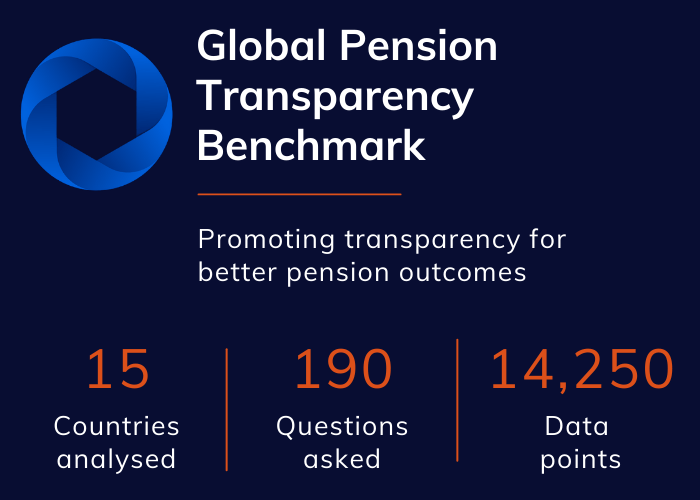
The transparency of pension fund disclosures has improved in the past year across the 15 countries and 75 pension funds measured in the Global Pension Transparency Benchmark, a collaboration between Top1000funds.com and CEM Benchmarking.

The GPTB, now in its second year, examines the transparency of disclosures across four drivers of value, namely cost, governance, performance and responsible investing.

In this second year, governance disclosures showed the biggest improvement with the average score of 65 out of 100 marking an improvement of seven from last year’s average score of 58. Governance was the best overall average score of the four factors.

The Canadian funds continue to excel in this category which CEM Benchmarking’s Michael Reid says is consistent with their reputation for excellent governance.
In last year’s review CEM noted that governance scores were most closely correlated with the overall score: good governance produces positive results and creates greater incentive (or perhaps less disincentive) to be transparent with stakeholders.

This year responsible investing disclosures showed an equal correlation with governance. Good governance allows funds to move beyond simply managing assets and towards addressing wider environmental and social issues.

The overall average performance score was 62, a slight decline from 64 last year and the second highest scoring factor after governance. The performance factor was the only factor to have a decline in the score this year. Average country scores ranged from 43 to 84.

Sponsored Content

The average country cost factor score was 48, unchanged from last year’s review, with individual scores ranging from 10 to 77.

The average country score for responsible investing was 49 out of 100 up from 42 in last year’s review, marking the biggest relative improvement among any of the four factors. These improvements mean that responsible investing is no longer the lowest scoring factor overall, having surpassed the average score for the cost factor. Improvements to disclosures were evident across all components and most countries. RI did continue to have the greatest dispersion of scores reflecting that countries are at different stages of implementing responsible investing within their investing framework. Average country scores ranged from 11 to 77, a slightly smaller range than last year.

“It was apparent from the reviews that many funds are actively taking steps to improve communications on responsible investing to stakeholders. In particular, many funds are expanding their disclosures to include quantifiable measures and progress towards climate related targets,” Reid says.

The GPTB ranks countries on their disclosures and found the following countries to be the outstanding performers in each category:
• Canada for governance
• The Netherlands for cost
• The Netherlands for responsible investing
• The United States for performance.

The Netherlands continued to lead the way in cost disclosure with the highest country score of 77. Scores were tightly banded from 71 to 89 and the top four cost factor scores were held by Dutch funds.

The Netherlands also ranked number one in the responsible investing factor, usurping last year’s winner of Sweden, with a score of 77. Both countries had improved disclosures over the past year. The Nordic countries – Sweden, Denmark, Finland, and Norway – continued to do very well on RI as a region, with all countries receiving scores well in excess of the overall average.

In the performance factor, the components with the highest scores continued to include asset mix and portfolio composition and risk policy and measures. Similarly the lowest scores were seen for asset class returns and value added and benchmark disclosures.

The US funds continued to lead the way, with an average country score of 84 for the performance factor. The US funds typically had extensive and good quality reporting across all performance components.

To examine the results for 2022 across factors, countries and the underlying funds click here.

Leave a Comment

Sampension: Why there are many reasons to be optimistic

Sampension: Why there are many reasons to be optimistic

Now is not the time to reduce risk, argues Henrik Olejasz Larsen, chief investment officer of Sampension, Denmark’s $50 billion pension fund for public and private sector employees. In an interview with Top1000funds.com, he says corporate profits have not deteriorated, and although the market has been tested from multiple directions, the underlying optimism driving equities is strong enough to overrule the negative impact of geopolitical risk.

Sort content by

Billions in dry powder waiting for signs of distress in real estate

The challenges currently outweigh the opportunities in many classes of real assets, and funds have billions in dry powder waiting for better deals, but strong fundamentals will ultimately prevail in the long term, said the head of asset manager Nuveen’s real assets business. The listed real estate sector was last year “trading at some of

60/40 may be ‘flipped around’ as fixed income appeal rises

After more than a decade of high-priced bonds, fixed income is now compensating investors more than many asset classes, argued Raymond Sagayam, chief investment officer, fixed income at Pictet Asset Management in the United Kingdom.

Machines can now detect when bullish executives doubt their own words

Three major trends have converged to drive growing appeal in new alternative data classes of quantitative investing, according to a leading quant researcher. “Quants like us who were in the right place at the right time in history can take advantage of the confluence of these three major secular trends,” said Mike Chen, head of

Sweden’s AP Funds emphasise the long-term as returns take a hit

This time last year, Sweden’s four buffer funds reported the best returns in their history. Fast forward 12 months, and the four funds have posted losses thanks to allocations to equities and fixed income dragging their portfolios down.

Tech focus: How Canada’s BCI created a centralized trading framework

Canada's BCI, the $211.1 billion asset manager, has transitioned to an active in-house global asset manager requiring robust systems, processes and specialised expertise. A recent White Paper explains how the process has led the investor to build a value-added, modern centralized trading framework.

Investors can’t afford to ignore China risk: Kotkin

A video interview with geopolitical expert Professor Stephen Kotkin looks at the investor implications of the Russia Ukraine conflict, the recalibration in the US China relationship and where the "real" geopolitical risk lies.

Previous



