

The synergy of talented individuals working together is the key to unlocking organisational and portfolio alpha, according to an indepth new study of 26 asset owners including the Future Fund. The study’s author Roger Urwin of the Thinking Ahead Institute discusses the challenges and opportunities of this combinatorial power.
The Thinking Ahead Institute collaborated with the Future Fund and 25 other asset owners in an in-depth exploration of asset owner practices, the TAI Asset Owner Peer Study. These asset owners were carefully chosen for their robust governance, substantial size, and global perspectives. The group included nine from the Americas, eight from Europe, and nine from the Asia Pacific region—a well-balanced representation drawn from major pension funds and sovereign wealth funds. My privilege as the author was to get considerable attention from C-suite executives working through peak busy times.
The soft stuff
Among the peers, a recurring theme emerged: “the soft stuff is the hard stuff.” In conversations with CEOs and CIOs, people-related issues surfaced a remarkable 436 times. The context centred on how asset owners attract, develop, and deploy their professionals to achieve the hard-won “organisational alpha” via a combination of people, processes, and capital. This synthesis occurs through effective governance, organizational culture, talent management, leadership and technology.
The study examined alpha from two perspectives: the portfolio (how it is constructed to add value) and the organisation (how the organisation is able to add value in creating the portfolio). One success factor stood out: the synergy of talented individuals working together.
While managing complexity and workload growth remain the top challenge for 73 per cent of the group, attracting and retaining talent closely follows at 65 per cent. The quality of asset owner teams is definitely improving, but it must continue to do so given growing complexity and shifting risk landscape. An overwhelming 88 per cent of respondents believe that systemic risks – such as climate change and geopolitical tensions – will increase over the next 5-10 years, while all the peers present to discuss the results thought that systemic risks are seriously under-estimated and need urgent attention. In an investment landscape marked by heightened risk and uncertainty, critical thinking is paramount. Relationship capital, supporting innovative ideas, becomes very valuable. The group emphasized the need for risk management to broaden, deepen, and lengthen its scope.
Organisations’ successful evolution hinges on self-awareness, informed by peers and competitors. As we face an uncertain future—one that may differ significantly from the past and won’t be as kind as the past has been —this self-awareness becomes even more critical.
Our study highlighted the importance of collaboration and combinatorial benefits in a myriad ways. Teams play the central role in decision-making; insourcing and outsourcing complement each other; investment and tech specialists require a shared language; collaborative stewardship models are on the rise; collective action and systems leadership gain prominence. Being joined-up has developed a golden aura in which the whole truly exceeds the sum of its parts.
But this combinatorial power is a big ask in three respects: first, in requiring integrative thinking – adapting to inevitable trade-offs between opposing points and building creative combinations that work better than siloed answers; second, in applying systems thinking – connecting dots, spotting patterns, and socialising solutions; and, third, in using systems leadership to see problems as shared challenges and approaching them holistically to produce cooperative solutions.
To adapt, CEOs and CIOs need to work on cultivating inward savvy (authenticity, self-awareness, critical thinking, visionary insight, and emotional intelligence), and outward agility (acting as ambassadors, authoritative voices, collaborators, diplomats, and experts).
The hard stuff
These asset owners are very capable organisations. For 73 per cent of them, governance is a strength. For the remainder governance comes with constraints more to do with the organisational settings from the past than the board of the present.
These organisations, by and large, have good boards although the proportion of independent experts should surely be higher – the group average came in at around 49 per cent. If these asset owners are going to do justice to their increasing challenges, they will need boards with greater domain knowledge and cognitive diversity. One hopeful sign is that most boards have increased their female representation to 41 per cent.
Two significant challenges loomed large to all funds: portfolio construction and sustainability integration. Regarding portfolios, the trend leans toward total portfolio approaches (TPA) in which every investment competes for capital based on meeting fund goals rather than the benchmark comparisons that drive strategic asset allocation approaches (SAA). Currently, 35 per cent have adopted TPA, and a further 54 per cent are moving in that direction.
Sustainability-wise, 65 per cent of these funds embrace universal ownership and 3D investing where funds seek to balance risk, return and real-world impacts on the premise that “the returns we need can only come from a well-functioning system, and we, alongside others, can contribute to its success.” A total of 69 per cent have a commitment to net-zero.
The peers all recognise their transformation to a more complex business model pursuing multiple objectives. Achieving this transformation demands vision, process, and above all innovative thinking. Like the use of balanced scorecards to mark progress and support decisions (this had total support in the peer discussions). And like the deepening of investment beliefs to dial in systems thinking.
But here’s the rub: just when change is paramount, asset owners are grappling with peak busy conditions. Business-as-usual grows ever more complex, so the critical initiatives in business-beyond-usual struggle for attention. Asset owners need to work on a simplification response to complexity; and to streamline the investment model using total portfolio thinking and 3D investing; and address risk in both its traditional shape and its systemic form in which climate risk and geopolitical risk have escalated. This will involve assessing risk more broadly, deeply and accurately with long-term considerations ascendant. They will need to think in systems terms to build the resilience for the rocky road ahead.
These asset owners are smart and know the direction of travel required. They know they need a system to manage a system. They are prepared to adapt but they will need agility and grit to be successful with the re-set button.
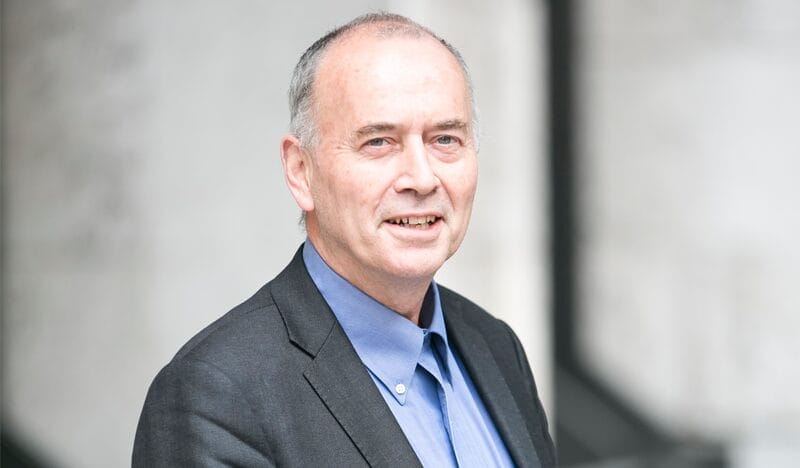
Roger Urwin is global head of investment content at WTW and co-founder of the Thinking Ahead Institute.








Leave a Comment
You must be logged in to post a comment.
Login