
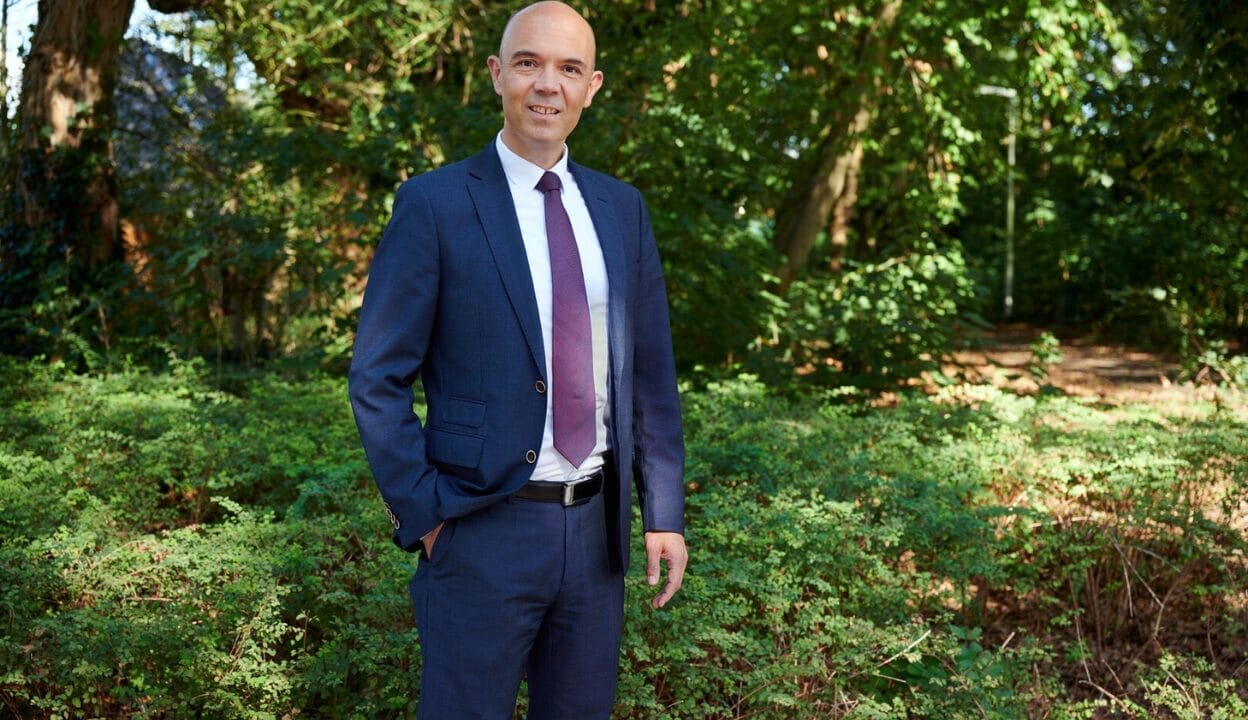

The AI boom is nearing its end, according to Thijs Knaap, chief economist at APG, the Dutch asset manager overseeing €577 billion ($640 billion) on behalf of 4.6 million participants across a range of different pension funds. He warns that every innovation, including AI, experiences a peak of inflation expectations which are not fully realised.
“My sense is that we are nearing the end of that peak, and AI may not be as big as we think,” he says.
Knaap explains that Nvidia, the chipmaker producing the technology that will support large AI systems, is a bellwether for the boom, coming to dominate the US stock market during a rally that has pushed its share price up 160 per cent year to date and given the company a market capitalisation of $3 trillion. The company’s growth has driven more than a quarter of the gains on the S&P 500 over the last year.
Insight into what lies ahead can be gleaned from analysis of Nvidia’s price-to-earnings ratio (the stock has a price that’s over seventy times the earnings) rather than the company’s sky-high share price, says Knaap.
“This means that investors expect the company’s revenue and profit to grow even further. The big question… is what the profit growth will be. It’s great that the company is so successful now, but will this trend continue?”
He says the risk of another company appearing on the horizon able to produce a cheaper alternative to Nvidia’s chips could topple the company from its unassailable position as the “lead prince” in the AI carnival.
“This could be very challenging for the chipmaker to maintain this growth.”
With Nvidia’s annual turnover predicted to near $100 billion, Knaap observes “that’s an increase of more than 100 per cent.” He says the company’s profit alone is roughly equivalent to the GDP of the Dutch province of Overijssel which has a population of 1.2 million people. In comparison, Nvidia employs around 30,000 people.
Earlier this month, a delay to its next generation of chips, known as Blackwell, posed a potential barrier to Nvidia’s continuing to grow at pace. In recent results, the company’s year-on-year growth drove another record quarter but it was less than the 262 per cent jump in revenue it had reported in the previous quarter.
APG does not disclose its total position on individual stocks within its public equity allocation. The asset manager with vast in-house expertise manages approximately 75 per cent of assets internally. The equity portfolio is divided between developed markets, fundamental and quant strategies and developed markets small cap and emerging markets.
Prepare for a US rate cut in September
Knaap continues that the Federal Reserve is likely to cut interest rates in its September meeting given growing concerns regarding rising unemployment. He said inflation seems to be under control and the Fed is now switching to focus on the other element of its dual mandate – labor market figures.
“There are particular concern about rising unemployment. At 4.3 percent, it’s still on the low side, but it’s a full percentage point higher than a year and a half ago, and that rise seems to be accelerating,” says Knaap
He voices his surprise that American statisticians seem to struggle with tracking the number of jobs following a recent unexpected downward revision. “In the Netherlands, we’re used to everything being perfectly administered, and we know exactly how many jobs there are, but in the U.S., it’s much less precise.”
He said any cut in US interest rates is designed to ward off recession and the ensuing impact of layoffs and people spending less money. But he says a recession still feels far off.
“The Fed wants to get ahead of that dynamic, which is why they are now starting to lower interest rates, even though unemployment is still on the low side. They’re playing it safe and will probably start with a small cut.”








Leave a Comment
You must be logged in to post a comment.
Login