
AP2 returns active Chinese equities back to quant

AP2, Sweden’s SEK 400 billion ($38.8 billion) buffer fund, recently divested its allocation to three Chinese asset managers overseeing an allocation to China A shares despite spending many years carefully building up the successful stock picking portfolio. High points of the strategy included the portfolio returning an average alpha of 30 per cent in 2017.

The decision to build an externally managed Chinese equity allocation back in 2013 was a marked change of tack from AP2’s quant approach across global developed and emerging market equity. The only other fundamental allocation is to Swedish equity where market knowledge and expertise is close at hand.

Now the allocation to Chinese companies  is back under that quant umbrella where it accounts for 20 per cent of the pension fund’s 11 per cent allocation to emerging markets and where investment decisions are drawn from models fed by a huge data pool. Around 70 per cent of AP2’s assets are invested in risk assets of which 50 per cent is equity and 20 per cent is real assets including property and forestry.

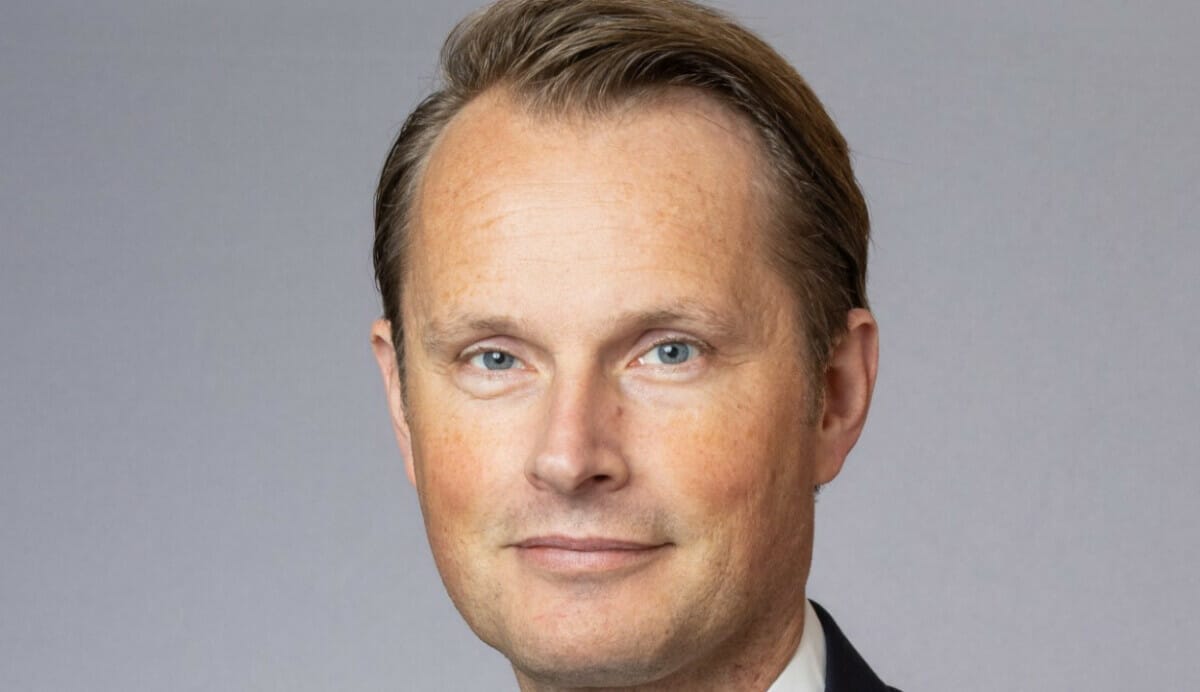
The decision to divest the mandates was driven by the buffer fund’s quest for efficiency and cost savings which has led to around 80 per cent of assets now being managed inhouse including all public markets, explains CIO Erik Kleväng Callert who joined AP2 in May 2022.

“Managing money in house allows you to be lower cost, more dynamic and more flexible in your investment process,” he says. “We can’t invest in China with the same fundamental approach we have in our home country. It would be impossible to have a fundamental approach to managing Chinese equities from Sweden.”

The shift in strategy also comes against the backdrop of AP2’s integration of key themes amongst which is growing geopolitical tension.

Sponsored Content

“Of course, we remain concerned about developments in China, and follow it really closely,” he continues. “Geopolitical tensions are emerging that will impact many of our allocations and assets but we still have a fair share of Chinese equities.”

In the quant allocation AP2 seeks the highest risk adjusted returns via a multi-factor approach that includes value, quality, low volatility and ESG factors that favour the most sustainable companies in line with AP2’s Paris-aligned benchmarks.

Brown opportunties

Another key trend influencing strategy is the climate transition. Much of the investment team’s time is spent understanding how to adjust the portfolio, getting to grips with not just the financial risk from climate change but how the companies AP2 owns will impact the environment and climate change going forward.

It calls for a particular approach to investment that is more active than quant.

“You cannot be 100 per cent passive in ESG. You must have some kind of smart beta; you have to have a more fundamental process,” says Callert. “We have a lot of ESG data and research on every company we own. If a company doesn’t do the right thing, we will look into it and we will potentially sell it off.”

AP2 mitigates climate risk in the portfolio by avoiding investments in high emitting sectors in line with Paris-alignment and its own emission targets. It also actively invests in solutions like new energy infrastructure, green bonds where the funds are earmarked for solutions, and has a large allocation to forestry.

But Callert, who draws on years of experience in sustainable investment from previous roles at PRI Pensionsgaranti, PP Pension & Insurance and Nordea Life & Pensions, says ESG integration is far from straightforward.

“We must be careful to always look at all our investments from a risk and return perspective. Investments must have a good business case as well as support the climate transition. Sustainable development doesn’t just involve green investments, investments must have the right risk return.”

Carefully picking winners and avoiding stranded assets is leading the team to research cheaper brown investments in the hope they grow in value as they transition their operations.

“We are thinking of investing in businesses that have yet to become green, i.e. companies that are focusing on transitioning their operations. This might include energy companies that are focusing their investment budget on switching from fossil fuels to renewable energy or steel companies developing new processes,” he says. “We see a value if you can buy them a little cheaper because many investors don’t like brown companies. We can buy them and fix them and this is a good option.”

For all AP2’s long term view, stable asset allocation and risk levels and determination to ignore short term market volatility, Callert will tilt the portfolio to a short term view or dislocations.

Today that includes opportunities in the undervalued Swedish Krona, currently cheap compared to its long-term equilibrium.

“We can change our exposure to FX in the portfolio so today we have a little less exposure to foreign currencies because see them as overvalued against the Swedish krona,” he concludes.


Asset Owner:AP Fonden 2 (AP2)

Leave a Comment

The twin forces rewriting the rules of investing

The twin forces rewriting the rules of investing

Portfolios built for the old world will be severely tested as emerging forces rewrite the rules of investing. The Fiduciary Investors Symposium heard that geopolitical and macroeconomic upheaval, together with the disruption wrought by AI, should force asset owners to rethink the structure and composition of portfolios.

Sort content by

CERN risk appetite keeps assets liquid

The CHf4 billion CERN pension fund maintains a dynamic, tactical strategy that takes into account the market environment and the fund’s liabilities. Once risk levels are set, CIO Elena Manola-Bonthond tweaks and adjusts to stay on target, employing strict due diligence in areas such as private equity and hedge funds.

Austrian APK smells equity opportunities

Top-performing APK Pensionskasse is examining different regions and sectors, looking to increase its allocation to equity if markets decline in the second quarter. Chief executive Christian Boehm expects technological developments and geopolitical influences to affect markets, including in Europe’s financial sector.

Illinois looks inward for new portfolio

The $42 billion Illinois Municipal Retirement Fund is using its enhanced internal management capabilities to start a quantitative portfolio applying multifactor strategies. The strategy is designed to build some downside protection into the fund’s equities allocation.

PMT’s new index shakes up its equities

The €72 billion Dutch metal industry pension fund has developed its own benchmark that combines ESG, long-term returns and current beneficiaries’ sensibilities with its previous passive strategy. The index’s various criteria have screened out many companies PMT previously held and reduced its allocation to US equities.

Most popular stories of 2018

We are also pleased to say that you, our readers, are spending more time on our site, as evidenced by our 10 most read stories, which averaged 4.2 minutes per article. Thank you to all our interview subjects, readers and supporters over the last year. Below is a look at the 10 most popular stories of 2018.

Washington works to be the best LP

Private equity has been a stand out for the $130 billion Washington State Investment Board and CIO Gary Bruebaker says the real trick is attracting the top general partners. That means making sharp investments, being true to your word and nurturing the relationship.

Previous



