

Much anticipated reform of Sweden’s five buffer funds will liquidate AP1, dividing assets between AP3 and AP4. Private equity specialist AP6 will also merge with AP2, expanding the opportunity for the private equity investor and securing the future of the specialist team.
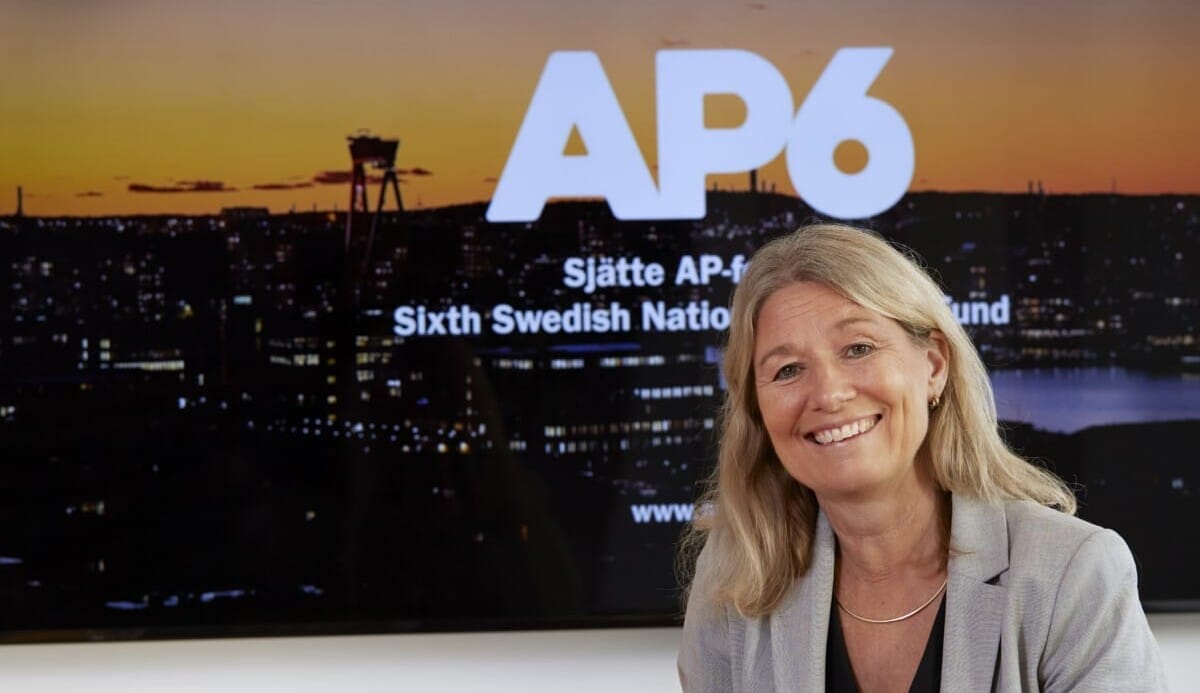
Katarina Staaf, chief executive of SEK 75 billion ($6.8 billion) Sixth Swedish National Pension Fund, AP6, says the recent reform process that has reduced the country’s five buffer funds to three has expanded the opportunity for the private equity specialist.
Under the reforms, AP6 will finally be integrated into the wider buffer system by merging with the Second Swedish National Pension Fund (AP2) forming a new entity in Gothenburg (where both funds are already domiciled) that will be given increased opportunities to invest in unlisted assets in accordance with AP6’s existing expertise. The reform process took account to two “very important” aspects that AP6 put forward in its consultation response, explained Staaf.
“As the proposal previously looked, there was a risk that the share of unlisted shares in the buffer fund system would decrease, as well as that the expertise acquired by AP6 was not fully utilised. The pension group has supported a proposal in which they want to give room to utilise accumulated expertise by AP6 and where the merged fund is given expanded opportunities to invest in unlisted assets up to and including 2036,” said Staaf.
AP6 was founded in 1996 and has generated a positive net profit every year for the past decade. The portfolio had a 3 per cent net return in 2023 and a 15.3 per cent return over the last 5 years. Assets are divided between buyout (44 per cent) buyout co investments (38 per cent) and venture/growth (14 per cent) secondary opportunities (4 per cent).
Most investments sit in IT and healthcare and the portfolio has gradually internationalised over time so that today around 31 per cent is invested in the US. Co-investment partners include EQT, Nordic Capital, Permira and Carlyle.
The consultation process flagged that integration of AP6 could be facilitated by removing the legal requirement of currency hedges, allowing inflows and outflows linked to the pension system and by enabling AP6 to borrow from The Swedish National Debt Office (Riksgälden).
But Staaf declined to speculate on next steps. Implementation and reorganisation will be overseen by two special investigators targeting completion in January 2026. A bill will be presented for a vote in the Riksdag during the second quarter.
“Only after this is it possible to have an idea of the way forward,” she said.
Policymakers have committed to private equity. But a drive to create economies of scale, reduce costs and tighten governance, AP1, the SEK 476 billion ($43 billion) buffer fund will be liquidated and its assets transferred equally to AP3 and AP4.
“We will prepare for the change and will contribute with our expertise and experience for the benefit of the pension system and affected organizations,” said chief executive Kristen Magnusson Bernard in a statement.
Chief executive of AP4 Niklas Ekvall says his focus is now on implementation.
“The government and the pension group, with representation from all parties, have now communicated their view of changes to the buffer fund system. It is now our task to implement their decisions in the best possible way for the pension system,” he said.
“It is good and natural to regularly review the pension system and buffer funds to ensure that it lives up to its objectives and to ensure confidence in the pension system among the Swedish people. The AP Funds were involved in the investigation that was carried out and we were given the opportunity to comment via our consultation responses.”
Ekvall also stressed the strength of the funds.
“The starting point for consolidation is to manage the fund capital in the best possible way in the future. The AP funds are proud to have delivered high returns that have helped to strengthen the pension system. The AP funds have built up competent and professional organisations with a strong culture and investment processes. The good returns, cost-effectiveness and our sustainability work are at the forefront of international comparisons.”
Elsewhere, the reforms have tightened the statutory competence requirement for board membership. They have also adjusted the investment cap for Swedish-listed companies.
AP3 and AP4 (the two remaining Stockholm-based funds) will now be able to hold up to 3 per cent of total market capitalisation, up from 2 per cent though voting rights remain capped at 10 per cent.







Leave a Comment
You must be logged in to post a comment.
Login