Sustainability Digital 2020 program

[vc_empty_space height=”10px”]

Sustainability Digital 2020: A Planet in Trouble

The COVID-19 global health and economic crisis has highlighted the need for leadership and capital to be urgently targeted towards the vulnerabilities in the global economy. The issues of sustainability have never been more important and it’s a critical time for investors to be collaborating for better corporate behaviours and economic outcomes.

According to the IMF, more than $20 trillion is needed over the next 20 years to be invested in climate change and other sustainable development goals. But countries can not achieve this on their own. Governments need to make it easier for business to finance and invest in sustainable development projects, the private sector needs to mobilise for long-term investment, and new solutions for financing the SDGs must be created.

This conference is an urgent call to action for all investors to influence investee companies to change their focus and put people before profits to create a more sustainable economy, and to wake up to the crucial role they play in ensuring a sustainable recovery.

Through case studies of investors and corporate collaboration, investors will hear how their peers have been engaging for change on issues relating to the environment, labour practices and better long-term outcomes. The conference will address the social and economic consequences of the coronavirus and outline the role that investors can play in the path to a sustainable economy.

The conference will address the social and economic consequences of the coronavirus and outline the role that investors can play in the path to a sustainable economy.[vc_btn title=”View the program here” color=”sandy-brown” link=”url:https%3A%2F%2Fsustainabilitydigital.top1000funds.com%2Fagenda%2F|||”]

Sponsored Content

Leave a Comment

China ESG risk: the next unknown

China ESG risk: the next unknown

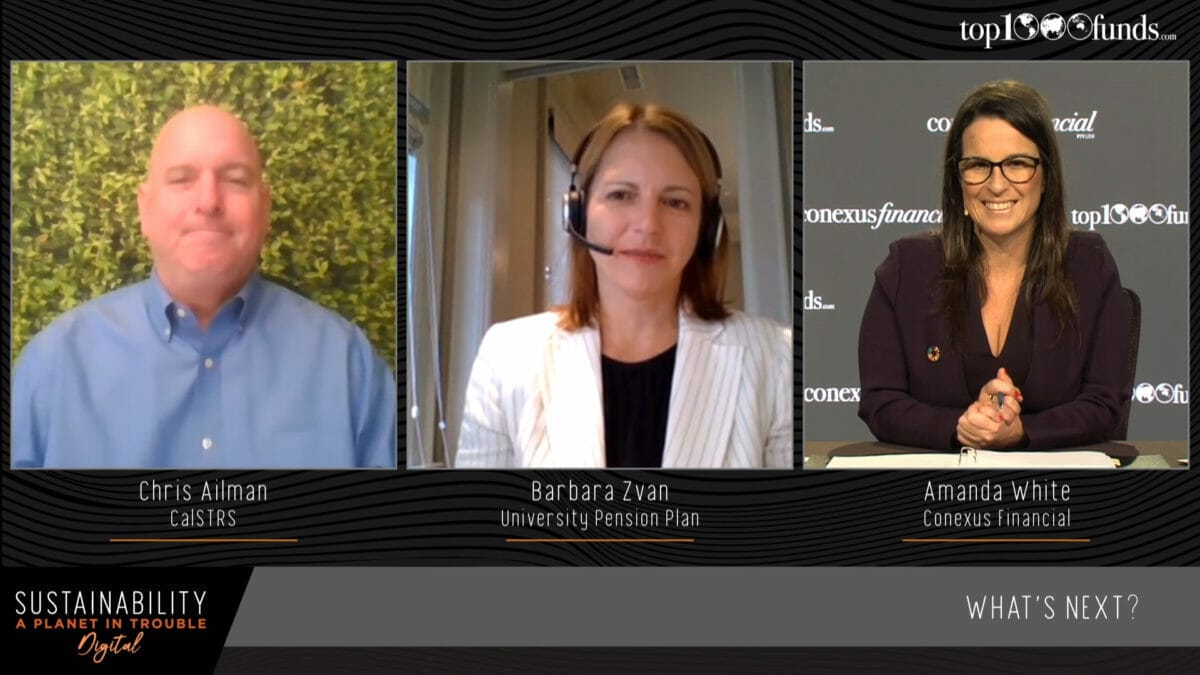
One of the most important, upcoming challenges at CalSTRS is how the fund should evaluate Chinese investments from a human capital and environmental standpoint, says Chris Ailman, chief investment officer at the giant pension fund.

Sort content by

OECD environment working paper #164

What policies for greening the crisis response and economic recovery? Lessons learned from past green stimulus measures and implications for the COVID-19 crisis

Harvard endowment goes net zero by 2050

The Harvard endowment is about half way through its transition to external investment management and will work with its service providers to implement the university’s new directive, to position the portfolio in line with net-zero greenhouse gas emissions by 2050.

COVID-19 fiscal recovery packages

The COVID-19 crisis is likely to have dramatic consequences for progress on climate change. Imminent fiscal recovery packages could entrench or partly displace the current fossil-fuel-intensive economic system.

Strategic asset allocation

Asset allocation plays such a fundamental role to determining long-term returns that ignoring these sustainability issues – where the impacts affect economies, businesses and society over decades – just does not make sense.

Investor collaboration on sustainability

How can investors be a catalyst for change and have an active voice in a sustainable recovery? This episode explores the role of investors and how they can collaborate for effective collective action. It includes the work of one of the leaders in sustainable investing and the biggest pension fund in Europe, APG. It invites investors to have an active voice in a sustainable recovery.

Enormity of climate crisis misunderstood

There is a lack of understanding in investment decision-making about how big the climate crisis is which could lead to investments and risks being mis-directed, according to Professor Cameron Hepburn, Professor of Environmental Economics at Oxford University.

Previous



