
How to fix a broken labour market

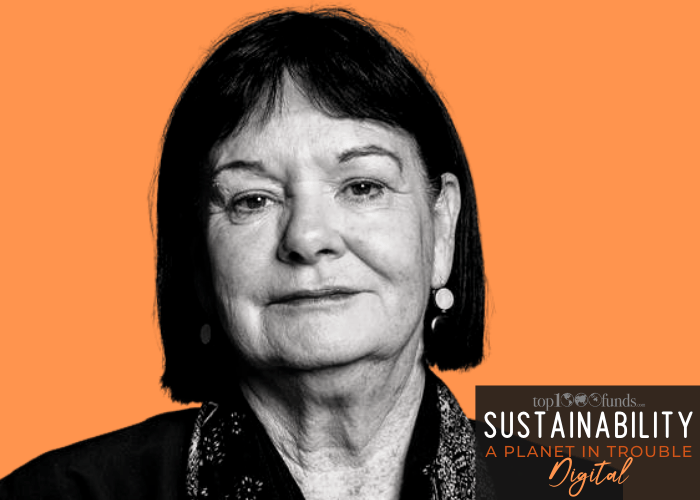
Sharan Burrow, general secretary of the International Trade Union Confederation, is calling on investors to do more to fix what she calls a broken labour market.

In an impassioned call to delegates at “Sustainability Digital; A Planet in Trouble,” Sharan Burrow, general secretary of the International Trade Union Confederation which represents 200 million workers in 163 countries called on institutional investors to do more to protect workers rights.

She said investors can choose to have an impact and shouldn’t put “making a profit” before “dehumanizing workers.”

She said investors need to ensure they are supporting democracy and that their capital is going to build strong companies that contribute to jobs and security. Moreover investors have a stake in repairing the broken social contract between workers and business because they invest workers capital.

A labour market that offers no security for workers or adequate retirement provision is good for neither business, investors or sustainability, said Burrow.

In what she called a “moment of truth,” she asked if business leaders and investors are prepared to reform the current model. She warned of conflict, already visible, if this didn’t happen, and noted that investors willingness to make change is often dependent on change not “effecting their environment.”

Sponsored Content

Burrow also highlighted the importance of a Just Transition that creates new jobs for those whose jobs disappear in the new economy. She highlights the auto sector particularly, where the transition to a low carbon economy is already having an impact on jobs and skills.

“Labour’s share of income has slumped and so many workers live day to day,” she said, calling for equality of race and gender to rebuild trust. “All investments must have a rights and sustainability lens; ESG is no longer an option.”

Burrow questioned whether global monopolistic companies were sustainable, suggesting they should be broken up.

She said workers need occupational health and safety, a minimum living way and control over the number of hours they work.

Reflecting how the Biden administration will impact workers rights, she noted the conflict inherent in the US between strong unions on one hand and resistance to human rights and labour laws from business that comes from the top on the other.

However, she said Biden was “a friend” to the union movement and would support freedom of association, but that he also had an eye on the economy and the urgent need to transition.

Burrow said that it is impossible to build a sustainable economy that doesn’t include benefits for labour and people. She also flagged worrying challenges in democracy, concluding that “many young people” no longer believe that democracy is good for them.

Leave a Comment

Climate the No.1 priority for 2021

Climate the No.1 priority for 2021

Climate is by far the number one sustainability priority for investors in 2021 according to a poll of asset owners from more than 32 countries which came together for the Top1000funds.com online Sustainability event in March.

Sort content by

Sustainability in the time of Covid-19

2020 underlined just how closely connected the world is. The pandemic broke out in a market in China but quickly spread to the rest of the world. The health crisis soon escalated into a serious economic crisis – a crisis of which we still do not know the full consequences of. Being able to act quickly and safely in a changing world is more important than ever. Many of PensionDanmark’s members and companies have endured periods of lockdown, and jobs have been lost as a consequence. The hotel and restaurant industry, the transport industry and the many employees at Denmark’s airports have been particularly hard hit. Many of the companies that were not shut down had to implement restrictions and other measures to protect themselves against COVID-19.

Asset Owner Technical Guide: Selection

The incorporation of ESG factors within the investment process has evolved from a nice-to-have to a necessity. Client demand has grown strongly, with 68% of the PRI’s asset owner signatory base addressing ESG considerations in their requests for proposals (RFPs). This means that many asset owners expect investment managers to include financially material ESG factors within their funds and investment strategies. In addition, policy makers around the world are introducing regulatory requirements for both investment managers and asset owners to disclose and report on responsible investment practices.

Asset Owner Technical Guide: Monitoring

A growing number of asset owners now expect their investment managers to incorporate ESG factors into their investment processes. This means that ESG needs to be at the core of the relationship between the asset owner and the investment manager – and that ESG considerations need to be addressed at every stage of that relationship, from setting the initial investment strategy, to drafting requests for proposals, to selection, appointment and monitoring.

Asset Owner Technical Guide: Appointment

Asset owners increasingly include ESG considerations in their investment management agreements (IMAs) and other legal documentation. More than two-thirds (69%) of PRI asset owner signatories typically implement ESG requirements in contracts such as IMAs and limited partner agreements (LPAs).1 To ensure that investment managers abide by their clients’ ESG requirements, certain legal aspects are becoming standard features of the asset owner-investment manager relationship.

A Greener Fiscal Future

With fiscal policy now the dominant lever supporting growth in most economies, it has become even more important to understand how the various fiscal policies will flow through to GDP, inflation, and different markets. We have been working to get our understanding of fiscal policy to the same level as our understanding of monetary policy. This is a difficult task, as fiscal comes in so many forms, each having different implications at the macro and micro levels. Some policies can be clearly counter-cyclical (the best of these are typically direct checks and shovel-ready infrastructure), while others aim to address more structural problems (like low productivity or environmental issues) but are less effective cyclically, as they are typically longer-term.

A new era of ESG under Biden

Against all odds, there is an air of optimism in 2021. We have entered a new era in US politics, and the inauguration of the Biden-Harris administration brings renewed hope for sustainable investment, particularly climate policy. So what can investors expect?

Previous