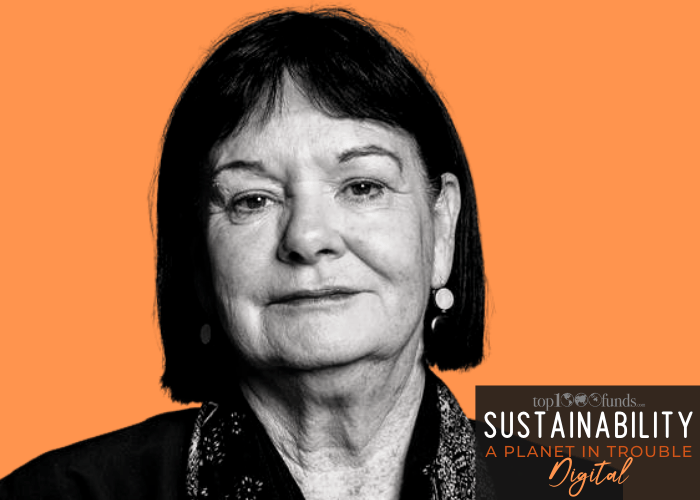

How to fix a broken labour market

Sharan Burrow, general secretary of the International Trade Union Confederation, is calling on investors to do more to fix what she calls a broken labour market.

In an impassioned call to delegates at “Sustainability Digital; A Planet in Trouble,” Sharan Burrow, general secretary of the International Trade Union Confederation which represents 200 million workers in 163 countries called on institutional investors to do more to protect workers rights.

She said investors can choose to have an impact and shouldn’t put “making a profit” before “dehumanizing workers.”

She said investors need to ensure they are supporting democracy and that their capital is going to build strong companies that contribute to jobs and security. Moreover investors have a stake in repairing the broken social contract between workers and business because they invest workers capital.

A labour market that offers no security for workers or adequate retirement provision is good for neither business, investors or sustainability, said Burrow.

In what she called a “moment of truth,” she asked if business leaders and investors are prepared to reform the current model. She warned of conflict, already visible, if this didn’t happen, and noted that investors willingness to make change is often dependent on change not “effecting their environment.”

Sponsored Content

Burrow also highlighted the importance of a Just Transition that creates new jobs for those whose jobs disappear in the new economy. She highlights the auto sector particularly, where the transition to a low carbon economy is already having an impact on jobs and skills.

“Labour’s share of income has slumped and so many workers live day to day,” she said, calling for equality of race and gender to rebuild trust. “All investments must have a rights and sustainability lens; ESG is no longer an option.”

Burrow questioned whether global monopolistic companies were sustainable, suggesting they should be broken up.

She said workers need occupational health and safety, a minimum living way and control over the number of hours they work.

Reflecting how the Biden administration will impact workers rights, she noted the conflict inherent in the US between strong unions on one hand and resistance to human rights and labour laws from business that comes from the top on the other.

However, she said Biden was “a friend” to the union movement and would support freedom of association, but that he also had an eye on the economy and the urgent need to transition.

Burrow said that it is impossible to build a sustainable economy that doesn’t include benefits for labour and people. She also flagged worrying challenges in democracy, concluding that “many young people” no longer believe that democracy is good for them.

Leave a Comment

Climate the No.1 priority for 2021

Climate the No.1 priority for 2021

Climate is by far the number one sustainability priority for investors in 2021 according to a poll of asset owners from more than 32 countries which came together for the Top1000funds.com online Sustainability event in March.

Sort content by

How to avoid funding treason

The siege on the US Capitol has revealed asset owners may be investing in companies that work with or fund extremist groups. To protect their organisations, their stakeholders, and their savers from such risks, asset owners should consider revising their ESG frameworks to include disclosure and accountability policies on corporate political spending.

Amazon under fire

Two of the world’s largest asset owners are putting pressure on Amazon to reveal exactly how it is protecting its workers from COVID-19. It’s a move indicative of the investor mood to focus attention on human and labour rights among investee companies, with a particular spotlight on the tech sector.

Diversity: The data challenge of 2020s

Assessing, managing and changing diversity, equity and inclusion (DEI) is set to become the data issue of the 2020s, as asset owners turn their attention to the power they have to advocate for change in the companies they invest in, and the firms that manage their money.

Climate risk is investment risk: Fink

The reallocation of capital towards sustainable companies is happening in real time and will accelerate, according to Larry Fink who is investing in technology and people to develop systems that can prove “climate risk is investment risk”.

Climate problem and industry ownership

Tim Hodgson, co-head of the Thinking Ahead Group, goes through an elaborate exercise to determine how much of the climate problem the institutional investment industry owns. The first step, he says, in finding a solution.

Verification essential for more impact

A new impact investing verification, which uses the same level of rigor that institutional investors approach the due diligence of fund managers, promises to unlock capital flows into impact and build the necessary scale with integrity needed to address the urgent social, environmental, and economic challenges.

Previous