
Bridgewater on the impact revolution

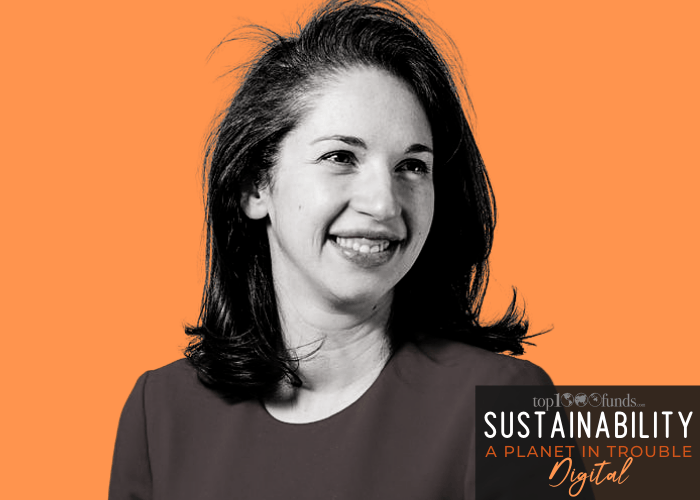
Integrating impact alongside risk and return is a revolution that will see more diversification among investor allocations to asset classes such as commodities. Elsewhere, it requires using multiple data sets to analyse stocks and sovereign bond allocations to see the real-world impact of a company’s product or services, and which governments are heading to net-zero. Bridgewater’s head of investment research Karen Karniol-Tambour explains.

A key first step in integrating impact in public markets is for investors to assess what real world outcomes they actually want to impact. It involves a shift to think about investment not just in terms of risk and return, but also in terms of impact.

Karen Kaniol-Tambour, head of investment at Bridgewater, the world’s largest hedge fund, explains that integrating different types of risk is now normal and deeply engrained. However, shifting to also think about impact as deeply and rigorously as risk and return is nothing short of “a revolution.”

Assessing the real-world outcomes investors want to impact involves looking at the services a company provides and how it behaves making those goods. As for investing in fixed income, investors should look at the actions the sovereign government is taking to shift outcomes in the real world like climate change.

In commodities, investing for impact means choosing to invest in commodities that will build carbon free economies like charging infrastructure and electric vehicles, or investing in clean and sustainable mining processes.

“This is the framework, and these are the relevant questions to ask,” said Karniol-Tambour who oversees an investment team of 150 proffessionals. From this process she said it is possible to see what assets have the most impact, and which have the least, and give impact as much credence as risk and return within a portfolio.

Sponsored Content

Expanding on the process within equities, she outlined how looking through an impact lens could lead to investment in a utility for its real-world impact on clean water and sanitation.

“This is an example of how you might measure a company,” she said. In the bond market impact investors could tilt to a government developing a low carbon economy for example.

Investors can apply risk, return and impact to the issues they care most about from climate change to biodiversity or labour rights, across their entire portfolio. With climate change, investors can look at stocks and analyse companies’ emissions and the products they make. They can also look at externalities and analyse “if a company was charged real money against the damage done, would their profit drop.”

Karniol-Tambour said that measuring impact is still in its infancy – “like risk many years ago” – but she said progress is accelerating fast because more investors are making it a priority. In a few years we will see a whole other level of being able to measure impact, she predicted.

“It is very undeveloped and has tremendous potential,” she said, citing developments like the work of Harvard Business Schools’ Impact-Weighted Accounts Leadership Council of which she is a member. Moreover, demand for impact is also being driven by the huge government stimulus to counter the effect of the pandemic, much of which is going into the transition.

Data is crucial

Bridgewater uses data from between five to 10 providers, picked from an initial pool of around 40 based on their ability to answer key questions around measuring impact. She also stresses the importance of triangulation or using more than one method to collect data on the same topic. This helps prevent the risk of personal opinions seeping into the measuring process.

“None of us are true experts on these topics,” she says.

As for interesting patterns emerging from the data, she said investing for impact in equity doesn’t require a new level of diversification. An experiment that took fewer than normal (around 50) of the best performing stocks from an impact perspective, found diversity levels didn’t fall away. Conversely, investing in commodities for impact does result in greater diversification given investors typically hold oil more than any other commodity. Investors wanting to impact the green transition need to expand away from oil to invest in commodities like copper or aluminium, she said.

“From an impact lens there are lots of commodities that need to be ramped up while carbon is phased out,” she said, adding that the most important source of diversification is towards environments investors are not exposed to.

“Put another way, investors should think what impact options they should add. Think what kind of environments you are not well diversified towards,” she said.

Index construction

Karniol-Tambour explained to delegates that many equity indices try to achieve ESG goals by “demanding” the sector mix stays the same as the underlying market mix. It means the index often ends up being the same as the market.

“In our view this is limiting your impact,” she said.

Bridgewater has built equity indexes shaped around the SDGs without these constraints. Instead “back-end checks” monitor the extent to which the index incorporates a sector tilt, for example. The process has revealed that passive investment, which changes all the time due to shifts in a company’s market cap or a sector market cap, has a bigger effect on how bias plays out in a portfolio than impact.

Finally, she counselled on the importance of finding ways to apply measurements systematically.

“If we can only make a qualitative assessment on one company we are limited and assessments need to be scaled up,” she said.

She also reiterated the danger of bias in qualitative assessments, stressing the importance of “as much opinion as possible.”

Leave a Comment

Climate the No.1 priority for 2021

Climate the No.1 priority for 2021

Climate is by far the number one sustainability priority for investors in 2021 according to a poll of asset owners from more than 32 countries which came together for the Top1000funds.com online Sustainability event in March.

Sort content by

Finance needs to lift its climate game

A recent survey of CFA Institute members showed finance firms are lagging in how they incorporate climate change into the investment process. Matt Orsagh, senior director, capital markets policy at CFA Institute, details steps that can be taken to improve this.

Virtual AGMs stop robust engagement

Watered-down shareholder participation at AGMs, due to virtual meetings during the pandemic, is sounding alarm bells at APG, the largest pension fund in Europe, where collaboration with other asset owners and organisations is the beating heart of its ESG strategy and a central tenet to its stewardship response to the pandemic.

Investors want transparency on diversity

The momentum around diversity and inclusion in the investment industry continues as consulting firms put pressure on asset managers to report on diversity and institutional investors in Canada and the US commit to solving inequities related to diversity.

Robeco eyes new engagement portfolios

The future of active investment will be grounded in engagement. Robeco is in the process of designing new portfolios so the manager engages with every portfolio company. Engagement specialist, Peter van der Werf explains how engagement drives returns.

The importance of engagement

In this episode Amanda White talks with engagement specialist at Robeco, Peter van der Werf, about the importance of engagement; what good engagement looks like; and what financially material sustainability themes are important right now.

Looking forward with the PRI

In conversation with Fiona Reynolds, chief executive of the PRI, this episode looks specifically at some of the activities of the PRI and its engagement with stakeholders around COVID-19, their ESG priorities and what a sustainable recovery looks like.

Previous