
How to rewrite Modern Portfolio Theory to integrate climate risk

Modern portfolio theory is useful in a world where the future is just like the past. But when it comes to climate change, the future is likely to be dramatically different requiring a new framework for decision-useful climate scenarios.

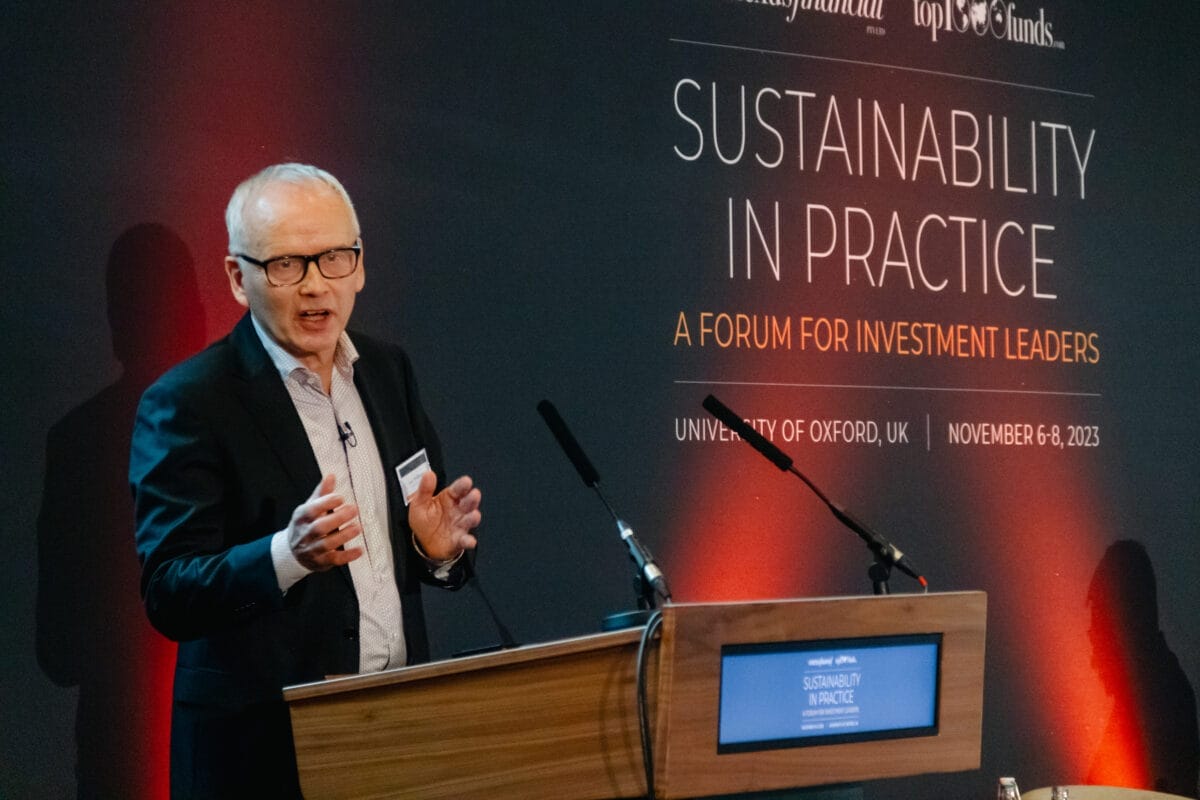
Speaking at Sustainability in Practice at Oxford University, Mark Cliffe, Visiting Fellow at Global Systems Institute, University of Exeter said that long-term scenarios looking years into the future are not necessarily decision-useful. They don’t reflect the volatility ahead and official scenarios underestimate the risk and opportunities arising from climate change, he told delegates, adding the challenge of pricing and modelling portfolio risk is finding predictable activity.

Cliffe explained that key “chronic” risk analysis is missing in modern portfolio scenarios which omit, for example, the impact of tipping points, natural capital loss, and the impact of war.

Scenario drivers include policy, geopolitics, the state of economies and technological change. “You have to factor this into scenarios,” he told the audience of institutional investors, asset managers and fellow academics. Elsewhere, he warned that the actions of NGOs and shareholders also needs to be integrated into a base for transition planning.

The challenge for investors is finding a balance that integrates the financial materiality in line with these risks and a fiduciary duty and legal obligation to reduce risk. However, he said “investors don’t have legal obligations to the planet.” Engagement is a high impact strategy and it is possible for investors to pressure companies to take responsibility for their externalities although he said “persuading people to do things they don’t want to do is hard work.”

He noted that divestment allows investors to hit carbon targets by offloading assets but “doesn’t help the world.” Alternatively, investors can line their portfolios with transition assets, and ride the transition.

Sponsored Content

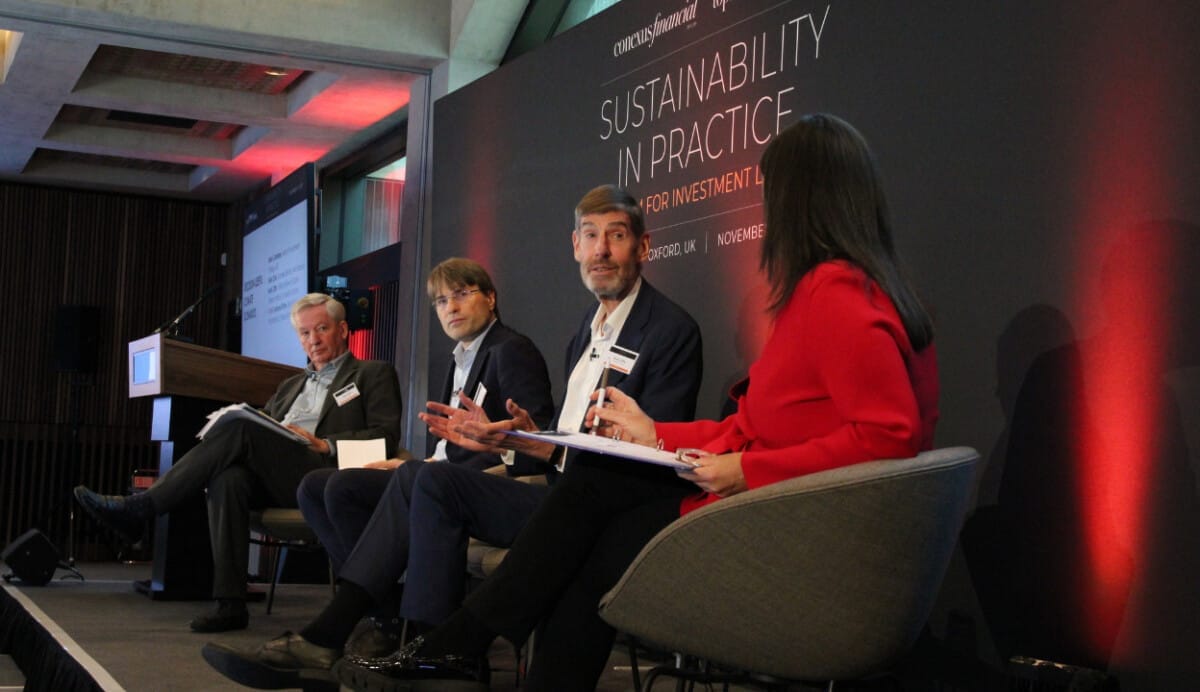
Fellow panellist Mirko Cardinale, head of investment strategy at USS, explained how the United Kingdom’s largest pension fund has introduced a new approach to climate analysis. Traditional scenario analysis, he said, often left the investor with more questions than answers and omits uncertainty around physical risk and the interaction between physical risk, inflation and tipping points. [See USS outlines new  climate scenarios for improved investment decision making.]

The investor has focused its analysis on key objectives including the integration of climate science; a focus on short-term scenarios in a bid to make the information decision-useful, a focus on volatility, moving away from benchmark-relative to holistic performance assessment and introducing a new governance framework. Cardinale said it involves a change of mindset in terms of how to approach asset allocation.

“It’s much harder to incorporate this complexity into portfolio,” he said.

Cardinale explained that the approach involves embracing a multi-faceted view of risk and moving away from strategic asset allocation with clearly defined parameters and reference portfolios.

He said that at USS the process remains a work in progress. “We don’t have firm conclusions and can’t say which assets to buy and sell.”

Going forward, the process will help shape scenarios that include new, challenging views on assets that will inform and change the nature of mandates and set different asset allocations. He continued that analysis involves quantitative and qualitative assessments.

“You need a process that has the flexibility to be top down and bottom up, allowing the different design of mandates for equity and infrastructure.” He added: “factoring in resilience to climate and inflation may be more important than the change in asset allocation.”

He said that climate is a clear financial risk and doesn’t conflict with fiduciary duty and told delegates that USS has been able to explore this new approach because of a change in governance.

Fellow panellist Mike Clark, founder of Ario Advisory and the Institute and Faculty of Actuaries representative on the global advisory council of the Sustainable Finance Programme at the University of Oxford’s Smith School of Enterprise and the Environment said it is important to get finance closer to science.

He said that the strategic risk around climate is mispriced; investors are not managing systemic risk or engaging with policy makers. He added that modern portfolio theory doesn’t work because of explosive materiality – for example changes in the food system and different growing seasons in Europe.

“There are things out there that finance isn’t thinking about, we are approaching tipping points and how are we going to reprice risk?”


Leave a Comment

Meeting multiple objectives: The pension fund addressing mental health

Meeting multiple objectives: The pension fund addressing mental health

With the right governance models pension funds can play a role in broader societal issues, such as mental health in the workplace, while still delivering financial security for members. A unique “democratic governance structure” at the Danish Velliv Association allows it to manage multiple objectives, chief executive Lars Wallberg said.

Sort content by

Highlights from Climate Week 2023: The Burning Man for climate geeks

Biodiversity, transition finance and a sense of urgency around climate mitigation were in focus at Climate Week 2023, dubbed the "Burning Man for Climate Geeks". PSP Investments' Herman Bril and Stella Y. Xu reflect on the highlights from Climate Week which they attended this year. They didn't attend Burning Man.

SDG-aligned private equity proves winning formula at AP1

It's possible for private equity investors to add value by integrating ESG. Swedish buffer fund AP1 is tapping the benefits.

How Swiss PUBLICA integrates climate risk

PUBLICA, one of the largest pension funds in Switzerland, has built a bespoke equity benchmark to reduce climate risk. It's not the consequence of any target to reduce emissions in the portfolio or wider ESG legislation. Senior portfolio manager Frederik von Ameln explains the process behind the strategy.

CalSTRS positions to take advantage of energy transition

CalSTRS has recognised the unique opportunity presented by the energy transition needs a unique response and its Sustainable Investment and Stewardship Strategies (SISS) portfolio has been specifically positioned to invest in opportunities that fall between private equity and infrastructure asset class buckets.

USS outlines new climate scenarios for improved investment decision-making

USS and the University of Exeter have outlined new climate scenarios that focus on short term, real world impacts and are more useful for investors. USS will use them to develop a long-term investment outlook and top-down portfolio construction.

NZ Super revamps factor portfolios, continues impact journey

NZ Super has revamped its multi-factor equities portfolios, working with its three external managers to integrate sustainability. Amanda White spoke to head of external investments, Del Hart, about the fine balance of meeting sustainability goals and finding factor alpha, and the next phase of the sustainability strategy: measuring investments for impact.