

Developing long-duration storage and digitisation of the whole energy system remain key challenges as the world struggles to slow the growing impact of climate change.
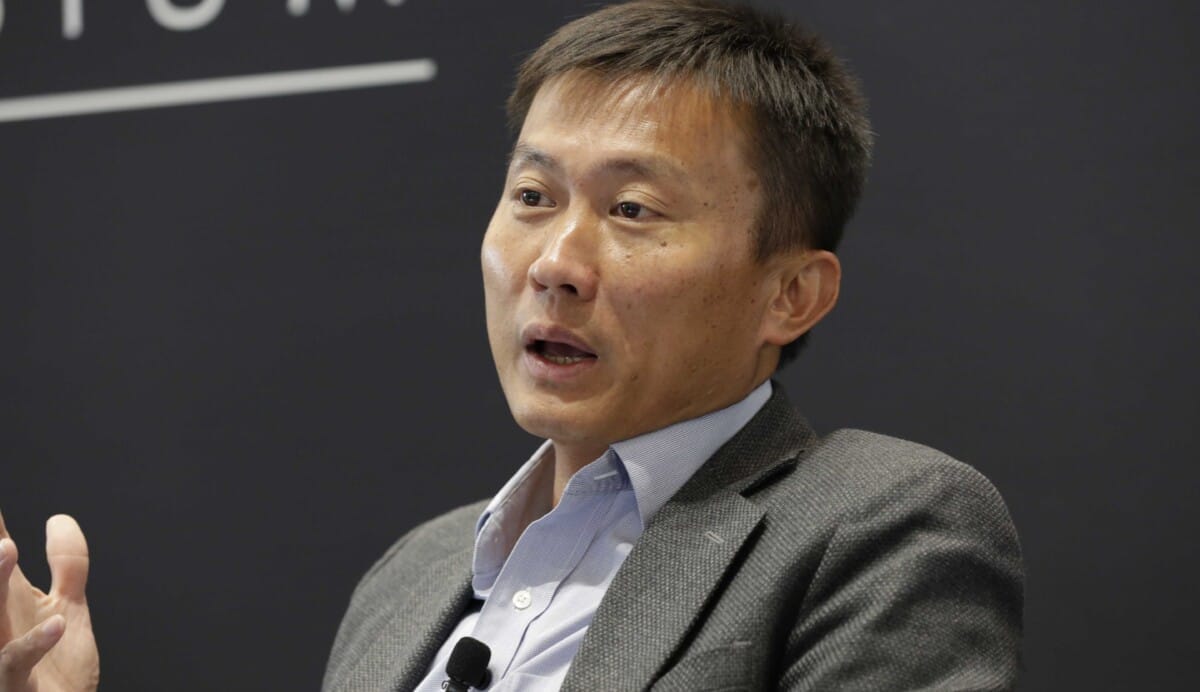
While the global energy transition raises these issues relating to technology, policy and financing, it also represents an enormous economic opportunity as industry races to unlock solutions, Professor Yi Cui, faculty director at Stanford Doer School of Sustainability, told the Fiduciary Investors Symposium at Stanford University.
Many scientists believe the world has already reached 1.5 degree Celsius warming compared to pre-industrial revolution levels, and at a 2 parts-per-million (ppm) per year increase of carbon emissions we will get to 2.0 degrees of warming in roughly 15 years, Cui said.
“This is a gigantic transformation we are facing that needs to be done within about 30 years,” he said. “This is very, very urgent.”
Over the past 20 years, the energy transition has recorded a number of successes. The primary one is clean electricity generation, with solar and wind power now being generated for cents per kilowatt hour, meaning there is no need to burn coal anymore, although coal-fired power plants still exist because they had already been built, Cui said.
Other related to long distance transmission lines, which are capable of transmitting electricity more than 2000 kms with very high efficiency; and low-cost LED lighting technology. Finally, the development of lithium-ion battery-powered electric cars over the past decade has been a major development.
Key Challenges
Despite these successes, the most important test for the energy industry relates to long-duration energy storage. It is the question of how to extend the storage of clean electricity from hours to days and weeks and months.
“If this works, you will help decarbonise the electricity sector and the transportation sector,” Cui said.
“That is basically 60 to 70 per cent of carbon emissions already. So it is a big deal.”
Cui said that in order to stop emissions rising in the next 15 years, we will also need negative carbon technology to capture and remove carbon and other greenhouse gasses like methane from the air.
The world must also develop a circular economy at scale to take care of reuse and recycling needs. For example, electric vehicles, existing gasoline cars, concrete, and steel will need to be recycled much more efficiently.
Another looming issue on the horizon is how to power the growing usage of artificial intelligence. Cui quoted Nvidia’s Jason Huang saying that power is very likely to limit AI’s development, given that by 2050 half of all electricity generated globally will be used to power AI.
“How do you build the AI power?” Cui said.
“Do you use nuclear reactor for the AI computing centre? Or do you build solar plus storage? This remains to be seen. And how do you build a transmission line to get to the AI centre? Depending on which country you are in, the degree of difficulty will be very, very different.”
Ambitious Plans
Cui said developing high-energy-density lithium-ion batteries is key to how much electrification is possible, with current innovations attempting to develop higher performing prototypes using new types of materials to store greater charge.
“The motivation is very simple, but it’s very, very hard,” he said.
“If you could do that, we can go from the bottom, that’s current technology, all the way up to being able to store four times more energy per weight of the batteries.”
Once this level reaches about 500 watts per hour per kilogram (Wh/kg), all ground transportation could potentially be electrified. If you get to 1000 Wh/kg then domestic flights, of about three hours’ duration, “I think it’s a done deal”, he added.
The second key requirement for decarbonising the entire energy industry is to make long-duration energy storage work, at a low enough cost and a large enough scale.
“The capital cost per kilowatt hour of the battery needs to be lower. We are very far away from that,” Cui said.
“That will be the technology that can give you very safe electricity storage, with a very long lifetime. These batteries could last for 30 years, and the initial cost will be low.”








Leave a Comment
You must be logged in to post a comment.
Login