
Eyes on SE Asia, divergent views on China among global funds

Australia’s second-largest superannuation fund, the A$240 billion Australian Retirement Trust, will likely “do more, not less” investing in China, said the fund’s head of strategy, following significant internal debate over geopolitical developments and how they will impact the portfolio.

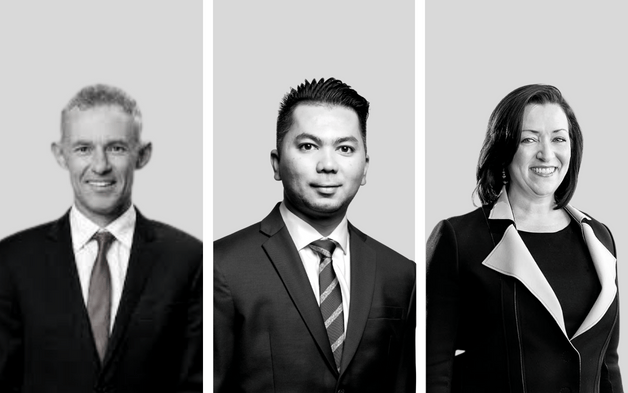
Speaking at Conexus Financial’s Fiduciary Investors Symposium held in Singapore, Andrew Fisher, head of portfolio strategy at ART – formed last year after the merger of Sunsuper and QSuper – said debate is ongoing about whether and how to invest in China and “the narrative and the position has moved so rapidly” over the past 12 months.

“We will keep investing in China, is my thorough belief, and I think we’re going to do more, not less, because China is going to be bigger as a part of the global economy,” Fisher said, in a panel discussion with heads of funds from Canada and Malaysia. 

When Russia invaded Ukraine, the newly merged ART decided immediately to sell all of its investments in Russia, figuring “why are you investing in a country that’s sanctioned and invading other countries?” Fisher said.

He asked hypothetically if it would it be the same playbook if China invades Taiwan, and even whether the fund should “be out of China already” so it doesn’t get “caught out in a similar fashion.”

But the conversation around China is different, he said, as there are no sanctions on China, there is a lot of posturing, rhetoric and propaganda on both sides, and while it is “romantic and compelling to get caught up in all of that…the reality is as Australia, we are right in the middle of this, and…it’s very hard to take sides.”

Sponsored Content

The fund’s exposure to China is relatively small, making it easy to say the fund will increase its exposure, he noted.

With a lot of uncertainty about the future direction of markets, the fund is focussed on diversification to build resilience, he said. ART was “a little concentrated in terms of the defensiveness  in our portfolios…fixed incomes have been quite short duration for a few years now and quite long foreign currencies, underweight Australian dollar.”

The fund is now moving towards a “more balanced position”, and looking more favourably on bonds than previously, he said.

Marlene Puffer, chief investment officer at AIMCo from Alberta, Canada, said AIMCo is working through plans to set up a Singapore office to “have boots on the ground to have a more direct, clear understanding of the complicated region that is Asia and South-East Asia.”

Eliminating home bias is a clear focus at the moment to build resilience through geographic diversification, as the fund has “more Canadian equities than we should,” Puffer said.

Innovation is driving growth across the region in areas like food and agriculture, she said. “We think of Singapore as a hub of investment activity where many managers who are permeating the rest of the region have been settling here.”

The office, which the fund expects to have between 15 and 20 people over the next couple of years, will focus primarily on infrastructure and renewables, public equities and private equity, and further diversification within some of the fund’s private asset strategies.

The fund previously had a Hong Kong office but “it’s much easier to make a choice for Singapore rather than Hong Kong at this moment,” Puffer said. “China’s growth is a complicated story at this time, and we’re definitely underweight China.”

Also on the panel was Abbas Ramlee, chief strategy officer at Permodalan Nasional BHD, one of Malaysia’s largest fund management companies. With a focus on the retail market, the fund has around a third of Malaysia’s population as contributors, Ramlee said.

Close to 95 per cent of the bank’s assets are located in Malaysia, and the bank is “close to business owners ourselves,” which helps drive value creation activities. However in the past five-or-so years, PNB has started gradually diversifying outside of Malaysia, and increased exposure to other asset classes, “trying to give better optimised risks to our unit holders.”

Investors in South-East Asia need to develop an understanding of each country, he said, as there is enormous variation between countries in the region, and in the investments that are favourable in each country. 

Ramlee said employing dynamic asset allocation helped the bank take advantage of macro trends. “So, for instance, going a bit more aggressive in inflation protection assets, real estate, infrastructure, things like that to really try to provide resiliency in our portfolio.”

Leave a Comment

Cross-checking data, wringing necks: the ESG journey

Cross-checking data, wringing necks: the ESG journey

Making a portfolio more resilient to climate change, and playing a role in decarbonising the real economy, requires a range of creative solutions to complex problems, along with a good measure of determination, said a panel of leaders driving ESG efforts at GIC, New Zealand Super and APG.

Sort content by

Appeal of cash will suck money from other asset classes in coming years

Cash is now a viable investment option for the first time in many years, and its appeal will draw money from other asset classes leading to poor performance both in financial assets and the real economy, according to Greg Jensen, co-chief investment officer at global investment management firm Bridgewater Associates.

Billions in dry powder waiting for signs of distress in real estate

The challenges currently outweigh the opportunities in many classes of real assets, and funds have billions in dry powder waiting for better deals, but strong fundamentals will ultimately prevail in the long term, said the head of asset manager Nuveen’s real assets business. The listed real estate sector was last year “trading at some of

60/40 may be ‘flipped around’ as fixed income appeal rises

After more than a decade of high-priced bonds, fixed income is now compensating investors more than many asset classes, argued Raymond Sagayam, chief investment officer, fixed income at Pictet Asset Management in the United Kingdom.

Machines can now detect when bullish executives doubt their own words

Three major trends have converged to drive growing appeal in new alternative data classes of quantitative investing, according to a leading quant researcher. “Quants like us who were in the right place at the right time in history can take advantage of the confluence of these three major secular trends,” said Mike Chen, head of

Recession is a lot more likely than markets are expecting

A slight moderation in inflation statistics, and a rising belief that growth is more durable than expected, has lulled markets into a false sense of security, according to senior portfolio strategist Phil Dobrin at American investment management firm Bridgewater Associates. Markets are now changing their prices and discounting a future that is at odds with

Re-shoring is a fad, services exports will drive Asia to new heights

There is no such thing as deglobalisation, and the reshaping of global trade amidst increasing protectionism is simply globalisation taking a different form, according to the chief economist at the asset management arm of two-century-old Swiss bank Pictet.