
Funds build resilience with private assets while managing liquidity risks

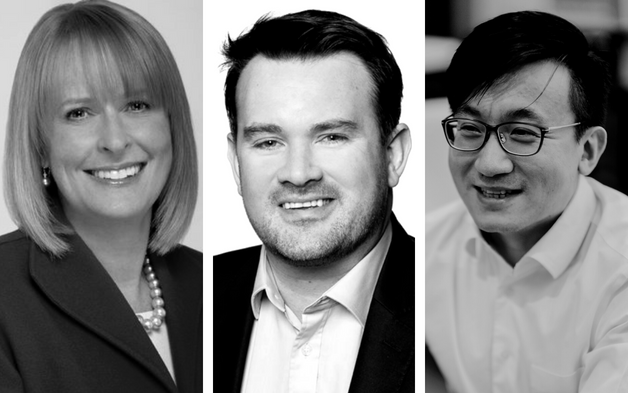
Anne-Marie Fink (L), John Greaves and Ding Li

Global pension funds are increasingly looking to private assets to build resilience, stress testing various scenarios to manage the liquidity risks that come with increasing private market allocations.

In a panel discussion at Conexus Financial’s Fiduciary Investors’ Symposium held in Singapore, Anne-Marie Fink, chief investment officer, private markets and funds alpha at the State of Wisconsin Investment Board, said SWIB has the advantage over many other US pension plans that its liabilities fluctuate with its assets, with the amount it pays out based on a five-year return with a base level that it cannot go below.

That “gives us a certain amount more flexibility relative to somebody who has got to pay X amount regardless of what’s going on in the markets,” Fink said, in a discussion chaired by Amanda White, director of international at Conexus Financial.

SWIB manages around US$143 billion in assets. The fund has roughly 28% private assets and is debating internally to increase that allocation to 35% or even 40%, Fink said. The fund’s liquidity allowed it to increase its allocation from 20% during 2021.

“Our teams have been really talking to all of our GPs and essentially saying, ‘we have liquidity, and if you have other partners that maybe are over their skis on their private assets, we can provide liquidity.’”

The fund’s hedge fund strategy is “portable alpha” with virtually no beta in its portfolio, Fink said, along with some passive allocations. This is sensitive to the cash rate, so now that the cost of capital has risen, the fund is now “pruning” its portfolio and looking for ways to increase return per dollar committed, potentially using leverage and accepting some extra volatility.

Sponsored Content

Also on the panel was John Greaves, head of investment strategy and research at Railpen in the United Kingdom, which manages about $50 billion of assets and administers several pension schemes including the UK’s Railways Pension Scheme.

Improved resilience versus governance and liquidity costs

Adding the appropriate amount of liquidity is an important consideration for Railpen, Greaves said, with illiquid assets like real assets potentially improving macro resilience, but at a governance cost and a liquidity cost.

The fund has pensions to pay, so it cannot ignore short-term risk outcomes, he said, and “liquidity risk is one of those reasons where you can become unstuck in the short term.”

“Funding liquidity risk” came to the fore last year in the UK, he said, proving it is critical for funds to think through, and stress test, their expected short term cash flows.

“That was really challenged in the UK in September and October last year with the volatility in the UK Government Bond Market,” Greaves said. “So that was a really good reminder to think what what might happen, what your risk models might say is impossible, and think through the unexpected. But that aside, it’s usually managed very prudently.”

“Market liquidity risk” is also a critical consideration, being the amount of illiquid assets a fund considers appropriate, Greaves said. These assets may take “many months or years to sell, sometimes you have some control, sometimes you don’t,” he said. 

Managing relationships is critical

The fund balances and differentiates among these assets where some assets may be very illiquid, while others may have strong secondary markets or provide significant income. Managing relationships with general partners is critical, and investing one year but not the next can stress these relationships.

“It was mentioned earlier that you want to avoid the bottom quartile managers,” Greaves said. “You better believe that you need to be investing almost every year to kind of do that, and to maintain those relationships in the top quartile managers. That’s just the way it is.”

Stress testing also involves looking at the possibility that illiquid assets may suddenly become cash flow negative, and “you’re not getting that return of capital because your general partners aren’t exiting because the environment isn’t favourable to do that,” Greaves said. 

The fund needs to limit exposure to illiquid assets at about 40%, he said, noting this approach differs from some Canadian schemes that have much higher levels of illiquidity.

“That model, I think, relies on being fairly proactive on secondary sales and exiting assets, and that is a very resource-intensive and quite a different investment process, so it wasn’t a good fit for us,” Greaves said.

Ding Li, senior vice president, total portfolio policy and allocation, economics and investment strategy, at Singapore sovereign wealth fund GIC, said taking a total return perspective, and looking at the total fund outcome, is also critical.

“For the long-term investor, especially for those kinds of pension plans which have some kind of payout liability, I think the total return is actually the focus for the investment outcome rather than alpha only,” Li said. “Because even if you pick out the right Alpha, if you don’t really capture good market beta, then your total outcome still does not meet your client’s objective.”

Leave a Comment

Cross-checking data, wringing necks: the ESG journey

Cross-checking data, wringing necks: the ESG journey

Making a portfolio more resilient to climate change, and playing a role in decarbonising the real economy, requires a range of creative solutions to complex problems, along with a good measure of determination, said a panel of leaders driving ESG efforts at GIC, New Zealand Super and APG.

Sort content by

Improved returns ahead as market faces ‘evolution, not revolution’

Markets are facing an “evolution, not a revolution,” and asset returns are likely to improve over the next ten years, despite a range of challenges facing global markets.

Supply chains are an unprecedented disincentive for great power conflict

It is inaccurate to refer to rising US-China tension as a “new Cold War,” according to a former permanent secretary of Singapore’s Foreign Ministry, as both countries are “vital and irreplaceable components of a single system” with supply chains that are unprecedented in their density, complexity and scope.

Giant sovereign, pension funds re-think portfolios as market shifts

Speaking at Conexus Financial’s Fiduciary Investors’ Symposium held in Singapore, leaders from sovereign wealth funds in Singapore and Malaysia, along with United States pension giant CalSTRS, discussed how investors are viewing global macro risks and opportunities, and strategies they are considering to future-proof their portfolios.

The 80% outside China and the US must not surrender their agency

It is critical for stakeholders in all nations to find nuanced ways to navigate rising tension between the US and China, and not “surrender agency to the interests of great powers who are much more interested in a zero sum game of ascendancy,” argues Professor Danny Quah from NUS.

Look beyond the Western headlines to get real story about Chinese market

Investors in China need to look beyond the top-down narratives coming from foreign countries and media to dig up the true story of what’s really happening in the market, argued Lirong Xu, the Shanghai-based chief investment officer of Franklin Templeton Sealand Fund Management.

Scenario planning critical for investors as US-China tensions rise

Managing the rise of great power competition between the US and China, and not letting it “go off the rails,” is the epochal challenge of our day, according to former US National Security Council member Richard Falkenrath who is now head of geopolitics and chief security officer at Bridgewater Associates.