
Giant sovereign, pension funds re-think portfolios as market shifts

Some of the biggest tailwinds of recent decades are now turning against global economies, forcing funds to find new ways to adapt, according to a panel of investment heads of sovereign and pension funds. 

Speaking at Conexus Financial’s Fiduciary Investors Symposium held in Singapore, leaders from sovereign wealth funds in Singapore and Malaysia, along with United States pension giant CalSTRS, discussed how investors are viewing global macro risks and opportunities, and strategies they are considering to future-proof their portfolios.

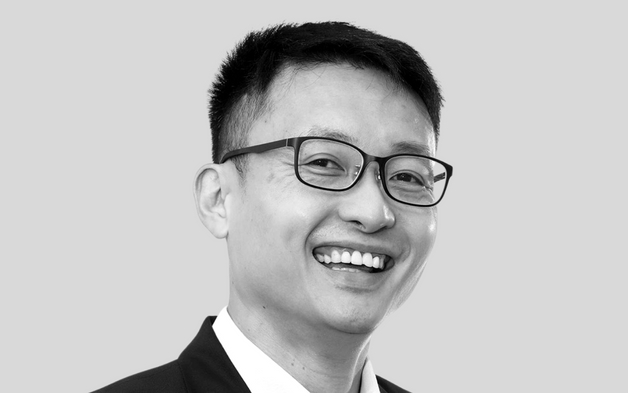
Bernard Wee (pictured), group head of markets and investment at the Monetary Authority of Singapore – one of Singapore’s three sovereign wealth funds – said that in the last 30 to 40 years, the global economy had benefited from “three very big tail winds,” all of which are now turning into headwinds. 

In the 1980s it was demographics, but population growth is now slowing. After reaching a global population of 8 billion last year, the next billionth person on Earth will take longer to arrive than the last billionth, for the first time in history, Wee said.

In the 1990s there was the peace dividend after the Berlin Wall came down, but now geopolitical tensions are rising again. And in the early 2000s increased trade and globalisation spurred economies, but trade volumes as a share of global GDP have fallen over the past decade.

Portfolios need to adapt to this new reality, Wee said, with a higher allocation to inflation protection that is “more customised” in terms of its composition of assets. 

Sponsored Content

For example, inflation-linked bonds (ILBs) performed worse than nominal bonds last year, which was partly due to “the unintended duration exposure you had in ILBs which tended to be much longer bonds than your nominal index.” Investors could also consider adding more gold as a tail-risk hedge.

Investors also need greater “granularity” within each asset class, he said. For example, a commodities benchmark gives a significant exposure to energy, but the details count.

“Energy has done well in the last two years, but you need to think about–with the green transition coming–do you really want such a large exposure to fossil fuels?” Wee said. “Or do you think that industrial metals, for instance, which has typically not been a larger part of the index, could be a bigger part of energy storage or energy transportation?”

There will also be a “redistribution of trade” as trade falls, and there will be winners and losers in emerging markets that were “the winners of growth in the past 20 years,” Wee said.

Scott Chan, deputy chief investment officer at CalSTRS, said inflation could wipe out the four percent earnings yield of the US equity market in the coming few years. “If 40% of the CalSTRS portfolio is starting right now in a negative real yield on earnings–possibly zero over a period of time…that’s sort of a bad setup,” Chan said. 

In response, the fund had been seeking opportunities in other asset classes like real estate, infrastructure and fixed income, and also increasing the amount of private credit. CalSTRS would likely double its allocation to direct corporate private lending over the next four years, he said.

“Probably the largest area that’s scalable for us, which we’re going to be really following into, is direct corporate private lending,” Chan said. “I think a lot of people in the crowd are seeing the same thing. Mid-teens returns, lower default rates, and the opportunity to select high quality companies.”

And with investment opportunities not always fitting neatly into categories, the fund also planned to increase its opportunistic portfolio from the current 0 to 2.5% of the fund, to 0 to 5% of the fund, “to give us more flexibility to pursue those opportunities,” Chan said.

Some of the funds in the opportunistic portfolio would be used to scale existing investments, he said, due to a shortage of new opportunities. “We’re not finding a ton of opportunities because we think prices are going to go south from here,” Chan said.

Having reduced fixed income in recent years, the fund is also considering tilting back in as yields have improved. 

“Right now we’re not doing that, we’re actually just raising cash because we’re getting a fair amount of yield on the short-term piece of it, but I think in the long term we might decide to flow a little bit more back into fixed income,” Chan said.

Wai-Seng Wong, head of strategy and asset allocation at Khazanah Nasional Berhad–Malaysia’s sovereign wealth fund–said Khazanah was set up in the 1990s as a vehicle to hold privatised government entities, which had since evolved into listed companies. The fund changed its approach around 2004 with a greater focus on growing value across the portfolio – not just preserving value – by actively managing the portfolio companies as a major shareholder, and working on mergers and restructuring.

“That’s really how we view building portfolio resilience, because the reality is, close to half of what we have in our portfolio are these kinds of assets–domestic or regional assets that perhaps require a bit more intervention–where we hold substantial stakes, whether it’s 10%, 20%, sometimes 60%,” Wong said.

There are some “bright sparks,” but also some “old-economy companies in various sectors,” and the fund has a critical role in driving reform and performance, refreshing boards, holding management accountable, and pushing for capital expenditure and strategies to future-proof industries, he said.

Leave a Comment

Cross-checking data, wringing necks: the ESG journey

Cross-checking data, wringing necks: the ESG journey

Making a portfolio more resilient to climate change, and playing a role in decarbonising the real economy, requires a range of creative solutions to complex problems, along with a good measure of determination, said a panel of leaders driving ESG efforts at GIC, New Zealand Super and APG.

Sort content by

Dramatic market changes demand forward-looking risk measures: GIC, MSCI

A future of rising uncertainty demands investors fundamentally re-think the way they assess risk when building resilient portfolios, argued a panel of experts from MSCI and Singapore sovereign wealth fund GIC.

Improved returns ahead as market faces ‘evolution, not revolution’

Markets are facing an “evolution, not a revolution,” and asset returns are likely to improve over the next ten years, despite a range of challenges facing global markets.

Supply chains are an unprecedented disincentive for great power conflict

It is inaccurate to refer to rising US-China tension as a “new Cold War,” according to a former permanent secretary of Singapore’s Foreign Ministry, as both countries are “vital and irreplaceable components of a single system” with supply chains that are unprecedented in their density, complexity and scope.

The 80% outside China and the US must not surrender their agency

It is critical for stakeholders in all nations to find nuanced ways to navigate rising tension between the US and China, and not “surrender agency to the interests of great powers who are much more interested in a zero sum game of ascendancy,” argues Professor Danny Quah from NUS.

Look beyond the Western headlines to get real story about Chinese market

Investors in China need to look beyond the top-down narratives coming from foreign countries and media to dig up the true story of what’s really happening in the market, argued Lirong Xu, the Shanghai-based chief investment officer of Franklin Templeton Sealand Fund Management.

Scenario planning critical for investors as US-China tensions rise

Managing the rise of great power competition between the US and China, and not letting it “go off the rails,” is the epochal challenge of our day, according to former US National Security Council member Richard Falkenrath who is now head of geopolitics and chief security officer at Bridgewater Associates.