
Investors balance net zero with fiduciary duty and climate scepticism

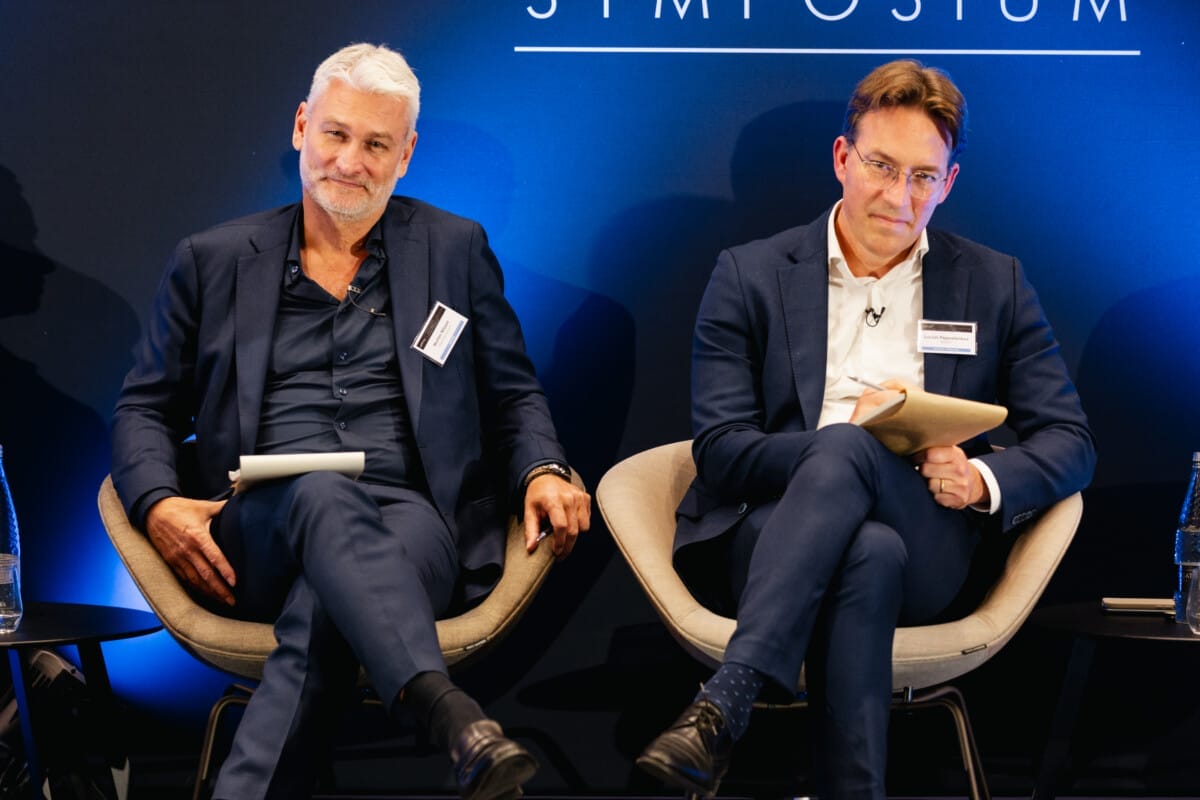
Morten Nilsson (L) and Lucian Peppelenbos. Photo: Jack Smith

Institutional investors who committed to net zero a while back now face a dramatically different world, including Brightwell Pensions which supported its client fund, the BT Pension Scheme (BTPS), to set an ambitious 2035 net-zero goal in 2020.

Since then, the world has been shaken by the pandemic and wars, and Brightwell has seen a significant shift in its stakeholder landscape. The asset manager has a different trustee board, and the population has turned sceptical about climate investment.

“Things are changing and for us the critical thing is to make it clear why we think [our net zero target] gives a better risk adjusted return. We are not doing it to save the world,” Morten Nilsson, chief executive of Brightwell Pensions said at the Fiduciary Investors Symposium at Oxford.

Brightwell’s net zero journey is marked by annual targets, backstopped by a belief that it is hard to predict how fast the pace of change might become and, therefore, it is important to prepare now. The focus is on real-world outcomes, and Nilsson said the team won’t turn down good investments just because a company doesn’t have a 2050 net zero target.

Robeco has developed a model that tracks corporate net zero and transition plans across the asset manager’s entire investment universe. Lucian Peppelenbos, climate strategist at Robeco, explained how the model charts companies in terms of carbon efficiency in their sector, and signposts how likely a company is to deliver on its targets over time.

The model explores the governance sitting behind a company, and if climate strategy is embedded.

Sponsored Content

“We look at the track record in reducing emission and green revenue and capex,” he said. For companies with high emissions, the model translates the capex spend to analyse the surplus or gap in capex,” he said.

“It tells us about the ambition and credibility.”

Ambitious companies pass into Robeco’s “green zone” signposting an improvement in their transition plans, where they are taking action and a clear view of the opportunity to allocate capital.

Prevailing issues

Peppelenbos added that “hardly any energy companies” are in the green zone with a credible transition plan. Industrials have stronger transition plans, particularly sectors like cement in emerging markets. He also noted that the tech sector, once lauded as the net zero leader, is reneging on its commitments because of the demand for energy to fuel data centres feeding AI. “On their websites you don’t see net zero,” he said.

Nilsson said that Brightwell has seen some of the most encouraging changes in real estate, noting that green real estate achieves higher rental incomes.

The session reflected on the importance of fiduciary duty around climate investment. For many investors, fiduciary duty only allows “a little bit” of impact or climate solutions.” Much of the investment in net zero has come with the expectation that public policy will drive the transition yet public policy has stalled.

Much of the investment in net zero was based on the idea that investors would be in the right position when government policy starts to drive the transition. However, this is not happening, and the policy position remains out of kilter whereby net zero investors are front-running behind the policy proposition. Delegates heard that the certainty of a net zero future is now in doubt.

Peppelenbos stated the need for policy, noting that Robeco is front-running net zero policies based on risk/return considerations.

US public asset owners are not mandated to integrate sustainability. Nor does Brazil have public policy demands on its funds – only 13 of the 400 public pension plans in Brazil have joined the PRI.

Panellists reflected on the importance of public and private partnerships in the transition, noting that governments need to work more with private capital.

“They need money and we have it,” said Nilsson.

But he noted that it is difficult for investors to trust policymakers. It is vitally important for investors to be able to pass on rising costs to consumers. But referencing how investors lost money in UK utility Thames Water (an asset heavily impacted by climate change) he said someone “has to pay” for assets to be investable.

“Political risk not to be underestimated in all of this,” he concluded.

Leave a Comment

Reckoning on growth: Why tech offers the solution

Reckoning on growth: Why tech offers the solution

Daniel Susskind, author of "Growth: A Reckoning" argues that leaning into new technology will allow global economic growth without gobbling up the earth's finite resources.

Sort content by

AI is a copilot, not a driver, of asset owner organisational change

The use of AI in asset owners’ investment operations continues to proliferate but increasingly they’re setting clear boundaries around what it is and is not permitted to do, while resisting the temptation to allow AI to dictate organisational change.

Great power competition: The unlikeable, but undeniable, mega theme

The fragmentation of global power, and big increases in defence spending, alongside climate change and the rise of AI, have been identified by Wellington Management as major generational changes that will impact markets for decades to come.

Private market investors ponder transition investment

Investors putting capital to work in private market transition assets face unknowns around government policy, but the Fiduciary Investors Symposium at Oxford has heard that private credit also fits well with the long term nature of transition investments and brings valuable relationships with investee companies.

Why investing in biodiversity champions pays

Delegates at the Fiduciary Investors Symposium, Oxford University heard how an allocation to biodiversity champions, without any tech exposure, only slightly trails the MSCI World in a reflection of how it is possible for investors to make money in biodiversity solutions.

Biodiversity: Regeneration set to become big investment theme in future

Regeneration will become a key investment theme in the future according to multiple biodiversity themes, according to Gabriel Micheli, senior investment manager, thematic equities, Pictet Asset Management.

‘Opportunity to lose a lot of money’ in net zero investments

Allocating capital to net zero opportunities doesn’t mean investors are prepared to do charity. In a universe of potential transition solutions, Battcock Professor of Environmental Economics Cameron Hepburn at the Smith School of Enterprise and the Environment, University of Oxford said investors should look at them with some filters.