FIS 2020: Networking roundtables

The final session of FIS Digital 2020 allowed investors to ‘meet’ and share ideas via private networking groups using a breakthrough technology

The final session of FIS Digital 2020, Conexus Financial’s last digital event of the year attended by 185 asset owners with a collective $11 trillion assets under management, marked another milestone in the company’s innovative event delivery.

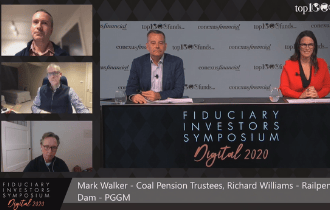
FIS Digital 2020 delegates were able to network with peers in a simulation of a live roundtable discussion. Investors joined private chat rooms with peers using special networking technology to discuss the key themes of the conference in “rooms” or “tables.”

Each discussion was chaired by a different asset owner or manager speaker. Richard Williams, CIO of the United Kingdom’s £25 billion ($33 billion) RMPI Railpen, Jaap van Dam, principal director, investment strategy at the Netherland’s €268 billion ($325 billion) PGGM which manages assets for more than 2.5 million Dutch participants, and Mark Walker, CIO of the UK’s £21 billion ($27 billion) Coal Pension Trustee led and coordinated the discussions, adding their own experiences from a tumultuous year.

For Walker this included a heightened focus on idea generation and new sources of income producing assets.

For Railpen the focus has been on seeking out investment opportunties and drawing on a cash pile built up especially for the kinds of opportunities crises trigger, while for PGGM the focus has been on a green recovery.

Sponsored Content

In year when sharing and collaboration in person, a vital lifeblood to investment, has been impossible FIS 2020 Digital was able to offer a valuable alternative.

Leave a Comment

APG’s view on accelerated change

APG’s view on accelerated change

APG's CIO Peter Branner explains how the pandemic has accelerated key trends already underway around digitization, central bank policy and action to combat climate change. It all points to fierce competition for private assets.

Sort content by

The need for urgent action on climate

Nigel Topping who was appointed by the UK Government as the High Level Climate Action Champion for United Nations climate talks, COP26 joins Fiona Reynolds, chief executive of the PRI, in conversation with Amanda White, editor of Top1000funds.com This episode focuses on climate change and how, amongst and despite, the short-term focus of this COVID-19 crisis, we can mobilise government, business and investors into action around this important issue of climate change.

Kotkin’s mega trends: Deadends & despair

Political regimes around the world are stuck in a series of dead-ends and despair. Most importantly, the China-US relationship has hit a brick wall as their fundamentally different values and interests clash. Deterrents and robust policy is the only way forward, says Stephen Kotkin, professor in history and international affairs, Princeton University.

New AA model prioritises liquidity

Singapore’s sovereign wealth fund GIC and PGIM, one of the world’s largest asset managers, have collaborated to develop a world-first asset allocation framework that explicitly models the impact of private assets on total portfolio liquidity, incorporating both the top-down allocation view and the bottom-up cash flow view.

The future of the corporation

In this Fiduciary Investors Series podcast Amanda White talks to Henry Richards, who is the project lead on the Future of the Corporation at the British Academy. The discussion is part of our exploration of purposeful companies and the premise that we need to redefine business in the 21st century to build trust between corporations, investors and society.

The importance of resilience

Already OPTrust’s portfolio can best be described as resilient. But CIO James Davis, who started his career in October 1987, expects global macro economic changes from this crisis that we have never seen before and he wants to position the portfolio for whatever is around the corner.

What past market crashes teach us

Looking back at the portfolios of large institutional investors during and after the dot.com crash and the GFC, CEM Benchmarking, reveals commonality in the portfolios that thrived. For both events the top quartile returns were more than 2 per cent higher than the bottom quartile. Analysing the asset allocation and behaviour of investors showed two clear themes: top quartile performers had more defensive allocations pre-crash; and rebalancing is a tailwind for performance.

Previous



