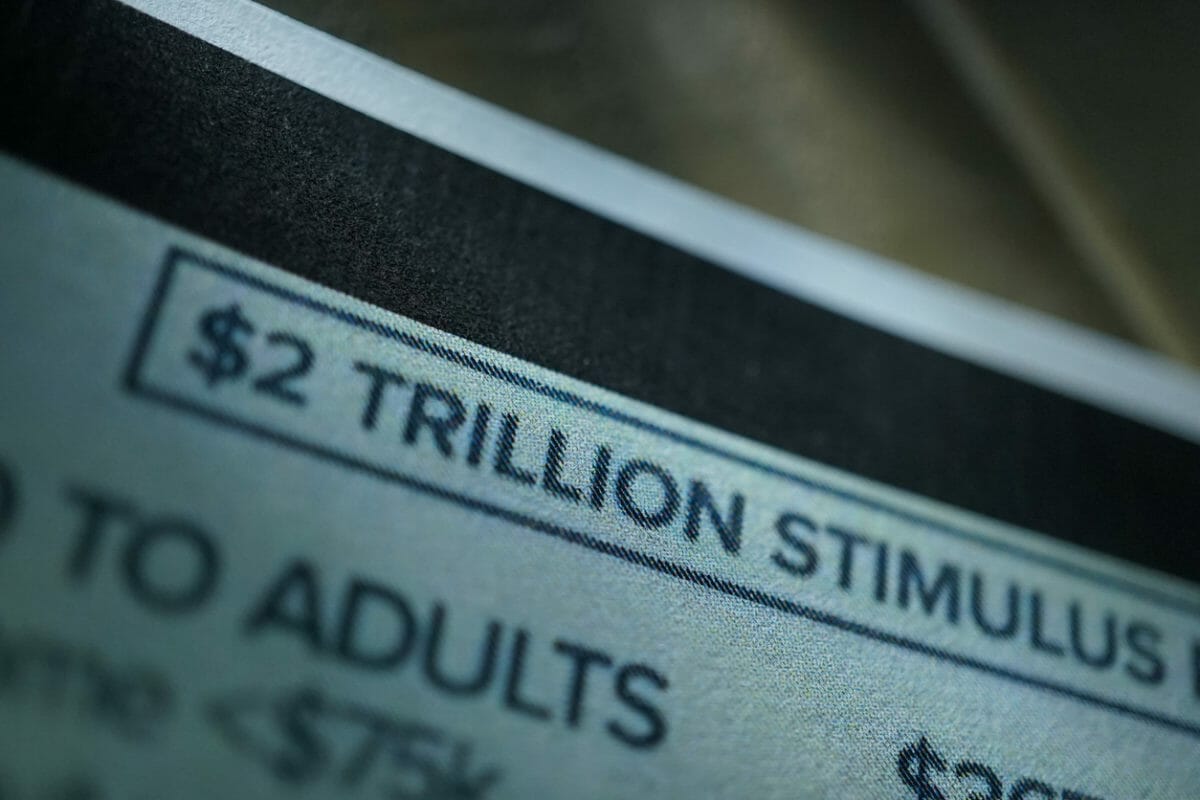

Economists call for targeted spending

Three prominent Chicago Booth economists have called for more targeted spending by the US government to more effectively manage the disruption to the economy, but they are not worried about inflation in the near term.

Austan Goolsbee, the Robert P Gwinn Professor of Economics at Chicago Booth and the former chair of the Council of Economic Advisers and a member of President Obama’s cabinet, says the virus is “the boss” and is still what is driving the economy.

“We should not be calling these bills ‘stimulus’ because they are not traditional stimulus. These are just rescue payments, they are disaster relief, once you realise that it becomes obvious that you give the money to the people who need it,” he says.

Goolsbee, who is named one of the 100 global leaders of tomorrow by the World Economic Forum, says that now, in the middle of the worst downturn on record and in what is possibly a double-dip recession, is not the time for governments to stop spending.

“It is not the time to tighten the belt. Governments should spend the money and direct it to the places it is most necessary. Tightening would completely miss the economic moment.”

Similarly Randall Kroszner, Deputy Dean for Executive Programs and the Norman P Bobins Professor of Economics at Chicago Booth says the government needs to move from policies that were ‘hopeful’ to those that are more targeted.

Sponsored Content

“It’s not just about spending more, it’s about where is the best bang for your buck,” he says.

Kroszner, who was a governor of the Federal Reserve from 2006 to 2009 and spoke at the Fiduciary Investors Symposium last year, says the government has to recognise that many sectors will not go back to where they were pre pandemic.

“The most recent jobs report shows there is a boom in tech but a significant contraction in hospitality and transport. It is hard to move people from one to the other. Some of those companies will have to shut down, and we need to provide support for those families and move on. That is hard for politicians to do, to move on. But we have to see that we need to provide support for people to move on, that is good for them as they get into productive work more quickly, and it is good for the economy.”

Raghuram Rajan, the Katherine Dusak Miller Distinguished Service Professor of Finance who was the 23rdGovernor of the Reserve Bank of India and was also formerly chief economist and director of research at the International Monetary Fund, says this is an opportunity for governments to concentrate on structural reform.

“Relief makes sense, but it has to be better targeted, a lot of money has gone to people who don’t need it,” he says pointing out that one option would be to extend unemployment insurance in sectors that are worse off.

“I am perturbed by the constant feeling this is all about stimulus. There is a need for serious structural reform in many countries including the US. It is clear the pandemic has exacerbated every inequality there was before. To that extent it is time to try and fix those sources of problems. How do we build back better, rethink education and infrastructure? It’s not so much about stimulus, but about how do we create sustainable growth in the medium to long term and focus on reforms.”

The economists called for a shift away from a focus on the headline spending number and a focus on where the relief is being spent.

“What you want is bang for buck: where are you spending it, not the amount you spend. Are you investing in human capital, infrastructure, what is the return and productivity of the investment, that is what will drive wages growth,” Kroszner says.

Goolsbee says the Federal Reserve has missed its inflation target for the past decade, and he continues to “not be afraid of inflation”.

“I don’t think the Fed should take its foot off the pedal because they are scared of inflation,” he says.

Similarly Rajan says the Fed won’t pre-empt anything to manage inflation.

“It will wait until it sees strong inflation and at that point it may act, but that probably won’t be over the next year,” he says.

Leave a Comment

Long Covid for the global economy

Long Covid for the global economy

Prevention is the balm for global economic shock, says respected central bank adviser Professor Warwick McKibbin who says the world’s economic future is uncertain and inflation is likely to remain under a persistent pandemic.

Sort content by

Rising to the challenge

Boards and investment committees must rise to the current challenge, with governance models needing a pivot to respond to the new social distancing norm. Roger Urwin outlines a virtual investment committee model.

Liquidity, rebalancing reign at PSERS

Cash is king right now, according to CIO of the Pennsylvania School Employees’ Retirement System, Jim Grossman, and he’s got plenty of it. The fund has a very diversified asset allocation, with about half the portfolio invested in liquid assets and Grossman and his team are working hard to make sure that the strategic allocations are maintained.

Wiseman’s wise words for investors

Ensuring a portfolio has enough liquidity to rebalance back to the long-term strategic asset allocation is the most critical preparation investors can do ahead of any crisis, according to Mark Wiseman, who said this current environment could be the "opportunity of a generation".

France’s FRR prepares to ramp up equity

The French SWF, FRR, is preparing to invest more in equities and illiquid assets as important reforms extend its time horizon. With the coronavirus crisis delaying the asset allocation decisions the fund is operating in an "intermediate context", slowly shifting out of bonds and into equities.

Coronavirus, climate change parallels

The lackadaisical response by the United States to the coronavirus crisis is indicative of broader risk management issues and comparable to the country’s anaemic response to climate change according to risk expert, Bob Litterman.

The power of collective investor action

It’s time for the responsible investment community to step up and play its role as long-term holders of capital and call corporations to account. It’s time for asset owners sitting at the apex of the investment chain to lead the financial sector through this crisis. We need to maintain a focus on long-term horizons and support collective action while trying to understand the real issues companies are facing from COVID-19 as well as the flow on effects to our individual portfolios.

Previous