
Rebalancing at UTIMCO: Why investors should worry about corporate earnings

In today’s volatile and challenging markets, University of Texas Investment Management Co (UTIMCO), the $81.5 billion asset manager and one of the largest public endowments in the US, will maintain its counter-cyclical approach by rebalancing every month and going overweight in equity as it sees the market drop.

Following a predetermined set of thresholds, the investor is happier to be overweight because it is easier to tell when the market is cheap and buy in, than it is to judge if the market is expensive, and be underweight.

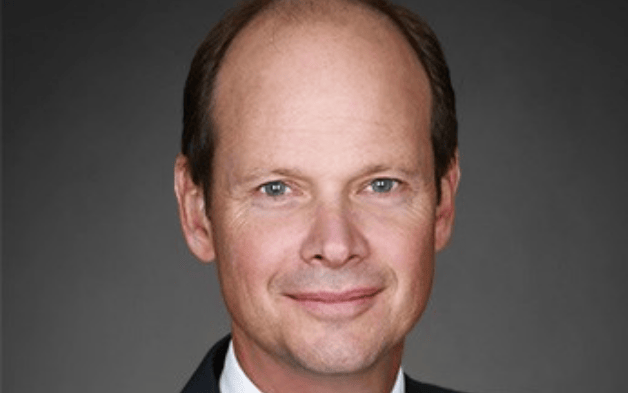
“We will go overweight when we can, buying assets cheaply and ride that up: we rarely go underweight,” said president, CEO and chief investment officer Rich Hall in a recent board meeting at the fund’s Austin headquarters.

During the meeting, Hall also outlined his key concerns regarding the impact of policy shifts by the US administration on projected corporate earnings for 2025, describing a negative shift in earnings expectations due to lower growth, higher inflation and little added relief from the Federal Reserve.

Consensus numbers for the S&P 500 year-on-year earnings per share (EPS) growth estimates were as high as 15 per cent at the end of 2024, and it looked like the S&P would end the year at 6500 points. Key metrics signposted a constructive or neutral outlook for companies, and investors believed that the new administration would implement pro-business policies.

However, the market missed the magnitude of the impact of tariffs on trade and the economy. These numbers fell “off a cliff” in January this year, and are now as low as 9 per cent. Although Hall acknowledged that [9 per cent] is still growth, it is “not what it was,” and comes with higher levels of risk given enduring policy uncertainty.

Sponsored Content

Recessions happen when people ‘wait and see’

“There is a saying that recessions happen when people wait and see. The policy and economic uncertainty is causing consumers and companies to pull back on spending until they see what is going to happen,” he warned, adding that the probability of a recession increases as spending slows, and that a recession can become self-fulfilling until new facts emerge to break the pattern.

Moreover, he noted that despite the sharp fall in the equity market in April, the S&P 500 is still at elevated levels relative to the last ten years. This is a cause for concern for investors given the uncertainty that is still in the economy, and the fact that the higher the level, the bigger the potential fall.

During the last 12 recessions since World War 2, the median market fall in the S&P 500 has been 24 per cent and the median EPS fall has been 11 per cent. Modelling these averages to current levels if recession strikes suggests an S&P valuation of 4500, triggered by a decline in earnings and a compression in valuation multiples.

Getting stuck in the mud with stagflation

Hall also flagged his concerns regarding stagflation – one of the most difficult environments for asset values – given the fall in GDP growth and the rise in inflation.

“You can get stuck in the mud and that’s not a great place to be.” He noted that inflation expectations have spiked higher across the board and it remains to be seen to what extent tariffs will push it higher still. Meanwhile, inflation uncertainty has slowed the pace of rate cuts by the Fed, with the idea that any cuts will come later, not sooner.

Despite the high levels of volatility in the last 12 months, UTIMCO’s portfolio has earned 8.6 per cent, exceeding its benchmark by over 2 per cent, and the asset base has grown to $81.5 billion.

The endowment has 26.2 per cent in public equity, 27.8 per cent in private equity and 6.4 per cent in directional hedge funds. It has a 5 per cent allocation to long treasuries, 2.3 per cent in cash and 10.8 per cent in stable value, plus a 2.8 per cent allocation to natural resources, 4.8 per cent infrastructure, and 8.8 per cent real estate. Five per cent is allocated to strategic partnerships.

Leave a Comment

Dutch pension funds face tech reckoning, warns central bank

Dutch pension funds face tech reckoning, warns central bank

The Netherlands' Central Bank has warned the country's pension funds that their €150 billion ($177 billion) investments in tech companies, representing almost 43 per cent of their listed equities portfolios and 8 per cent of their total balance sheet, is at risk from a potential AI bubble.

Sort content by

A new route to minimising volatility

Defensive equity investment strategies are nothing new, but a key issue with many is that defensive does not necessarily mean low volatility. Scientific Beta looks at a strategy to target both goals, using robust low volatility controls to create a new defensive index for the volatility-averse investor.

France’s FRR prepares to ramp up equity

The French SWF, FRR, is preparing to invest more in equities and illiquid assets as important reforms extend its time horizon. With the coronavirus crisis delaying the asset allocation decisions the fund is operating in an "intermediate context", slowly shifting out of bonds and into equities.

Emerging markets vulnerable

Investors have pulled $83 billion from emerging markets since the beginning of the COVID-19 crisis, the largest capital outflow ever recorded, and the IMF and the World Bank are calling on G20 countries to show relief in dealing with their emerging market counterparts.

Time for a coordinated approach

The US Federal Reserve has fired its last round of ammunition, cutting interest rates to zero, in a move that continues to see it play from the monetary policy songbook. Some market commentators doubt whether it will be enough to prop up markets, raising the question of whether it is finally time for a more coordinated fiscal and monetary policy approach.

Former Trump adviser: recession coming

Kevin Hassett, the former economic adviser to US president Donald Trump, has warned that the chance of the global economy falling into a deep recession from the coronavirus outbreak was “pretty close to 100 per cent.”

Coronavirus: market impacts

The coronavirus has triggered a market correction, bringing the S&P 500 off its all-time high. But as always an analysis of fundamentals, and the relationship between price and value, is essential for allocating capital. So could this be a time to buy?

Previous



