
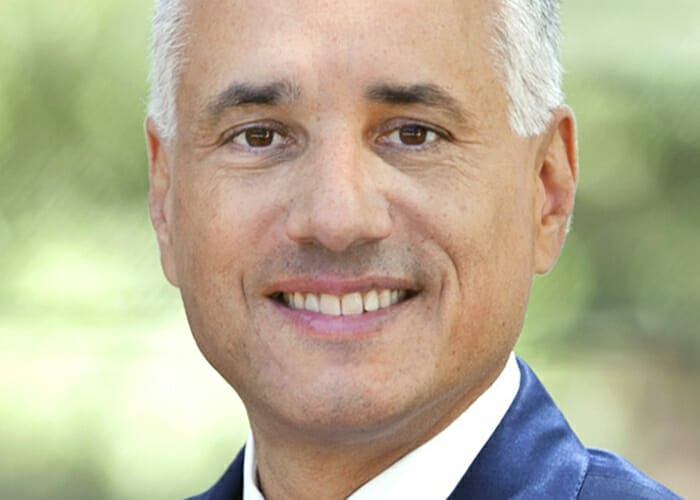

With more than $170 billion in equity exposure, the California Public Employees’ Retirement System is the biggest institutional sharemarket investor in the US. But chief investment officer Ted Eliopoulos says CalPERS is missing out on opportunities because private companies are waiting longer for their initial public offerings.
“What we see as an opening in the marketplace is how long private companies are staying private now,” Eliopoulos said in an interview at CalPERS’ semi-annual retreat meeting on January 16 in Petaluma, California.
Eliopoulos wouldn’t say how big a private company investment portfolio CalPERS is envisioning, but his interview remarks came after a panel of investors spoke at the meeting about whether the largest pension system in the US could take advantage of its home-state edge in a region that is headquarters to Silicon Valley and its start-up culture.
“We think there is an opportunity for CalPERS to invest in private companies, perhaps at later stages of the venture cycle,” Eliopoulos said in the interview. “Companies that have gone through their first, second, third, fourth venture round but aren’t ready yet…to go public, that’s an opportunity.”
Eliopoulos did not say when CalPERS would make a decision on the private markets portfolio. He did tell the $357 billion pension system’s board at the meeting that CalPERS had taken a “high level” of equity risk to meet annualised return expectations of 7 per cent over the next three decades. The fund’s new asset allocation plan, which goes into effect on July 1, increases the target for equity from 46 per cent of the portfolio to 50 per cent.
CalPERS doesn’t invest in major private companies that are yet to go public, such as Uber, like some other public pension plans have done. It does have a private equity portfolio worth about $26 billion, but most of it is devoted to buyout funds. Venture funds make up just $1 billion of the system’s private equity portfolio.
They have also performed poorly. On a five-year annualised basis, ending June 30, 2017, they have returned 4.7 per cent, compared with the private equity portfolio’s overall 11.5 per cent for the same time period, CalPERS statistics show.
Venture capital should be part of CalPERS’ private equity portfolio, said Steve Poizner, a start-up investor who spoke at the retreat meeting, but he said it should have a higher-quality set of investments.
“The point is that CalPERS historically has invested in venture funds that aren’t in the top tier,” said Poizner, who has also served as California’s insurance commissioner. “The top tier in Silcon Valley hasn’t wanted to partner with CalPERS for a variety of reasons. So the returns to CalPERS in the venture capital class haven’t been all that great. CalPERS needs to get more flexible so it can work with the top-tier VCs because the top-tier VCs produce the vast majority of the profits in the VC sector.”
Eliopoulos agreed, saying some top-performing VC funds had shunned CalPERS because of transparency rules the pension plan required.
“It’s absolutely critical in the field of active management in general – private equity, private markets, venture – to attach yourself to the very best talent in the marketplace,” he said.
Eliopoulos said an ongoing review at the fund is looking at alternative business models for private equity and venture capital, including outsourcing the portfolio. He said no timetable has been set but CalPERS has been in the process of soliciting proposals from investment managers for the outsourcing program as part of its review.







Leave a Comment
You must be logged in to post a comment.
Login