
From bonds to equities for GPIF

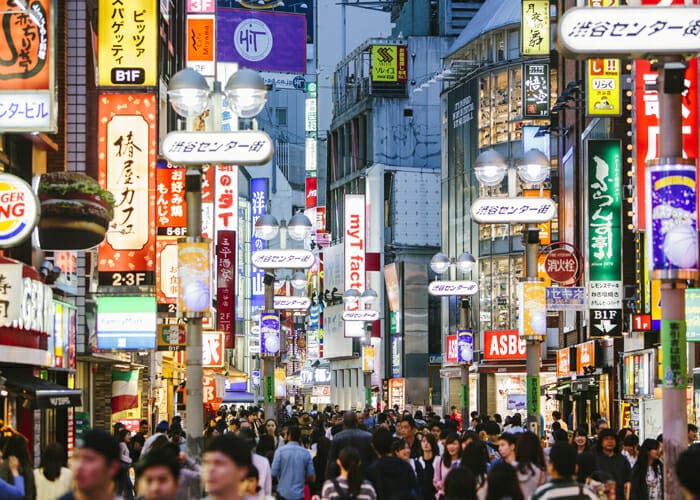
People walking in Shibuya shopping district.

During the two years to the end of December 2016, Japan’s Government Pension Investment Fund, the biggest investor in the world, decreased its domestic bonds exposure by 10 per cent, re-allocating the assets to domestic and international equities.

This has been a relatively quick move away from bonds, considering the extent of GPIF’s bond portfolio and the size of the fund. At the end of 2008, the fund had more than 75 per cent of its assets in domestic bonds, with only 6.6 per cent in international equities and 9.4 per cent in domestic equities.

Since December 2014, domestic equities have increased by 4 percentage points, to 23.76 per cent, at the end of December 2016, and international equities have increased by 3.5 percentage points, to 23.16 per cent of the fund.

The fund has $1.3 trillion in assets. It now invests in more than 2120 listed Japanese equities; the largest holding, by dollar investment, is Toyota, at 188,430,900 shares.

Globally, GPIF has holdings in 2596 companies, with the largest including Microsoft, Verizon, Johnson & Johnson, Exxon Mobil, Facebook, GE, Nestle, Wells Fargo, and Procter and Gamble.

As the fund has increased its allocation to equities, it has also become interested in stewardship. This month, it asked all of its external asset managers to disclose the details of their proxy voting records on behalf of GPIF.

Sponsored Content

In a statement, GPIF president Norihiro Takahashi, said: “GPIF believes that disclosure of the details of proxy voting records is very much essential for institutional investors to fulfil own stewardship responsibilities in order to deepen corporate governance reform and move its focus from ‘form’ to ‘substance’ as Japan’s Stewardship Code indicates. GPIF shall continue to enhance the mid- to long-term investment returns for our beneficiaries through improvement of corporate value and fostering sustainable growth of investee companies.”

As previously reported, in 2016, all of the fund’s external asset managers exercised their voting rights.

GPIF uses managers rather than investing directly, because its size makes it too influential. It generally limits a stock owning to 7 per cent. The fund has previously stated that its external managers with poor governance will get a smaller part of the cheque.

Leave a Comment

Long term lens shields Colorado from private credit jitters

Long term lens shields Colorado from private credit jitters

As concerns in private credit mount, Colorado PERA CIO and COO Amy McGarrity says the pension fund isn’t seeing any strains in its growing allocation to the asset class, arguing that long-term investors are shielded from the risks because they can lock up their capital to weather market cycles.

Sort content by

France’s FRR ups risk in line with longer term investment horizon

Fonds de reserve pour les retraites (FRR), France’s €21 billion ($24 billion) pension reserve fund, has increased its weighting to equity in line with a new strategic asset allocation to reflect the investor's longer return horizon. It is also eyeing more unlisted assets including private equity, private debt and infrastructure.

University of California: Less is more and simple is better in investing

Jagdeep Singh Bachher, the CIO who oversees the University of California's $198 billion in pension and endowment assets, says that he wants to keep investment simple as the fund removed its hedge fund allocation completely, conceding "it’s not one of the things we are good at doing".

CalPERS finds continuity in climate of uncertainty

Investors are grappling with a multi-regime change that is manifesting in trade and geopolitical upheaval and a rise in real interest rates. But at a recent meeting, the CalPERS board heard that US equities remain top performers and the dollar, though weaker, is still historically strong and wil remain so.

GPIF pins active equity overhaul on ‘scientific’ manager selection

A quest for manager and fund strategy diversification has led the world's largest pension fund, Japan’s Government Pension Investment Fund, to reach a decade-high allocation to active global stocks. Its active equity portfolio now consists of 103 funds, increasing fivefold compared to 2020 when it only invested in 20.

UPP: Canadian investor looks outside US markets

Canada's University Pension Plan is eyeing new risks and opportunities triggered by policies from the Trump administration, like additional taxes for US investments and a surge of public spending on defence and infrastructure in Germany. It is also fine-tuning its roster of active managers.

Alpha at North Dakota: Tracking error key to portfolio construction

The $8 billion North Dakota Department of Trust Lands is rolling out a core-satellite approach to portfolio construction in a bid to control tracking errors. But CIO Frank Mihail explains that in some asset classes like infrastructure, the process is more complicated.

Previous



