
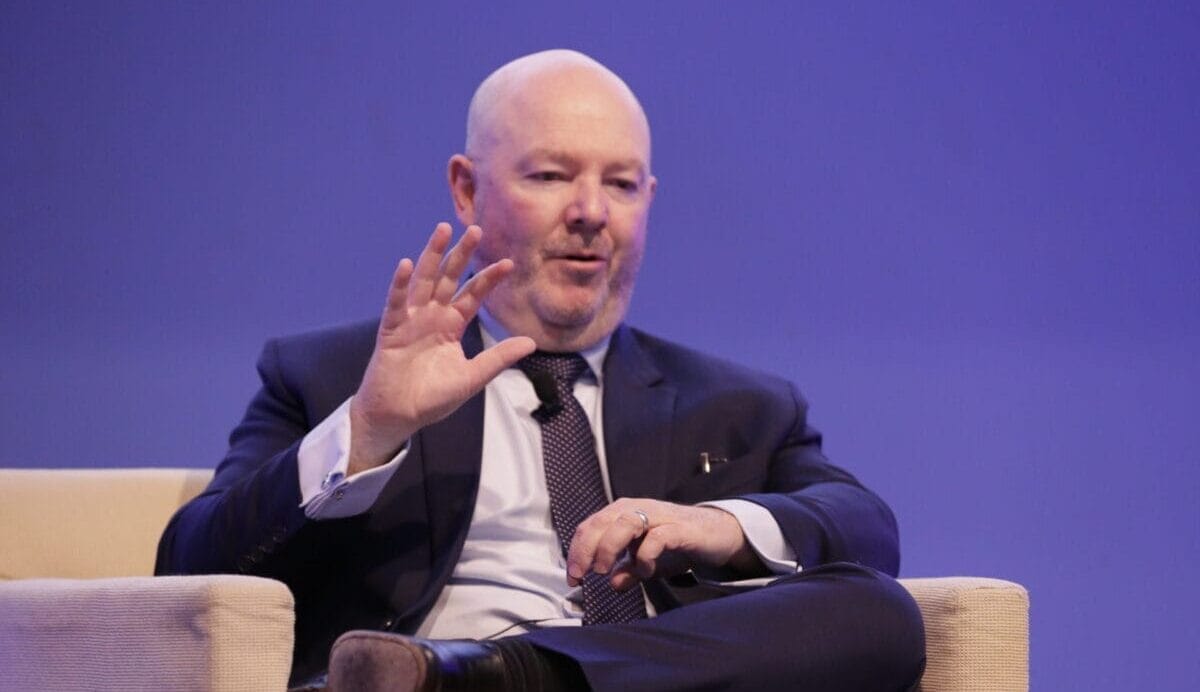

In the past two years, the Future Fund has made around $70 billion worth of changes in the portfolio that its director of research and insights, Craig Thorburn, said can be traced back to stubbornly high inflation.
The Australian sovereign wealth fund stood at A$225 billion ($149 billion) at the end of the 2024 financial year. In its latest position paper on geopolitics, it outlined its bias towards “owning inflation” as a way to mitigate risks that come with changing trade dynamics, a rise in strategic competition, and growing populism.
These portfolio changes were made between July 2022 and the end of June in 2024 across multiple asset classes, Thorburn said, and one of the most prominent decisions was to increase gold exposure as a part of the currency mix.
“We own two currency baskets – a developed one and an emerging market currency basket,” Thorburn told a CFA Society investment conference in Melbourne.
“One is primarily for diversification benefits; and the other is for a little bit of that, as well as return benefits against the Aussie dollar.
“We added gold into that mix to ensure that diversification benefit as it relates to our developed-market currency basket, so beyond only, say, US dollars or Japanese yen or euro, we also own some gold as well.”
The fund also started incorporating commodities exposures in its portfolio, which Thorburn said has been “a material uplift…to deal with this secular inflation driver”.
Some of the changes relate to a reduction in bond exposure, as Thorburn said that asset class’s long-term diversification benefits are not as evident as they once were. The Future Fund has been reinforcing this view with various position papers since 2022, suggesting that bonds can no longer sufficiently offset the equity risks.
“There are scenarios where we do believe that bonds can provide that diversification benefit – that’s probably in a more benign, or what I would call business cycle recession,” Thorburn said.
“But unfortunately, there are other scenarios that are very different going forward that we are contemplating.”
Alternatives such as hedge funds are attractive as diversifiers, which the Future Fund attributed as one of its key return drivers in the last financial year.
“On top of that, the duration exposure that we hold is actually through assets like infrastructure and property, and we do ensure that they do have that inflation linkage,” he said.
“In the case of property and infrastructure, one of the advantages – should it be contracted – is that you can actually get that inflation exposure through the contract.
“It’s not enough to just own those assets. You’ve got to ensure that that inflation pass-through is actually through the contract.”
While the changes were made in preparation of increasing geopolitical conflicts, Thorburn made it clear that the goal is not to “trade conflicts” but to position the portfolio to not only survive them but also thrive in their recovery.
“We are not trading conflict. We are not smart enough to do that. In fact, history shows that if you try and do that, you’re probably going to destroy wealth,” he said.
“I would argue…macro has always mattered, even when it looked like it didn’t. Geopolitics is one of those external factors that has actually mattered, but over the last 30 or so years, probably because of the Great Moderation and the great peace dividend, it looked like it didn’t.
“But unfortunately, in our view, it [the pronounced impact of geopolitical conflicts] is back.”








Leave a Comment
You must be logged in to post a comment.
Login