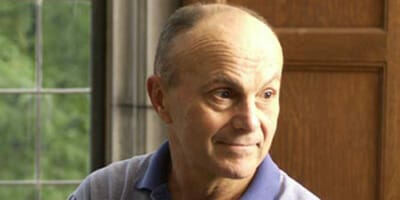
The Fama of modern finance

When Eugene Fama enrolled at Chicago Booth School of Business in 1960, “finance was a joke”, he says in a candid and fascinating insight into his more than 50 years as a student, academic and teacher at the university.

The essay, published by Chicago Booth’s Capital Ideas, details Fama’s own history but also a short history of finance including how the efficient-market hypothesis was born.

Fama, who is often called the “father of modern finance”, calls the Black-Scholes paper on option pricing the most important paper in economics of the twentieth century.

“No other paper has to be learned by every single economist getting a PhD and has also created an industry – the derivatives industry.”

Fama, who also got into Harvard, chose to go to Chicago because he was advised that “it was more academically oriented than Harvard”.

He is the Robert R McCormick Distinguished Service Professor of Finance, and received a MBA and PhD from the University of Chicago Booth School of Business

Sponsored Content

“I love my work,” he says in the essay. “I have no intention of stopping as long as I’m breathing – and I may even do it after that.”

To read the full essay, click here.

Leave a Comment

Sort content by

Tail risk parity, V 1.0

Just when you thought you were safe, the next reiteration of risk parity has arrived. AllianceBernstein’s tail risk parity takes the concept of risk parity, reallocating assets uniformly according to risk, but it uses tail risk, not volatility, as the core measure. The concept of risk parity is a portfolio diversified according to risk, rather

Retirement: a cause worth working on

There are two things that drive the newly appointed global chief operating officer of State Street Global Advisors, Greg Ehret, in his bid to improve the client experience: the retirement business is a cause worth working on and the clients are the reason the business exists. Ehret was appointed to the new position at SSgA,

Pension funds, where banks no longer go?

There continues to be potential for pension capital appearing where bank lending no longer wants to go. Commentators in the UK and continental Europe have heightened expectations that pension funds will step in to help fill the continent’s bank financing gap. Societe Generale, for instance, recently predicted further “disintermediation” by investors sidestepping banks and looking

Building consensus for investment beliefs at CalPERS

An investment-beliefs workshop for the CalPERS board, held in April, revealed five areas, including active management, where the views of the board and staff lacked consensus. The contentious, or unsettled, topics for discussion were active management, private asset classes, sustainability (environmental, social and governance), investment performance targets and stakeholder considerations. At the board workshop, Janine

Behind PGGM’s ESG index

In 2010 PGGM conducted a study to see if it was possible to reduce the number of companies it invested in from 4000 to 400, based on its environmental, social and governance leanings, and still maintain it’s beta risk/return profile. The idea was that the €133-billion ($174-billion) fund would better know and understand what it

Holland’s hybrid: defined ambition

Jan Tamerus, actuary director at PGGM, was instrumental in developing the new Dutch pension defined-ambition structure. Back in 2006, he was involved in looking at the sustainability of the defined benefit system and in concluding it was not in fact sustainable, the idea of defined ambition evolved. One of the key reasons for not going

Previous




