Sustainability among key industry’s tagged for China’s growth

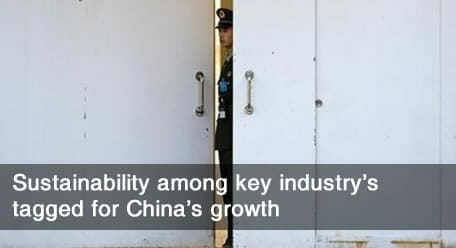
It’s not very salubrious but it’s secure. The four-star Jingxi Hotel in Beijing (pictured), which is owned by the People’s Liberation Army, hosted the annual plenum of the Communist Party’s Central Committee to draft the country’s next five-year plan.

The 12th five-year plan, nutted out by about 300 committee members, will be put to the National People’s Congress in March for ratification. The key themes in the latest plan are sustainability and reducing inequalities between provinces.

Analysts are predicting a lower GDP-growth target to be discussed between now and March, with details of the plan coinciding with a surprise 25bps point rise in the official interest rate last week – the first in China for three years.

A research note from HSBC Global Banking and Markets says more growth is likely to have to come from private consumption which has dropped from 50 per cent of total GDP to an estimated 36 per cent in the past 20 years.

“Expect further efforts to boost household incomes, primarily through higher minimum wages, as well as lower personal taxes,” the bank says.

Notwithstanding the stated concern for poorer provinces, the latest plan intends to speed the demographic shift to the cities, which will further boost consumption.

Sponsored Content

After the meeting, the Government confirmed a list of emerging strategic industries to be at the forefront of a “higher quality” of economic growth. They are: energy-saving and environmental protection firms, next generation IT, biotech, high-end manufacturing, new energy, new materials and composites, and clean-energy cars.

According to Shanghai Securities News, the group of industries currently make up only 3 per cent of GDP but are expected to contribute at least 15 per cent by 2020.


Leave a Comment

Sort content by

Colorado fund stokes fire of Congressional grilling of ratings agencies

Premature efforts to eliminate the use of credit ratings agencies without an adequate alternative would increase risk to investors, warned Gregory Smith, the chief operating officer of the Public Employee’ Retirement Association of Colorado (PERA).mrec4inarticleinline Sponsored Content scnative1 scnative2 scnative3

Investors miss emerging opportunities post-crisis

The financial crisis and subsequent fiscal adjustments and deleveraging in developed markets has enhanced the case for emerging market investing, says global investment strategist and specialist in emerging markets at State Street Global Advisors, George Hoguet, but investors are not taking advantage of the complete opportunity set.mrec4inarticleinline Sponsored Content scnative1 scnative2 scnative3

GIC cuts developed allocations as growth slows

The Government of Singapore Investment Corporation (GIC) will continue to increase its allocation to emerging economies and cut back on its exposure to developed markets because of concerns over slowing growth.mrec4inarticleinline Sponsored Content scnative1 scnative2 scnative3

Dutch reforms ‘flawed’, warns Ambachtsheer

The pension thought-leadership mantle held by The Netherlands has been called into question by the new Dutch pension accord, according to commentary in the latest Ambachtsheer Letter, which details perceived design flaws in the accord.mrec4inarticleinline Sponsored Content scnative1 scnative2 scnative3

Winners emerge from crowded field in UN PRI race

Six candidates have gained election to the advisory council of the UN PRI in a close-fought election that for the first time saw asset managers and service providers included.mrec4inarticleinline Sponsored Content scnative1 scnative2 scnative3

Mooted US downgrade foreshadows post-triple A world

While the US narrowly avoided defaulting on its spiralling debt, concerns about a possible downgrade of the US credit ratings is likely to herald a post-triple A ratings investment world, say fixed-income experts.mrec4inarticleinline Sponsored Content scnative1 scnative2 scnative3

Previous



