Sustainability among key industry’s tagged for China’s growth

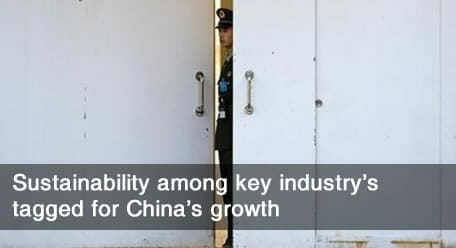
It’s not very salubrious but it’s secure. The four-star Jingxi Hotel in Beijing (pictured), which is owned by the People’s Liberation Army, hosted the annual plenum of the Communist Party’s Central Committee to draft the country’s next five-year plan.

The 12th five-year plan, nutted out by about 300 committee members, will be put to the National People’s Congress in March for ratification. The key themes in the latest plan are sustainability and reducing inequalities between provinces.

Analysts are predicting a lower GDP-growth target to be discussed between now and March, with details of the plan coinciding with a surprise 25bps point rise in the official interest rate last week – the first in China for three years.

A research note from HSBC Global Banking and Markets says more growth is likely to have to come from private consumption which has dropped from 50 per cent of total GDP to an estimated 36 per cent in the past 20 years.

“Expect further efforts to boost household incomes, primarily through higher minimum wages, as well as lower personal taxes,” the bank says.

Notwithstanding the stated concern for poorer provinces, the latest plan intends to speed the demographic shift to the cities, which will further boost consumption.

Sponsored Content

After the meeting, the Government confirmed a list of emerging strategic industries to be at the forefront of a “higher quality” of economic growth. They are: energy-saving and environmental protection firms, next generation IT, biotech, high-end manufacturing, new energy, new materials and composites, and clean-energy cars.

According to Shanghai Securities News, the group of industries currently make up only 3 per cent of GDP but are expected to contribute at least 15 per cent by 2020.


Leave a Comment

Sort content by

Risk-averse investors widen search for safe havens

While a flight to quality characterised the response of investors to the previous financial crisis, the latest figures on capital flows reveal that the new risk-off landscape could involve a wider search for safe havens, following the recent market tumble.mrec4inarticleinline Sponsored Content scnative1 scnative2 scnative3

DB dose needed to purge DC parasites

This month Australia celebrated 20 years of its compulsory superannuation guarantee system. Observing the past two decades, “entrepreneurial academic” Jack Gray has some advice for those rebooting their system, and it’s not defined contribution. mrec4inarticleinline Sponsored Content scnative1 scnative2 scnative3

POLL1

Have your say What is the collective noun for a group of global pension funds? * What is the collective noun for a group of fund managers? * The best results will be published next week. mrec4inarticleinline Sponsored Content scnative1 scnative2 scnative3

Back to the future: short-selling ban lambasted

Cliff Asness must be a very stressed man. Not only has he been “mad as hell” for nearly three years (or is it mad again?) but also the reprise in responses by regulators around the globe to market crises, namely banning short selling, means he doesn’t have to write any original words in response.mrec4inarticleinline Sponsored

Texas Teachers examines incentive pay to staff

The Teacher Retirement System of Texas has reviewed the benchmarks it used to calculate investment staff compensation after concerns were raised over the level of bonuses it paid to senior staff earlier in the year.mrec4inarticleinline Sponsored Content scnative1 scnative2 scnative3

Are pension funds really long-term investors?

Pension funds used to be considered long-term investors, but the reactionary behaviour of a recent prudence* of pension funds globally has changed my view of their time-horizons and subsequent role in capital markets. *Prudence is the newly-crowned collective noun for pension funds as per the competition in our newsroom. Have your say in our poll.

Previous



