Sustainability among key industry’s tagged for China’s growth

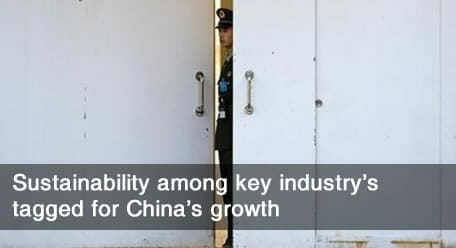
It’s not very salubrious but it’s secure. The four-star Jingxi Hotel in Beijing (pictured), which is owned by the People’s Liberation Army, hosted the annual plenum of the Communist Party’s Central Committee to draft the country’s next five-year plan.

The 12th five-year plan, nutted out by about 300 committee members, will be put to the National People’s Congress in March for ratification. The key themes in the latest plan are sustainability and reducing inequalities between provinces.

Analysts are predicting a lower GDP-growth target to be discussed between now and March, with details of the plan coinciding with a surprise 25bps point rise in the official interest rate last week – the first in China for three years.

A research note from HSBC Global Banking and Markets says more growth is likely to have to come from private consumption which has dropped from 50 per cent of total GDP to an estimated 36 per cent in the past 20 years.

“Expect further efforts to boost household incomes, primarily through higher minimum wages, as well as lower personal taxes,” the bank says.

Notwithstanding the stated concern for poorer provinces, the latest plan intends to speed the demographic shift to the cities, which will further boost consumption.

Sponsored Content

After the meeting, the Government confirmed a list of emerging strategic industries to be at the forefront of a “higher quality” of economic growth. They are: energy-saving and environmental protection firms, next generation IT, biotech, high-end manufacturing, new energy, new materials and composites, and clean-energy cars.

According to Shanghai Securities News, the group of industries currently make up only 3 per cent of GDP but are expected to contribute at least 15 per cent by 2020.


Leave a Comment

Sort content by

There’s no escaping the fiduciary duty of creating a better world

ESG, and more recently climate change, are now largely accepted in the investment process, and more importantly have passed the fiduciary duty test.

Six US public funds top the class

A study examining funding policy, benefit design, and economic assumptions of six US public funds, which managed to endure the economic turmoil, shows some consistent features that could be emulated for fund persistence.mrec4inarticleinline Sponsored Content scnative1 scnative2 scnative3

Managing liquidity and rebalancing constraints

This extension of previous research by Morgan Stanley’s Martin Leibowitz and Anthony Bova provides an analysis of the relationships between rebalancing liquidity, portfolio flows, and diversification into illiquid assets.mrec4inarticleinline Sponsored Content scnative1 scnative2 scnative3

Fiscal disunity mires euro as US$ buoys slightly

Conflicting social, political and economic priorities are fighting for dominance in the Eurozone, and managing director and head of currency management at SSgA, Collin Crownover, believes this is affecting the outlook for the currency, while the US dollar, in a relative sense, looks quite positive. mrec4inarticleinline Sponsored Content scnative1 scnative2 scnative3

CII wants SEC to keep up legal fight

The Council of Institutional Investors has called for the Securities and Exchange Commission to pursue a re-hearing of a controversial proxy access rule that would have bolstered shareholder rights but was recently defeated in a legal challenge.mrec4inarticleinline Sponsored Content scnative1 scnative2 scnative3

Investors look at private equity despite bumpy ride on public markets

Despite European public equity markets tumbling, private equity is yet to experience the sharp downturn it suffered in the last financial crisis, with investors still showing interest in the strongly performing asset, said independent alternative assets research firm Preqin.mrec4inarticleinline Sponsored Content scnative1 scnative2 scnative3

Previous



