Sustainability among key industry’s tagged for China’s growth

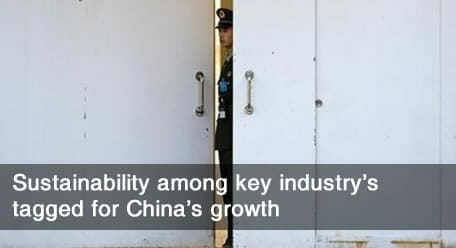
It’s not very salubrious but it’s secure. The four-star Jingxi Hotel in Beijing (pictured), which is owned by the People’s Liberation Army, hosted the annual plenum of the Communist Party’s Central Committee to draft the country’s next five-year plan.

The 12th five-year plan, nutted out by about 300 committee members, will be put to the National People’s Congress in March for ratification. The key themes in the latest plan are sustainability and reducing inequalities between provinces.

Analysts are predicting a lower GDP-growth target to be discussed between now and March, with details of the plan coinciding with a surprise 25bps point rise in the official interest rate last week – the first in China for three years.

A research note from HSBC Global Banking and Markets says more growth is likely to have to come from private consumption which has dropped from 50 per cent of total GDP to an estimated 36 per cent in the past 20 years.

“Expect further efforts to boost household incomes, primarily through higher minimum wages, as well as lower personal taxes,” the bank says.

Notwithstanding the stated concern for poorer provinces, the latest plan intends to speed the demographic shift to the cities, which will further boost consumption.

Sponsored Content

After the meeting, the Government confirmed a list of emerging strategic industries to be at the forefront of a “higher quality” of economic growth. They are: energy-saving and environmental protection firms, next generation IT, biotech, high-end manufacturing, new energy, new materials and composites, and clean-energy cars.

According to Shanghai Securities News, the group of industries currently make up only 3 per cent of GDP but are expected to contribute at least 15 per cent by 2020.


Leave a Comment

Sort content by

How to avoid being the butt of a carbon price joke

Executive director of the Asset Owners Disclosure Project and business director of the Climate Institute, Julian Poulter, aruges the progress of carbon legislation in Australia is a wake-up call to asset owners around the globe. mrec4inarticleinline Sponsored Content scnative1 scnative2 scnative3

What price is right for a low carbon future

Australia’s lower house of Parliament passed a carbon tax yesterday. It prices carbon at $23 a ton. India’s carbon tax is 80 rupees (about $1) a ton. So what is the appropriate price of carbon? According to Robert Litterman in his Financial Analysts Journal editorial, it is a complex equation that should reflect fundamental uncertainty

Déjà vu as Wilshire warns CalPERS of ARS portfolio risks

CalPERS’ absolute return strategies program is over-reliant on quantitative tools, inadequately staffed and may be overweight in certain strategies and risks, according to Wilshire’s annual review of the portfolio.mrec4inarticleinline Sponsored Content scnative1 scnative2 scnative3

Investors have more than just voting in their engagement armoury, study finds

Institutional investors are using just a fraction of the “weapons” they have at their disposal when they engage with companies, and need to use the entire proxy proposal process better, Rob Bauer told attendees at a recent PRI conference.mrec4inarticleinline Sponsored Content scnative1 scnative2 scnative3

DiNapoli defends DB schemes

New York State Comptroller, Thomas DiNapoli, has defended public defined benefit schemes, saying that they are not a drag on state government finances, are sustainable and form a vital part of the US economy.mrec4inarticleinline Sponsored Content scnative1 scnative2 scnative3

Funds seek the elixir of scale

The investment firepower and cost savings promised by economies of scale have enraptured the Australian superannuation industry. This has instilled in some funds an urge to merge in order to enjoy the benefits of being large. However some investment chiefs believe that bigger size brings a new set of problems that can undermine performance.mrec4inarticleinline Sponsored

Previous



