Sustainability among key industry’s tagged for China’s growth

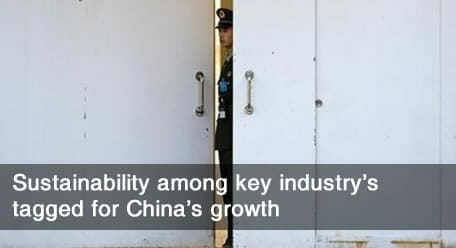
It’s not very salubrious but it’s secure. The four-star Jingxi Hotel in Beijing (pictured), which is owned by the People’s Liberation Army, hosted the annual plenum of the Communist Party’s Central Committee to draft the country’s next five-year plan.

The 12th five-year plan, nutted out by about 300 committee members, will be put to the National People’s Congress in March for ratification. The key themes in the latest plan are sustainability and reducing inequalities between provinces.

Analysts are predicting a lower GDP-growth target to be discussed between now and March, with details of the plan coinciding with a surprise 25bps point rise in the official interest rate last week – the first in China for three years.

A research note from HSBC Global Banking and Markets says more growth is likely to have to come from private consumption which has dropped from 50 per cent of total GDP to an estimated 36 per cent in the past 20 years.

“Expect further efforts to boost household incomes, primarily through higher minimum wages, as well as lower personal taxes,” the bank says.

Notwithstanding the stated concern for poorer provinces, the latest plan intends to speed the demographic shift to the cities, which will further boost consumption.

Sponsored Content

After the meeting, the Government confirmed a list of emerging strategic industries to be at the forefront of a “higher quality” of economic growth. They are: energy-saving and environmental protection firms, next generation IT, biotech, high-end manufacturing, new energy, new materials and composites, and clean-energy cars.

According to Shanghai Securities News, the group of industries currently make up only 3 per cent of GDP but are expected to contribute at least 15 per cent by 2020.


Leave a Comment

Sort content by

The Netherlands’ UWV battles to regain funding

The funding crisis that hit pension funds across the world may be easing – in common with the five-year long economic crisis – but restoring healthy funding levels remains a vital priority for many investors. The Netherlands’ €4.9-billion ($6.6-billion) UWV pension fund is one of that number. A funding ratio of 98.7 per cent at

The diminishing role of agents

I’ve always been frustrated by interviewing consultants and the lack of conviction they have about their decisions. “What would your ideal model portfolio look like?” I constantly ask. “It depends on the client” is the predictable and consistent answer. That may be valid, even true, but it speaks to a wider problem. Consultants are hired

Push the reset button at PRI in Person

At the United Nations-backed Principles for Responsible Investment conference Cape Town on October 1, general secretary of the International Trade Union Confederation Sharan Burrow delivered a speech entitled Push the Reset Button – a Line Between Speculation and Investment. She discussed the stability of the global economy, the necessity for investors to shift to long-term

OECD leads global infrastructure push

The OECD seeks to lengthen the time horizons of investors and get institutional money flowing from across the world into infrastructure gaps.

Sustainable investment goes to school

The Robert F Kennedy Centre for Justice and Human Rights and Columbia University’s Earth Institute will run a series of high-level courses on sustainable investment focused on environmental, social and governance approaches as well as human and labour rights this autumn. The Compass Sustainable Investing Certificate program, designed for long-term investors, will have a solutions-driven

Giving time to investment governance

Roger Urwin, global head of content at Towers Watson and governance specialist, says most organisations don’t spend enough time on it, but transformational change is all about giving time to investment governance. Culture and leadership, for example is so self-evidently important in people organisations and yet it is understated in asset owners, he says. “The soft

Previous



