Sustainability among key industry’s tagged for China’s growth

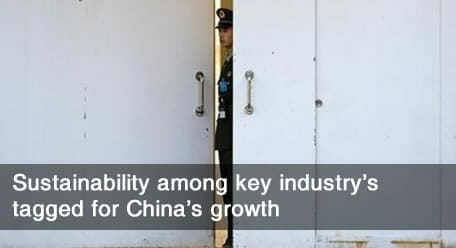
It’s not very salubrious but it’s secure. The four-star Jingxi Hotel in Beijing (pictured), which is owned by the People’s Liberation Army, hosted the annual plenum of the Communist Party’s Central Committee to draft the country’s next five-year plan.

The 12th five-year plan, nutted out by about 300 committee members, will be put to the National People’s Congress in March for ratification. The key themes in the latest plan are sustainability and reducing inequalities between provinces.

Analysts are predicting a lower GDP-growth target to be discussed between now and March, with details of the plan coinciding with a surprise 25bps point rise in the official interest rate last week – the first in China for three years.

A research note from HSBC Global Banking and Markets says more growth is likely to have to come from private consumption which has dropped from 50 per cent of total GDP to an estimated 36 per cent in the past 20 years.

“Expect further efforts to boost household incomes, primarily through higher minimum wages, as well as lower personal taxes,” the bank says.

Notwithstanding the stated concern for poorer provinces, the latest plan intends to speed the demographic shift to the cities, which will further boost consumption.

Sponsored Content

After the meeting, the Government confirmed a list of emerging strategic industries to be at the forefront of a “higher quality” of economic growth. They are: energy-saving and environmental protection firms, next generation IT, biotech, high-end manufacturing, new energy, new materials and composites, and clean-energy cars.

According to Shanghai Securities News, the group of industries currently make up only 3 per cent of GDP but are expected to contribute at least 15 per cent by 2020.


Leave a Comment

Sort content by

Innovation to align investors with the social good

The CFA Institute’s president John Rogers, believes there is evidence of innovation in investment products that meet the needs of asset owners in a more sustainable, longer-term way, and points to the work of professors and advisors to the CFA , Andrew Lo of MIT and Robert Shiller of Yale.   One of the main

Adding value through risk allocations

2013 was a great year to add value by using risk to assign asset allocation, according to chief investment officer of Windham Capital, Lucas Turton, whose fund added 300 basis points above benchmark last year by dynamically allocating according to risk.   Windham Capital Management’s style is to focus on measuring and understanding risk to

Alternatives increase as investors manage to outcomes

Investor allocations to alternatives will increase over the next three years as the focus on outcome-oriented investments heightens, according to respondents in the annual conexust1f.flywheelstaging.com /Casey Quirk Global Fiduciary CIO sentiment survey. The second annual survey, which included respondents from 56 asset owners with combined assets of $3 trillion, showed an accelerating trend to moving

Organisational change: asset owners 2.0

A key ingredient for success in any organisation is strong leadership. It is common in the corporate world for the chief executive to change every five to 10 years as the organisation evolves. Are the same principles true for large institutional investors?     Roger Urwin, global head of investment content at Towers Watson, who

The rise of the foreign trustee

Which developed world pension fund will become the first to have a Chinese national sit on its board? The debate on board diversity has focused on gender, race and age, but in future it could extend to having representatives of the countries your fund would most like to invest in. As funds travel along the

Economic growth outlook positive but integrity needs work

The outlook for economic growth this year is markedly positive, compared to last year, but capital market integrity is not improving, according to the opinions of more than 6,000 CFA Institute members. The CFA Institute global markets sentiment survey, measures the views of its members on market integrity and economic issues. This year’s survey, which

Previous



