Sustainability among key industry’s tagged for China’s growth

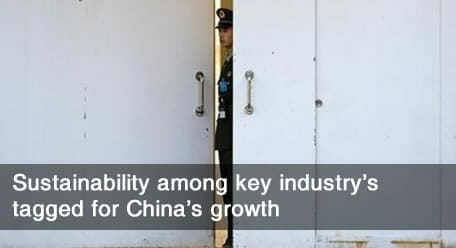
It’s not very salubrious but it’s secure. The four-star Jingxi Hotel in Beijing (pictured), which is owned by the People’s Liberation Army, hosted the annual plenum of the Communist Party’s Central Committee to draft the country’s next five-year plan.

The 12th five-year plan, nutted out by about 300 committee members, will be put to the National People’s Congress in March for ratification. The key themes in the latest plan are sustainability and reducing inequalities between provinces.

Analysts are predicting a lower GDP-growth target to be discussed between now and March, with details of the plan coinciding with a surprise 25bps point rise in the official interest rate last week – the first in China for three years.

A research note from HSBC Global Banking and Markets says more growth is likely to have to come from private consumption which has dropped from 50 per cent of total GDP to an estimated 36 per cent in the past 20 years.

“Expect further efforts to boost household incomes, primarily through higher minimum wages, as well as lower personal taxes,” the bank says.

Notwithstanding the stated concern for poorer provinces, the latest plan intends to speed the demographic shift to the cities, which will further boost consumption.

Sponsored Content

After the meeting, the Government confirmed a list of emerging strategic industries to be at the forefront of a “higher quality” of economic growth. They are: energy-saving and environmental protection firms, next generation IT, biotech, high-end manufacturing, new energy, new materials and composites, and clean-energy cars.

According to Shanghai Securities News, the group of industries currently make up only 3 per cent of GDP but are expected to contribute at least 15 per cent by 2020.


Leave a Comment

Sort content by

10-point plan for employers and trustees of defined contribution pension plans

Defined contribution company plans began 2009 on the heels of a bruising year. The significant decline in capital markets coupled with extreme investment volatility raises many issues for companies with DC plans. There are numerous issues employers/plan trustees need to address when reviewing their plans this year. These range from the plan’s governance to the

Dynamic asset allocation legitimate strategy in troubled times

For institutions with access to professional advice and with long investment horizons, a fixed mix approach to asset allocation is “aiming too low”, according to Jeremy Grantham, outspoken chief of GMO, who argues instead for a more dynamic approach to asset allocation in times of severe mispricing. “If the last 15 years has taught us

“Less verbiage, more detail” hedge funds told to open up

Diminishing returns from many hedge funds and the Madoff fraud have caused institutional investors to intensify their due diligence on hedge funds, and demand more liquidity, transparency and lower fees, according to research from alternatives specialist Preqin. mrec4inarticleinline Sponsored Content scnative1 scnative2 scnative3

Callan, Mercer deal threatens independent consulting model

The future of independent consulting firms in the US is under threat as one of the largest truly independent firms, Callan Associates, signs a definitive agreement to merge with global giant Mercer. mrec4inarticleinline Sponsored Content scnative1 scnative2 scnative3

ADIC opens up MENA for big German bank

The Abu Dhabi Investment Company (ADIC) has become an investment advisor to Germany’s second largest private bank, BHF-BANK. mrec4inarticleinline Sponsored Content scnative1 scnative2 scnative3

Malaysian investments favour domestic, cross-border strategies

To combat the financial crisis, Khazanah Nasional Berhard, the US$25.7 billion investment arm of the Malaysian government, will focus on catalysing domestic economic growth and continuing its program of strategic cross-border investments. mrec4inarticleinline Sponsored Content scnative1 scnative2 scnative3

Previous



