Sustainability among key industry’s tagged for China’s growth

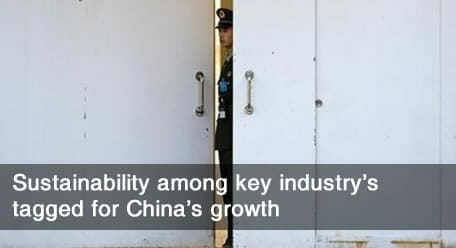
It’s not very salubrious but it’s secure. The four-star Jingxi Hotel in Beijing (pictured), which is owned by the People’s Liberation Army, hosted the annual plenum of the Communist Party’s Central Committee to draft the country’s next five-year plan.

The 12th five-year plan, nutted out by about 300 committee members, will be put to the National People’s Congress in March for ratification. The key themes in the latest plan are sustainability and reducing inequalities between provinces.

Analysts are predicting a lower GDP-growth target to be discussed between now and March, with details of the plan coinciding with a surprise 25bps point rise in the official interest rate last week – the first in China for three years.

A research note from HSBC Global Banking and Markets says more growth is likely to have to come from private consumption which has dropped from 50 per cent of total GDP to an estimated 36 per cent in the past 20 years.

“Expect further efforts to boost household incomes, primarily through higher minimum wages, as well as lower personal taxes,” the bank says.

Notwithstanding the stated concern for poorer provinces, the latest plan intends to speed the demographic shift to the cities, which will further boost consumption.

Sponsored Content

After the meeting, the Government confirmed a list of emerging strategic industries to be at the forefront of a “higher quality” of economic growth. They are: energy-saving and environmental protection firms, next generation IT, biotech, high-end manufacturing, new energy, new materials and composites, and clean-energy cars.

According to Shanghai Securities News, the group of industries currently make up only 3 per cent of GDP but are expected to contribute at least 15 per cent by 2020.


Leave a Comment

Sort content by

New method for incentive compensation at CalPERS

CalPERS is contemplating an incentive schedule for senior investment executives that builds in downside risk, by expanding the range of the factor multipliers for the quantitative elements of investment performance plans, a move which could potentially eliminate a small compensation incentive award. mrec4inarticleinline Sponsored Content scnative1 scnative2 scnative3

End of an era as APG appoints new CIO

A focus on governance and sustainability has been recognised by APG Asset Management, in appointing former global chief executive of ING Investment Management, Europe, Angelien Kemna, as successor to chief investment officer Roderick Munsters, the man who has sat at the helm of two of the Netherlands’ biggest pension funds. mrec4inarticleinline Sponsored Content scnative1 scnative2

NYSTRS leaves UNPRI but remains committed to governance

The New York State Teachers Retirement System has voluntarily withdrawn active participation in the United Nations Principles for Responsible Investment (UNPRI) initiative but will continue to support strong corporate governance principles through memberships in the Council of Institutional Investors and Ceres. mrec4inarticleinline Sponsored Content scnative1 scnative2 scnative3

Pastoral musings on investments

Chief research strategist and head of beta research at RogersCasey, Cynthia Steer, takes a summertime look at the “New World” of investing. She compares today’s investment challenges to those of gardening, and in contemplating the stoicism and constancy of long-time gardeners and farmers, she notes that portfolios today need to be re-constituted, the risk within

CalPERS’ securities lending loss

CalPERS will continue its securities lending program following an annual review, despite significant pressure on its collateral pool, with income of $220 million generated for the year to March but unrealised losses on the internal collateral reinvestment of $854 million. mrec4inarticleinline Sponsored Content scnative1 scnative2 scnative3

Does less leverage mean lower returns for listed property?

The financial crisis has put an end to the excessive use of leverage by real estate companies, and the prospect of distressed assets presents opportunities for pension funds. Kristen Paech discusses the outlook for the sector with Ritson Ferguson, CEO and chief investment officer of ING Clarion Real Estate Securities.   mrec4inarticleinline Sponsored Content scnative1

Previous



