Sustainability among key industry’s tagged for China’s growth

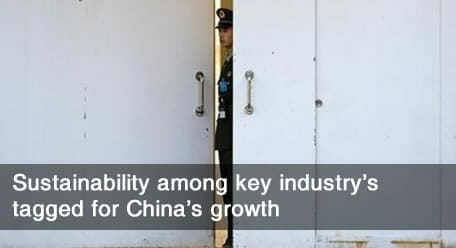
It’s not very salubrious but it’s secure. The four-star Jingxi Hotel in Beijing (pictured), which is owned by the People’s Liberation Army, hosted the annual plenum of the Communist Party’s Central Committee to draft the country’s next five-year plan.

The 12th five-year plan, nutted out by about 300 committee members, will be put to the National People’s Congress in March for ratification. The key themes in the latest plan are sustainability and reducing inequalities between provinces.

Analysts are predicting a lower GDP-growth target to be discussed between now and March, with details of the plan coinciding with a surprise 25bps point rise in the official interest rate last week – the first in China for three years.

A research note from HSBC Global Banking and Markets says more growth is likely to have to come from private consumption which has dropped from 50 per cent of total GDP to an estimated 36 per cent in the past 20 years.

“Expect further efforts to boost household incomes, primarily through higher minimum wages, as well as lower personal taxes,” the bank says.

Notwithstanding the stated concern for poorer provinces, the latest plan intends to speed the demographic shift to the cities, which will further boost consumption.

Sponsored Content

After the meeting, the Government confirmed a list of emerging strategic industries to be at the forefront of a “higher quality” of economic growth. They are: energy-saving and environmental protection firms, next generation IT, biotech, high-end manufacturing, new energy, new materials and composites, and clean-energy cars.

According to Shanghai Securities News, the group of industries currently make up only 3 per cent of GDP but are expected to contribute at least 15 per cent by 2020.


Leave a Comment

Sort content by

CalPERS’ absolute return mess

Wilshire’s annual review of CalPERS’ internal risk managed absolute return strategies (RMARS) has revealed a number of anomalies compared with its other global equity investments, including an over-reliance on quantitative tools and inadequate staff compensation incentives. mrec4inarticleinline Sponsored Content scnative1 scnative2 scnative3

Swedish pension fund collaboration to influence local market

Four of Sweden’s national pension funds (AP1-4) have collaborated with another nine investors to form the Swedish arm of The Sustainable Value Creation, and have already begun surveying the top 100 companies on the NASDAQ OMX Stockholm regarding their governance policies and sustainable value creation. mrec4inarticleinline Sponsored Content scnative1 scnative2 scnative3

Crisis will force private real estate to go public

Tight credit conditions in the US will diminish the private sector’s monopoly on residential and commercial property, driving assets into public markets and real estate investment trusts (REITs) loaded with cash from a spate of capital raisings. mrec4inarticleinline Sponsored Content scnative1 scnative2 scnative3

Commodity investing: papering over the problems

As funds globally review their investment policies, investment consultants are now strongly endorsing commodity investment, with funds generally planning a staged 3 to 6 per cent strategic allocation into commodities. Writing exclusively for conexust1f.flywheelstaging.com, chairman of Mountain Pacific Group, Ronald Liesching, traces the history of commodity investing, highlighting the risks and benefits for pension fund

Russell changes tune on TAA

After a long history of opposition to tactical asset allocation, Russell Investments has not become a convert but is allowing for a “slower twitch” version of the discipline, says global chief investment officer of the consultant and multimanager, Peter Gunning. mrec4inarticleinline Sponsored Content scnative1 scnative2 scnative3

ATP staff reduce own CO2 emissions

Each employee of the $110 billion Danish fund, ATP has saved the environment 300 kilograms of CO2 in one year, according to its first climate change report, which coincides with the fund’s strategic move to focus on climate and environmental considerations within its investment policy. mrec4inarticleinline Sponsored Content scnative1 scnative2 scnative3

Previous



