Sustainability among key industry’s tagged for China’s growth

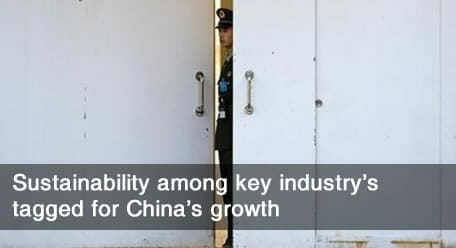
It’s not very salubrious but it’s secure. The four-star Jingxi Hotel in Beijing (pictured), which is owned by the People’s Liberation Army, hosted the annual plenum of the Communist Party’s Central Committee to draft the country’s next five-year plan.

The 12th five-year plan, nutted out by about 300 committee members, will be put to the National People’s Congress in March for ratification. The key themes in the latest plan are sustainability and reducing inequalities between provinces.

Analysts are predicting a lower GDP-growth target to be discussed between now and March, with details of the plan coinciding with a surprise 25bps point rise in the official interest rate last week – the first in China for three years.

A research note from HSBC Global Banking and Markets says more growth is likely to have to come from private consumption which has dropped from 50 per cent of total GDP to an estimated 36 per cent in the past 20 years.

“Expect further efforts to boost household incomes, primarily through higher minimum wages, as well as lower personal taxes,” the bank says.

Notwithstanding the stated concern for poorer provinces, the latest plan intends to speed the demographic shift to the cities, which will further boost consumption.

Sponsored Content

After the meeting, the Government confirmed a list of emerging strategic industries to be at the forefront of a “higher quality” of economic growth. They are: energy-saving and environmental protection firms, next generation IT, biotech, high-end manufacturing, new energy, new materials and composites, and clean-energy cars.

According to Shanghai Securities News, the group of industries currently make up only 3 per cent of GDP but are expected to contribute at least 15 per cent by 2020.


Leave a Comment

Sort content by

Why US funds can drive harder fee bargains

Many US fund sponsors believe they have not received fair value for the fees they paid to investment managers in recent years, a survey by Callan Associates found. mrec4inarticleinline Sponsored Content scnative1 scnative2 scnative3

CEM survey reveals private equity partnership details

CEM Benchmarking has completed a review of the private equity investments of 30 large pension funds globally, with an average of $935 million committed to private equity, revealing detail of their partnership structures, fees, and investment stages, timing and regions, and is now embarking on its first ever risk practices project. mrec4inarticleinline Sponsored Content scnative1

More private equity funds abandoned

Only $38 billion was raised in private equity worldwide in the third quarter of 2009, the lowest level since the fourth quarter of 2003, with the number of fund raisings abandoned more than tripling in a year, according to Preqin. mrec4inarticleinline Sponsored Content scnative1 scnative2 scnative3

Mercer 2009 funding and credit balance report

Principal at Mercer, Craig Rosenthal, was among the witnesses who gave testimony to the US House of Representatives Committee On Ways and Means, under the hearing “Defined Benefit Pension Plan Funding Levels and Investment Advice Rules” on October 1. mrec4inarticleinline Sponsored Content scnative1 scnative2 scnative3

UAE and Malaysia strengthen investment ties

In another deal struck in the United Arab Emirates (UAE) financial sector, the $25 billion Khazanah Nasional Berhad of Malaysia has bought a 25 per cent stake in Dubai Islamic investment firm Fajr Capital for $150 million. mrec4inarticleinline Sponsored Content scnative1 scnative2 scnative3

HMC to increase in-house management

Harvard Management Company, with responsibility for managing the $26 billion Harvard endowment fund, has hired a number of senior investment staff and reorganised its internal structure as it positions itself to bring more asset management in-house. mrec4inarticleinline Sponsored Content scnative1 scnative2 scnative3

Previous



