Sustainability among key industry’s tagged for China’s growth

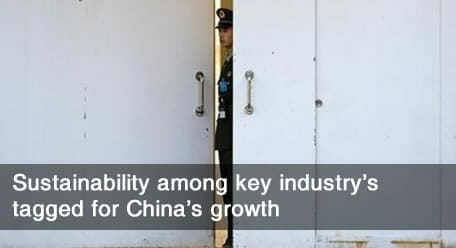
It’s not very salubrious but it’s secure. The four-star Jingxi Hotel in Beijing (pictured), which is owned by the People’s Liberation Army, hosted the annual plenum of the Communist Party’s Central Committee to draft the country’s next five-year plan.

The 12th five-year plan, nutted out by about 300 committee members, will be put to the National People’s Congress in March for ratification. The key themes in the latest plan are sustainability and reducing inequalities between provinces.

Analysts are predicting a lower GDP-growth target to be discussed between now and March, with details of the plan coinciding with a surprise 25bps point rise in the official interest rate last week – the first in China for three years.

A research note from HSBC Global Banking and Markets says more growth is likely to have to come from private consumption which has dropped from 50 per cent of total GDP to an estimated 36 per cent in the past 20 years.

“Expect further efforts to boost household incomes, primarily through higher minimum wages, as well as lower personal taxes,” the bank says.

Notwithstanding the stated concern for poorer provinces, the latest plan intends to speed the demographic shift to the cities, which will further boost consumption.

Sponsored Content

After the meeting, the Government confirmed a list of emerging strategic industries to be at the forefront of a “higher quality” of economic growth. They are: energy-saving and environmental protection firms, next generation IT, biotech, high-end manufacturing, new energy, new materials and composites, and clean-energy cars.

According to Shanghai Securities News, the group of industries currently make up only 3 per cent of GDP but are expected to contribute at least 15 per cent by 2020.


Leave a Comment

Sort content by

Investors suffer as Asian hedge funds ossify

As institutions take over from high-net-worth individuals and family offices as the main investors in hedge funds around the world, those hedge fund managers, too, are becoming institutionalised. This is not always a good thing for investors.mrec4inarticleinline Sponsored Content scnative1 scnative2 scnative3

Hedge funds charge more than private equity

Fee comparison between hedge funds and private equity is riddled with complexity, but a research paper by specialist alternative consulting firm, Cliffwater – that weighs outcomes by their likelihood of occurrence – finds a fee cost for the typical hedge fund equals 32 per cent of gross profits, while for private equity it is 25

Ohio uncertain on alternatives consultant

The $72 billion Ohio Public Employees Retirement System is looking for an investment consultant to advise on its $10 billion alternatives program, and is considering whether to hire separate consultants for each asset class or one consultant to advise on the entire program.mrec4inarticleinline Sponsored Content scnative1 scnative2 scnative3

PIMCO’s El-Erian on surviving the ‘new normal’

As investors faced a “multi-speed world” in which uncertainty about the US and European economies contrasted with emerging markets’ rapid growth, they should not be misled by short-term signals from the markets, said Mohamed El-Erian, CEO and co-CIO at PIMCO. mrec4inarticleinline Sponsored Content scnative1 scnative2 scnative3

The Devil Wears UBS … revised edition

Style is not really the forté of the Swiss so it may come as no surprise that the London arm of Swiss investment bank UBS got itself into a pickle after it published a 44-page dress code for employees late last year.mrec4inarticleinline Sponsored Content scnative1 scnative2 scnative3

Start praying for returns, says Wurts

Investors wishing to meet return goals could put as much hope in prayer as in their portfolio structure, according to Wurts & Associates which was forecasting a continuing “tough” economic environment.mrec4inarticleinline Sponsored Content scnative1 scnative2 scnative3

Previous



