Sustainability among key industry’s tagged for China’s growth

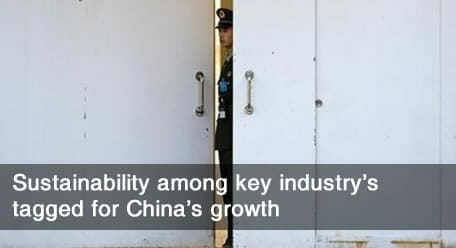
It’s not very salubrious but it’s secure. The four-star Jingxi Hotel in Beijing (pictured), which is owned by the People’s Liberation Army, hosted the annual plenum of the Communist Party’s Central Committee to draft the country’s next five-year plan.

The 12th five-year plan, nutted out by about 300 committee members, will be put to the National People’s Congress in March for ratification. The key themes in the latest plan are sustainability and reducing inequalities between provinces.

Analysts are predicting a lower GDP-growth target to be discussed between now and March, with details of the plan coinciding with a surprise 25bps point rise in the official interest rate last week – the first in China for three years.

A research note from HSBC Global Banking and Markets says more growth is likely to have to come from private consumption which has dropped from 50 per cent of total GDP to an estimated 36 per cent in the past 20 years.

“Expect further efforts to boost household incomes, primarily through higher minimum wages, as well as lower personal taxes,” the bank says.

Notwithstanding the stated concern for poorer provinces, the latest plan intends to speed the demographic shift to the cities, which will further boost consumption.

Sponsored Content

After the meeting, the Government confirmed a list of emerging strategic industries to be at the forefront of a “higher quality” of economic growth. They are: energy-saving and environmental protection firms, next generation IT, biotech, high-end manufacturing, new energy, new materials and composites, and clean-energy cars.

According to Shanghai Securities News, the group of industries currently make up only 3 per cent of GDP but are expected to contribute at least 15 per cent by 2020.


Leave a Comment

Sort content by

Capital ventures forth … cautiously

Everyone likes venture capital. It’s one of the feel-good asset types that fiduciary investors can believe makes a difference to society. Unfortunately, for the past 10 years it has also, on average, lost money.mrec4inarticleinline Sponsored Content scnative1 scnative2 scnative3

Climate-change cloud has silver lining: Mercer

Climate change could slash as much as 10 per cent off portfolios in the next 20 years, according to Mercer’s much-anticipated climate change report, the result of an 18-month collaboration with 14 institutional investors from around the globe.mrec4inarticleinline Sponsored Content scnative1 scnative2 scnative3

CalSTRS plugs holes in neat buckets with risk overlays

CalSTRS will employ a new way of evaluating portfolio risk which overlays risk across asset classes, rather than replacing asset classes with risk categories, and introduces six broad risk factors.mrec4inarticleinline Sponsored Content scnative1 scnative2 scnative3

Ontario Teachers puts hand up for triennial vote on pay

A say-on-pay vote every three years is preferable to an annual vote that could lead to a focus on short-term objectives, according to the $100 million Ontario Teachers’ Pension Plan in its annual letter to more than 650 public companies around the world.mrec4inarticleinline Sponsored Content scnative1 scnative2 scnative3

Occidental managers make capital mistakes in rush to Orient

Everyone is mesmerised by the Asian growth story. The emerging middle classes, hundreds of millions of new consumers and, not the least, high fees for funds management services.mrec4inarticleinline Sponsored Content scnative1 scnative2 scnative3

Derivatives: sour grapes or Dodd-Frank victims?

While claims the Dodd-Frank Act will make the derivatives market prohibitively expensive could be seen as a case of sour grapes from a market unregulated until now, a committee reviewing the Act has asserted that end-users of derivatives, including pension funds, will bear the brunt of the new laws.mrec4inarticleinline Sponsored Content scnative1 scnative2 scnative3

Previous



