Sustainability among key industry’s tagged for China’s growth

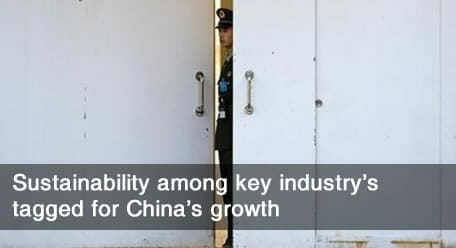
It’s not very salubrious but it’s secure. The four-star Jingxi Hotel in Beijing (pictured), which is owned by the People’s Liberation Army, hosted the annual plenum of the Communist Party’s Central Committee to draft the country’s next five-year plan.

The 12th five-year plan, nutted out by about 300 committee members, will be put to the National People’s Congress in March for ratification. The key themes in the latest plan are sustainability and reducing inequalities between provinces.

Analysts are predicting a lower GDP-growth target to be discussed between now and March, with details of the plan coinciding with a surprise 25bps point rise in the official interest rate last week – the first in China for three years.

A research note from HSBC Global Banking and Markets says more growth is likely to have to come from private consumption which has dropped from 50 per cent of total GDP to an estimated 36 per cent in the past 20 years.

“Expect further efforts to boost household incomes, primarily through higher minimum wages, as well as lower personal taxes,” the bank says.

Notwithstanding the stated concern for poorer provinces, the latest plan intends to speed the demographic shift to the cities, which will further boost consumption.

Sponsored Content

After the meeting, the Government confirmed a list of emerging strategic industries to be at the forefront of a “higher quality” of economic growth. They are: energy-saving and environmental protection firms, next generation IT, biotech, high-end manufacturing, new energy, new materials and composites, and clean-energy cars.

According to Shanghai Securities News, the group of industries currently make up only 3 per cent of GDP but are expected to contribute at least 15 per cent by 2020.


Leave a Comment

Sort content by

France’s FFR halves equities, weights bonds

Equities allocations have been slashed as a result of government changes to the liabilities of the Fonds de Reserve pour les Retraites (FFR) which prompted changes to the fund’s investment policy. mrec4inarticleinline Sponsored Content scnative1 scnative2 scnative3

Japan disaster registers shocks on the Macro Scale

The natural disaster in Japan, that has tragically killed more than 3,000 people, caused millions of dollars damage and thrown the Middle East off the front pages, could also mark a pivotal moment in investments, with markets back to being triggered by macro concerns.mrec4inarticleinline Sponsored Content scnative1 scnative2 scnative3

Inflation spectre should scare investors back to text books

Inflation is a big risk for most pension funds around the world. The question is: what do you do about it? The interesting point, though, is if inflation is a ‘fat tail’ risk, maybe it’s already been too widely signalled.mrec4inarticleinline Sponsored Content scnative1 scnative2 scnative3

Funds count costs of external asset management

Cost is the flagrant motivation in the trend for US pension funds to move assets in-house, but as this article explores, budgets also need to extend to the demands of investment research, travel and staff incentive compensation.mrec4inarticleinline Sponsored Content scnative1 scnative2 scnative3

Dutch look ambitiously beyond DB funds

As the social partners in the Netherlands debate the future of the pension system, Amanda White spoke with chief institutional business and deputy CEO at PGGM, Else Bos, about the preferred reform outcome which may be a move towards a “defined ambition” structure, as well as PGGM’s vision of retirement provision which moves beyond just

NZ quake fund skates on very thin reserves

New Zealand’s earthquake disaster relief fund could be completely drained following the fatal 6.3 quake that flattened large swathes of central Christchurch on February 22.mrec4inarticleinline Sponsored Content scnative1 scnative2 scnative3

Previous



