Sustainability among key industry’s tagged for China’s growth

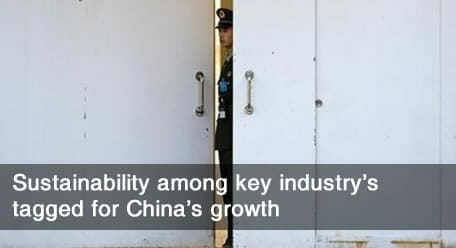
It’s not very salubrious but it’s secure. The four-star Jingxi Hotel in Beijing (pictured), which is owned by the People’s Liberation Army, hosted the annual plenum of the Communist Party’s Central Committee to draft the country’s next five-year plan.

The 12th five-year plan, nutted out by about 300 committee members, will be put to the National People’s Congress in March for ratification. The key themes in the latest plan are sustainability and reducing inequalities between provinces.

Analysts are predicting a lower GDP-growth target to be discussed between now and March, with details of the plan coinciding with a surprise 25bps point rise in the official interest rate last week – the first in China for three years.

A research note from HSBC Global Banking and Markets says more growth is likely to have to come from private consumption which has dropped from 50 per cent of total GDP to an estimated 36 per cent in the past 20 years.

“Expect further efforts to boost household incomes, primarily through higher minimum wages, as well as lower personal taxes,” the bank says.

Notwithstanding the stated concern for poorer provinces, the latest plan intends to speed the demographic shift to the cities, which will further boost consumption.

Sponsored Content

After the meeting, the Government confirmed a list of emerging strategic industries to be at the forefront of a “higher quality” of economic growth. They are: energy-saving and environmental protection firms, next generation IT, biotech, high-end manufacturing, new energy, new materials and composites, and clean-energy cars.

According to Shanghai Securities News, the group of industries currently make up only 3 per cent of GDP but are expected to contribute at least 15 per cent by 2020.


Leave a Comment

Sort content by

Real estate sustainability

The Global Real Estate Sustainability Benchmark (GRESB), which will launch its third annual sustainability survey today, has announced a partnership with the Global Reporting Initiative to enhance sustainability reporting. The survey allows participating fund managers to benchmark their portfolio on environmental and social performance against their peers. The GRESB Foundation is backed by 30 institutional

Top1000funds.com audience using social media for business

Thank you to all our readers who responded to the Top1000funds.com Audience Behaviour Survey. The survey’s overall aim was to allow us to better tailor our portfolio of products and events to you our readers. Some of the interesting findings included that our typical reader is aged between 41 and 50 and earns between $96,000

Global property lures investors

Property investors should look beyond the current languid growth in developed market economies and position their portfolios for a recovery in the world economy in 2013 and 2014, Mark Roberts the global head of RREEF Real Estate says. Roberts, who also chairs the National Council of Real Estate Investment Fiduciaries (NCREIF), points to initial yield

Why Global Investment Matters

The recent rally on global markets does not mean that the risk environment has abated Towers Watson’s global head of investment Carl Hess has warned. Speaking from New York prior to the launch of the consultant’s report Global Investment Matters, Hess says that while the risk of the imminent collapse of financial markets has lessened,

Extracting value from managers

Three funds find effective ways to get better value from staff, co-investment and private markets. The Danish ATP, Australian Sunsuper and the Teachers Retirement System of Texas are among the funds looking at innovative ways to extract value and interact with the managers of their private equity allocations. Institutional investors are increasingly seeking new ways

Limited partners hold fee-bargaining power

In a harsh capital-raising climate, ATP Private Equity Partners and TRS have different startegies on how to drive hard bargains on private equity fees. Institutional investors are gaining concessions on private equity management fees, with a near-record number of funds on the road seeking funds resulting in a shift in bargaining power to limited partners.

Previous



