Sustainability among key industry’s tagged for China’s growth

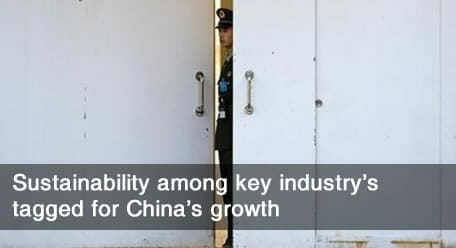
It’s not very salubrious but it’s secure. The four-star Jingxi Hotel in Beijing (pictured), which is owned by the People’s Liberation Army, hosted the annual plenum of the Communist Party’s Central Committee to draft the country’s next five-year plan.

The 12th five-year plan, nutted out by about 300 committee members, will be put to the National People’s Congress in March for ratification. The key themes in the latest plan are sustainability and reducing inequalities between provinces.

Analysts are predicting a lower GDP-growth target to be discussed between now and March, with details of the plan coinciding with a surprise 25bps point rise in the official interest rate last week – the first in China for three years.

A research note from HSBC Global Banking and Markets says more growth is likely to have to come from private consumption which has dropped from 50 per cent of total GDP to an estimated 36 per cent in the past 20 years.

“Expect further efforts to boost household incomes, primarily through higher minimum wages, as well as lower personal taxes,” the bank says.

Notwithstanding the stated concern for poorer provinces, the latest plan intends to speed the demographic shift to the cities, which will further boost consumption.

Sponsored Content

After the meeting, the Government confirmed a list of emerging strategic industries to be at the forefront of a “higher quality” of economic growth. They are: energy-saving and environmental protection firms, next generation IT, biotech, high-end manufacturing, new energy, new materials and composites, and clean-energy cars.

According to Shanghai Securities News, the group of industries currently make up only 3 per cent of GDP but are expected to contribute at least 15 per cent by 2020.


Leave a Comment

Sort content by

SWFs eye private real estate funds

New research reveals many sovereign wealth funds (SWFs) have entered the private fund arena and more are planning to invest through private equity funds in the future. According to analysis from the 2009 Preqin Sovereign Wealth Fund Review, which contains investment plans for all SWFs active in the real estate sector, 13 per cent invest

OMERS’ new co-investment entity gateway to private deals

The Ontario Municipal Employees Retirement System (OMERS) has created a new investment entity, called OMERS Strategic Investments, with a specific mandate to secure co-investment relationships with like-minded investors from around the world, and facilitate a move to its target of about 42 per cent of investments in private markets. mrec4inarticleinline Sponsored Content scnative1 scnative2 scnative3

Beware of PE secondaries “rubbish” as dealflow rises, valuations drop

Investors in the private equity secondaries universe must be selective as more assets, including distressed assets, come to market and valuations seem set to head south. mrec4inarticleinline Sponsored Content scnative1 scnative2 scnative3

US congress challenges Bernanke on bankers’ performance pay

Federal officials in the US, including Federal Reserve chairman, Ben Bernanke, will receive letters from Congress in the next couple of days requesting documents about their knowledge of performance bonuses paid to Merrill Lynch executives just weeks before federal money was allocated to the bank’s merger with Bank of America. mrec4inarticleinline Sponsored Content scnative1 scnative2

Shareholder engagement crucial to returns: Australian Future Fund

As many corporate executives draw public criticism for their governance practices, institutional investors should exercise their power to influence who is appointed to the boards of companies they invest in, and who remains on them, the chairman of Australia’s A$59.6 billion Future Fund, David Murray, said. mrec4inarticleinline Sponsored Content scnative1 scnative2 scnative3

Co-investment opportunities come to the fore

The distress in the financial markets is offering Australian superannuation funds good opportunities to achieve a higher internal rate of return (IRR) on quality assets purchased directly. Sam Magee, commercial director at Australian investment manager Industry Funds Management (IFM), told the Conference of Major Superannuation Funds (CMSF) held in Australia this week, that there are

Previous



