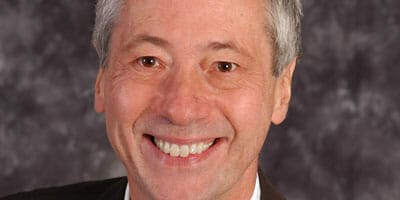
State Street’s Probyn into 2013

The current equity rally is not predicated on a shift in economic performance, according to chief economist at State Street, Chris Probyn, who says it would be reasonable to say the market may “pause for thought”.

Probyn says the move from fixed income to equities has been fostered by some of the “economic areas for concern” being eliminated.

These include the avoidance of a hard landing in China, and a disorderly breakup of the euro, proactive policy responses in Japan and the avoidance of the US fiscal cliff.

“These have all been ticked off,” he says. “But still growth is not great. The fourth quarter earnings reports have been good, with the notable exception of Apple, so there is some fundamental support for equities. But there is no fundamental upshift, so the size and speed of the rally is a little surprising.”

Probyn’s outlook for 2013 is for 0.25 per cent global growth, driven by a 0.5 per cent growth in emerging markets.

His economic outlook for developed markets is zero growth, which he partly attributes to fiscal policy decisions.

Sponsored Content

“We have reinvented economics, when the economy is weak we stop government spending, it is a failure of policy and we are repeating the mistakes of the 1920s,” he says.

Probyn also attributes the equity rally to a certain psychological behaviour.

“People have worry fatigue, they are tired of worrying about the same things,” he says.

State Street doesn’t have a big economics department, three people in fact. One emerging markets specialist plus two who look at the G8, defined as the G7 plus Australia (because of State Street’s presence in that country).

Probyn believes that in order to understand certain asset classes there needs to be an understanding of the global economic story, such as the relationship between resources and China.

He admits that for most economists it is difficult to predict exact growth numbers, but it’s more important to get “the overall story right”. Last year that overall story was further growth moderation, and that is the outlook for 2013 as well.


 

Leave a Comment

Sort content by

Why you should take notice of what we write

New research released this month gives impetus to the evidence that newspaper articles can predict aggregate future stock returns. Conducted by Professor of Finance at the University of St Gallen in Switzerland, Manuel Ammann, it examines articles in the German finance paper, Handeslblatt, from July 1989 until March 2011, and overall found that “newspaper content

CalPERS to move $1bn fixed income in-house

CalPERS plans to move $1 billion of its externally-managed international fixed income portfolio in-house in the next 12 months, but it will require board approval to do so.mrec4inarticleinline Sponsored Content scnative1 scnative2 scnative3

Texas Teachers extends manager partnerships

Texas Teachers Retirement System has extended a unique public markets strategic partnership structure to two of its private market managers in a move it claims will give the fund a long-term strategic advantage over other investors.mrec4inarticleinline Sponsored Content scnative1 scnative2 scnative3

Keynes and the character required for a long-term view

In the interests of educating myself I recently read Chapter 12 “The State of Long-Term Expectations” in John Maynard Keynes’ seminal economics tome General Theory. I particularly like his statement: “it needs more intelligence to defeat the forces of time and our ignorance of the future than to beat the gun”, but then I’ve always

Recipe for avoiding half-baked dynamic asset allocation

In what is lauded as somewhat of a Laurel and Hardy performance, APG’s Stefan Lundbergh and academic provocateur Jack Gray, demonstrate the disparity between ideology and action in a hypothetical dynamic asset allocation case study. But jokes aside, it highlights the misnomer in the words “best practice”, and the lack of courage in this industry.

HOOPP boss goes out on a high

Chief executive of HOOPP, John Crocker, has only one more board meeting before he retires, and except for travel plans to the Caribbean and Europe his dance card is empty. After 10 years in the position he leaves a fund in good shape – fully funded, technologically primed and with investments that use innovative, low-cost

Previous



