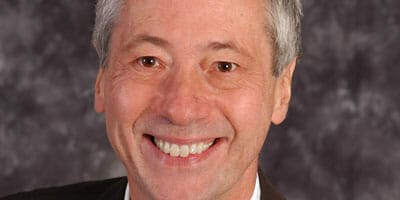
State Street’s Probyn into 2013

The current equity rally is not predicated on a shift in economic performance, according to chief economist at State Street, Chris Probyn, who says it would be reasonable to say the market may “pause for thought”.

Probyn says the move from fixed income to equities has been fostered by some of the “economic areas for concern” being eliminated.

These include the avoidance of a hard landing in China, and a disorderly breakup of the euro, proactive policy responses in Japan and the avoidance of the US fiscal cliff.

“These have all been ticked off,” he says. “But still growth is not great. The fourth quarter earnings reports have been good, with the notable exception of Apple, so there is some fundamental support for equities. But there is no fundamental upshift, so the size and speed of the rally is a little surprising.”

Probyn’s outlook for 2013 is for 0.25 per cent global growth, driven by a 0.5 per cent growth in emerging markets.

His economic outlook for developed markets is zero growth, which he partly attributes to fiscal policy decisions.

Sponsored Content

“We have reinvented economics, when the economy is weak we stop government spending, it is a failure of policy and we are repeating the mistakes of the 1920s,” he says.

Probyn also attributes the equity rally to a certain psychological behaviour.

“People have worry fatigue, they are tired of worrying about the same things,” he says.

State Street doesn’t have a big economics department, three people in fact. One emerging markets specialist plus two who look at the G8, defined as the G7 plus Australia (because of State Street’s presence in that country).

Probyn believes that in order to understand certain asset classes there needs to be an understanding of the global economic story, such as the relationship between resources and China.

He admits that for most economists it is difficult to predict exact growth numbers, but it’s more important to get “the overall story right”. Last year that overall story was further growth moderation, and that is the outlook for 2013 as well.


 

Leave a Comment

Sort content by

Californian funds look through 3D to diversify boards

The two large Californian public funds, CalPERS and CalSTRS, recently collaborated to help develop a new digital resource dedicated to finding untapped diverse talent to serve on corporate boards. Director of corporate governance at CalSTRS, Anne Sheehan (pictured), discusses the need for such a resource, and why collaboration is such a key component of corporate

PGGM targets social added-value

PGGM will make targeted ESG investments in all investment categories in 2011, and complete research into the social added-value of those investments, which may also lead to a model to screen the entire portfolio for a sustainable return, according to its annual responsible investment report.mrec4inarticleinline Sponsored Content scnative1 scnative2 scnative3

CalPERS commits to defined benefit

A set of 12 federal legislative policy priorities adopted by the board of CalPERS underpins the fund’s commitment to preserving defined benefit plans, and positions the fund firmly in the defined benefit camp in the debate over pension design.mrec4inarticleinline Sponsored Content scnative1 scnative2 scnative3

Derivatives cut both ways … even in experienced hands

There is still a degree of bad taste in the mouths of trustees when it comes to the use of derivatives in pension fund management, but some funds that have embraced the investment tools, such as HOOPP in Canada, are now reaping the benefits. mrec4inarticleinline Sponsored Content scnative1 scnative2 scnative3

European challenges inflate allocation concerns

Investors’ increasing expectation of inflation risk in Europe, coupled with monetary policy implementation challenges at the European Central Bank, is an argument for a greater allocation to strategies that perform well in inflationary markets, according to a research note by AQR Capital Management.mrec4inarticleinline Sponsored Content scnative1 scnative2 scnative3

Securities body ramps up risk surveillance

Securities watchdog, the International Organization of Securities Commissions (IOSCO), has revamped its structure to better identify market risks and develop regulatory standards for capital markets.mrec4inarticleinline Sponsored Content scnative1 scnative2 scnative3

Previous



